A 6-Year Single Center Experience in Neonatal Aortic Arch Surgery with Whole-Body Perfusion: Showing the Perks by Strict Propensity Score Matching
Isabelle Doll, Rodrigo Sandoval Boburg, Rafal Berger, Christian Jörg Rustenbach, Walter Jost, Jörg Michel, Harry Magunia, Christian Schlensak

TL;DR
This study shows that Whole-Body Perfusion improves outcomes in neonatal aortic arch surgery compared to traditional methods.
Contribution
The study introduces Whole-Body Perfusion as a superior perfusion strategy in neonatal aortic arch surgery, validated through strict propensity score matching.
Findings
Whole-Body Perfusion reduced time on cardiopulmonary bypass and cross-clamp significantly.
Patients with Whole-Body Perfusion required fewer blood transfusions and had shorter ventilator times.
Lactate levels and signs of multiorgan dysfunction were lower in Whole-Body Perfusion patients.
Abstract
Objectives: Perfusion strategy is crucial for the outcome of neonatal aortic arch surgery. This study investigates Whole-Body Perfusion to potentially improve postoperative outcomes for neonates, addressing a significant gap in current research. Methods: Retrospective analysis was conducted for neonates receiving aortic arch reconstruction in our institution: 33 patients were treated with Antegrade Cerebral Perfusion (ACP, 2014–2017) and 61 patients with Whole-Body Perfusion (WBP, 2017–2022). After strict Propensity Score Matching, 20 patients were analyzed in each group. WBP consists of ACP and Lower Body Perfusion (LBP), achieved through a femoral arterial sheath. Results: Patients with WBP had a shorter time on Cardiopulmonary Bypass (86.65 ± 25.47 vs. 172.95 ± 60.12 min) and Cross-Clamp time (46.70 ± 18.48 vs. 91.30 ± 40.10 min) (p ≤ 0.001). Lactate at the time of reperfusion and…
Genes, proteins, chemicals, diseases, species, mutations and cell lines named across the full text — each resolved to its canonical identifier and authoritative record.
Click any figure to enlarge with its caption.
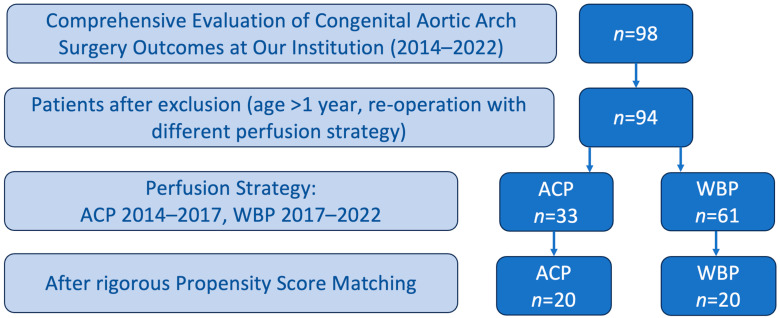 Figure 1
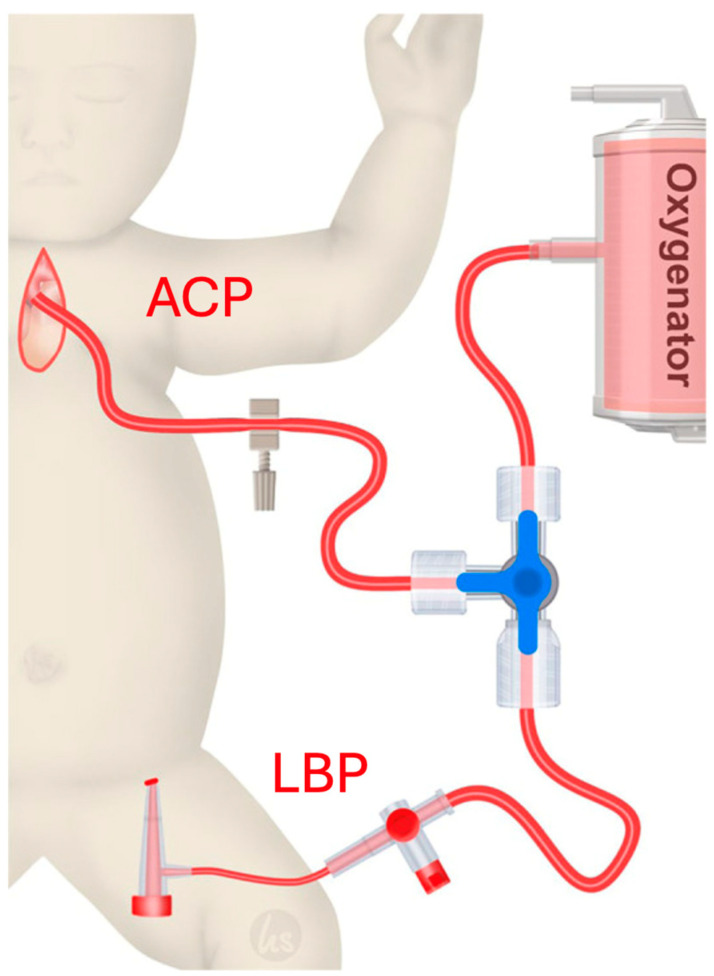 Figure 2
Peer Reviews
No public reviews on file for this paper yet. If you reviewed it on a platform where reviews are public (OpenReview, ICLR, NeurIPS, ICML), you can paste yours below so the community can read it here.
Videos
No videos yet. Explain this paper in a talk, walkthrough, or lecture? Add one.
Taxonomy
TopicsCongenital Heart Disease Studies · Aortic Disease and Treatment Approaches · Mechanical Circulatory Support Devices