Promyelocytic Leukemia Protein (PML) Regulates Stem Cell Pluripotency Through Novel Sumoylation Targets
Syrago Spanou, Takis Makatounakis, Chrysa Filippopoulou, Georgios Dougalis, George Stamatakis, Christoforos Nikolaou, Martina Samiotaki, Georgia Chachami, Joseph Papamatheakis, Androniki Kretsovali

TL;DR
This paper shows how the PML protein helps maintain stem cell identity by regulating specific proteins and chemical modifications linked to pluripotency and cell division.
Contribution
The study identifies SALL1 and CDCA8 as new PML-regulated sumoylation targets crucial for embryonic stem cell maintenance.
Findings
PML depletion in ES cells leads to reduced self-renewal factors and increased differentiation markers.
PML promotes sumoylation of SALL1 and CDCA8, which are essential for maintaining stem cell pluripotency and proliferation.
SALL1 sumoylation enhances Wnt signaling, while CDCA8 sumoylation supports cell proliferation in ES cells.
Abstract
The promyelocytic leukemia protein (PML) and its associated nuclear bodies have recently emerged as critical regulators of embryonic stem (ES) cell identity. Despite their recognized importance, the complete spectrum of PML-mediated molecular events in ES cells remains unclear. In this report, we study how PML is shaping the proteomic and SUMO proteomic landscape in ES cells. Proteomic profiling of PML-depleted ES cells uncovered a downregulation of self-renewal factors and an upregulation of proteins associated with translation and proteasomal activity, reflecting a cellular transition from pluripotency to differentiation. Importantly, PML promotes the sumoylation of pluripotency-related factors, chromatin organizers, and cell cycle regulators. We identified SALL1 and CDCA8 as novel PML-directed sumoylation targets, both critical for ES cell maintenance. SALL1 sumoylation increases the…
Genes, proteins, chemicals, diseases, species, mutations and cell lines named across the full text — each resolved to its canonical identifier and authoritative record.
Click any figure to enlarge with its caption.
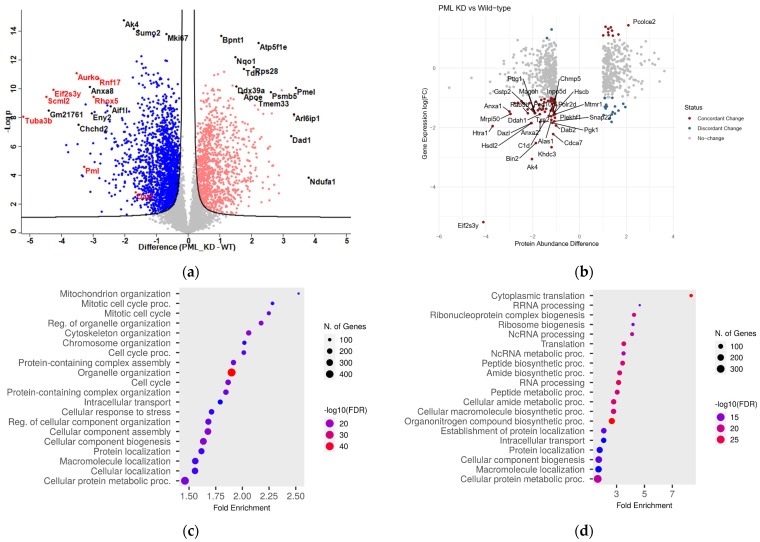 Figure 1
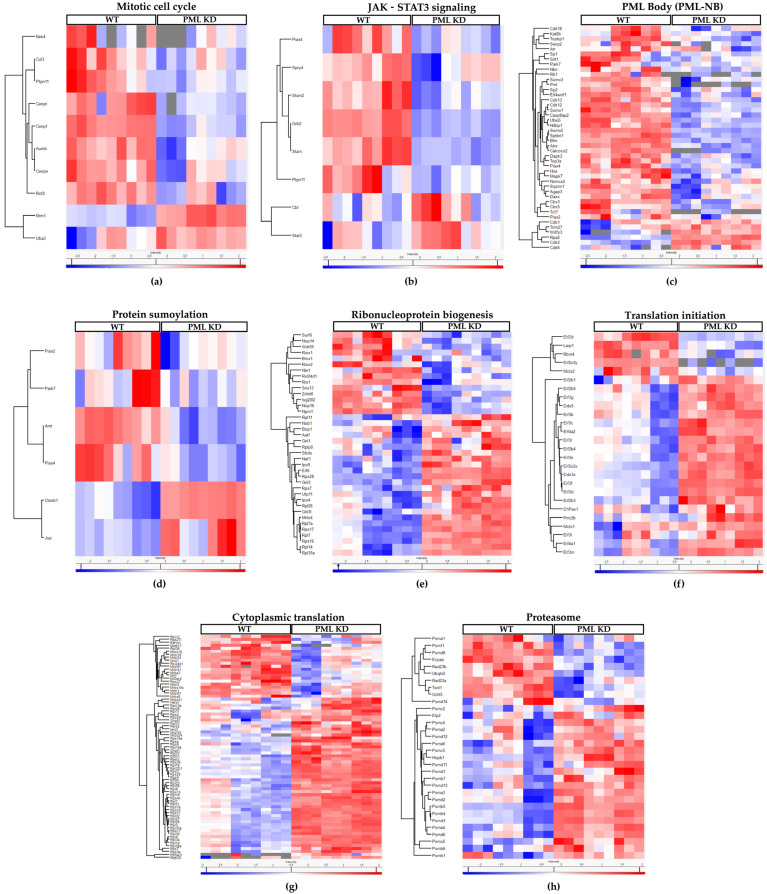 Figure 2
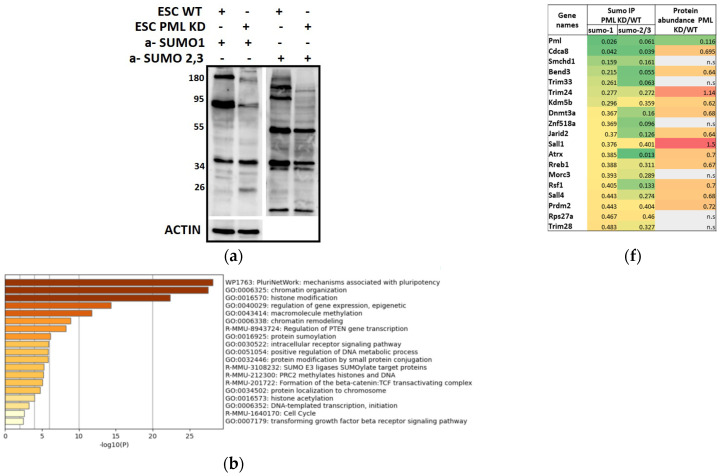 Figure 3
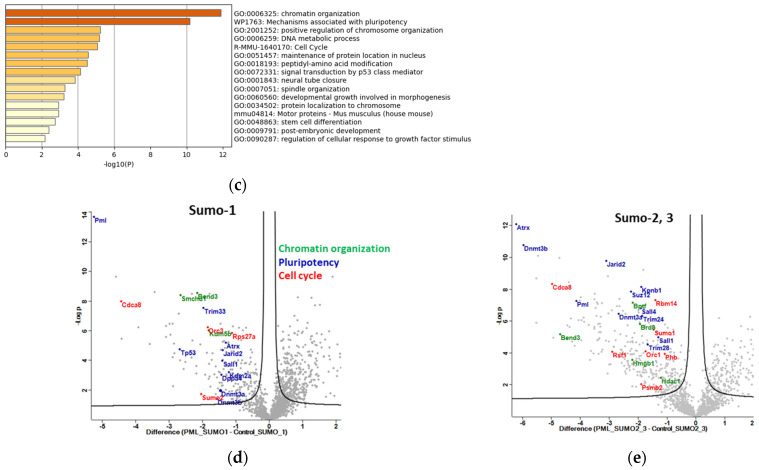 Figure 4
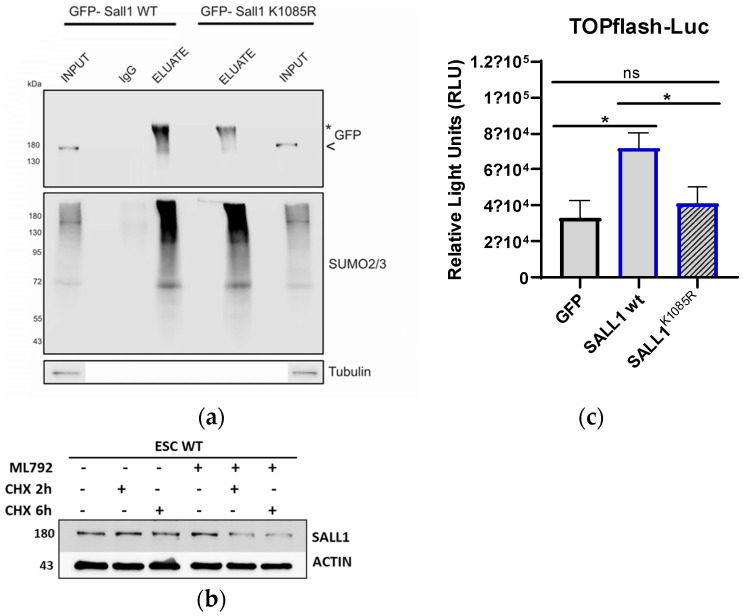 Figure 5
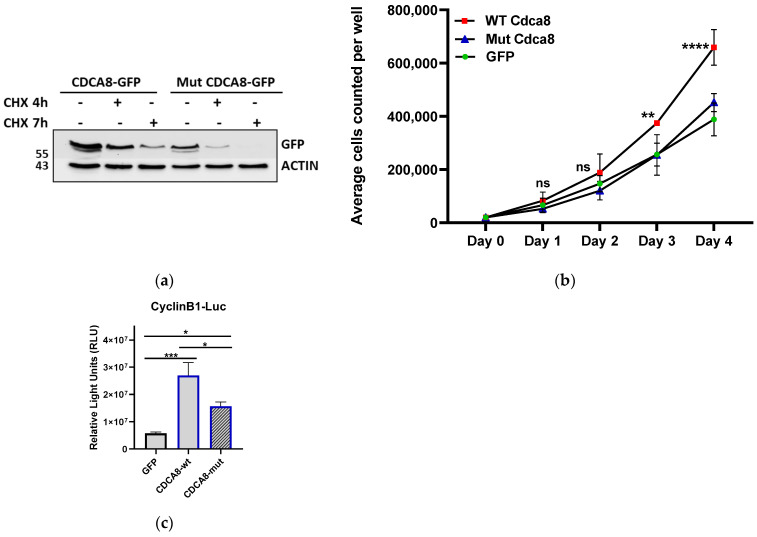 Figure 6
Peer Reviews
No public reviews on file for this paper yet. If you reviewed it on a platform where reviews are public (OpenReview, ICLR, NeurIPS, ICML), you can paste yours below so the community can read it here.
Videos
No videos yet. Explain this paper in a talk, walkthrough, or lecture? Add one.
Taxonomy
TopicsAdvanced biosensing and bioanalysis techniques · Retinoids in leukemia and cellular processes · Protein Degradation and Inhibitors