A First-Principles Calculation Study of the Catalytic Properties of Two-Dimensional Bismuthene Materials for Carbon Dioxide Reduction
Chang-Tian Wang, Qinchi Yue, Changhao Wang, Yuanji Xu, Chang Zhou

TL;DR
This study uses first-principles calculations to explore how bismuthene can efficiently convert CO2 into useful products, offering a potential solution for reducing greenhouse gas emissions.
Contribution
The study reveals the superior catalytic activity of the Bi(012) surface over Bi(001) for CO2 reduction, providing new insights for catalyst design.
Findings
Monolayer bismuthene is stable and suitable for catalytic applications.
Formic acid is the primary product of CO2 reduction on bismuthene surfaces.
The Bi(012) surface has a lower free energy barrier than Bi(001), indicating higher catalytic activity.
Abstract
The electrochemical reduction of carbon dioxide (CO2) at room temperature into industrial chemicals and energy products offers a promising strategy to mitigate atmospheric greenhouse gas emissions. In this study, bismuthene was employed as a catalyst for CO2 reduction reaction (CO2RR). Through first-principles calculations, we evaluated the CO2RR catalytic activities of bismuth (Bi) on the (001) and (012) surfaces, analyzing the mechanisms underlying these activities. Surface energy calculations for monolayer and multilayer bismuthene confirmed that monolayer bismuthene is stable and suitable for catalytic applications. Adsorption free energies of intermediates showed that formic acid is the primary product. Furthermore, it is found that the Bi(012) surface has a lower free energy barrier than Bi(001) in the CO2RR process, representing the higher catalytic activity. These results…
Genes, proteins, chemicals, diseases, species, mutations and cell lines named across the full text — each resolved to its canonical identifier and authoritative record.
Click any figure to enlarge with its caption.
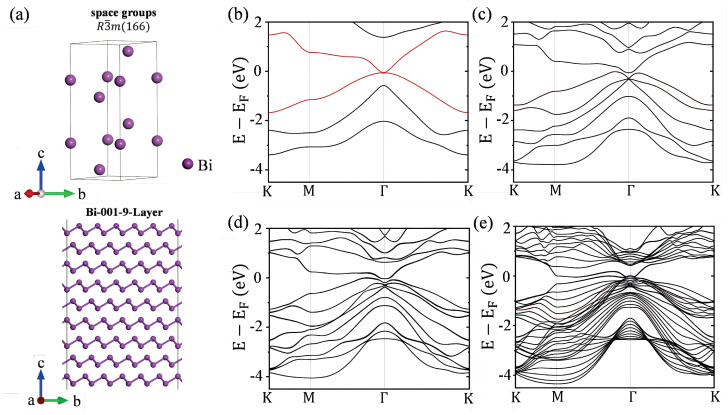 Figure 1
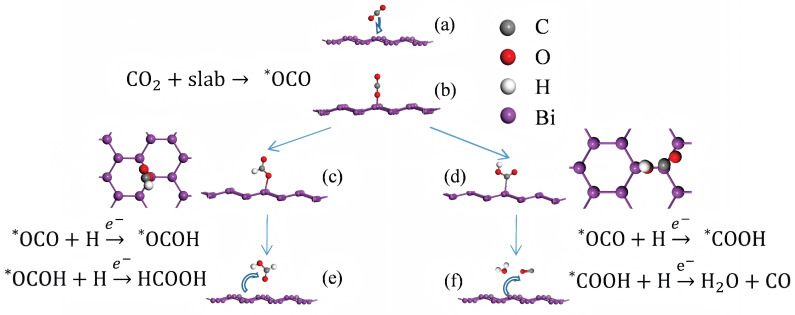 Figure 2
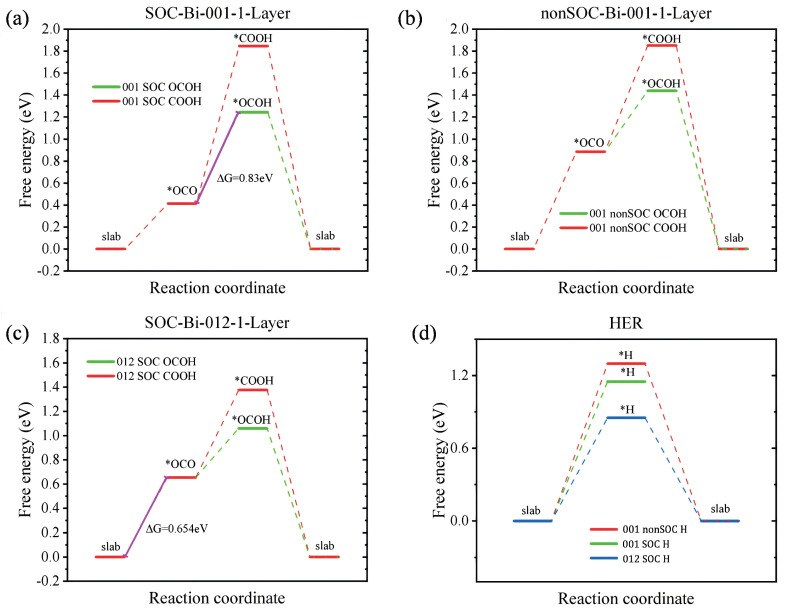 Figure 3
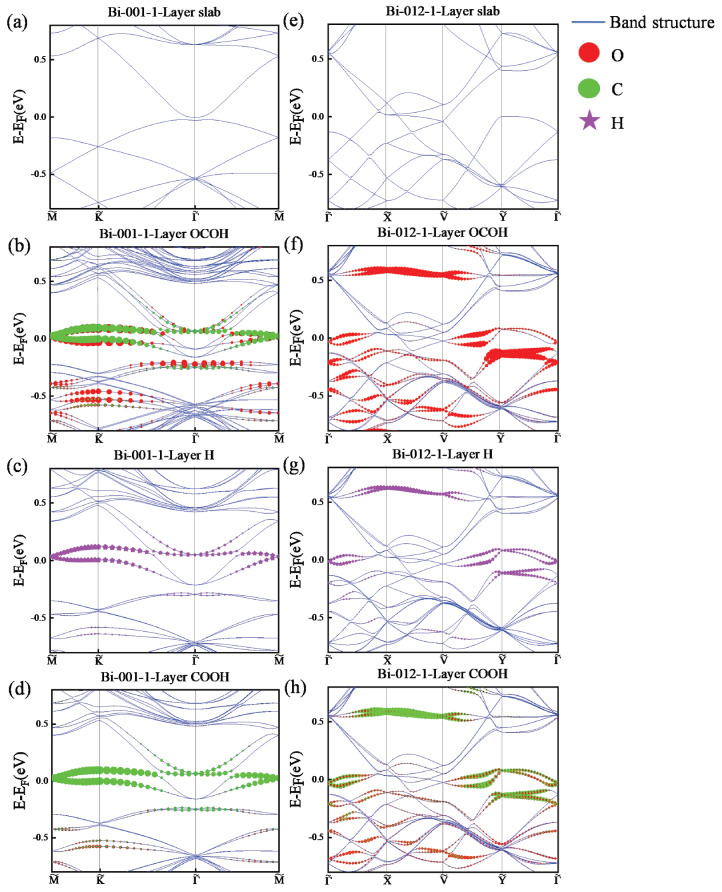 Figure 4
Peer Reviews
No public reviews on file for this paper yet. If you reviewed it on a platform where reviews are public (OpenReview, ICLR, NeurIPS, ICML), you can paste yours below so the community can read it here.
Videos
No videos yet. Explain this paper in a talk, walkthrough, or lecture? Add one.
Taxonomy
TopicsCO2 Reduction Techniques and Catalysts · Advanced Thermoelectric Materials and Devices · Thermal Expansion and Ionic Conductivity