Minimally Invasive Bipolar Technique for Scoliosis in Rett Syndrome—Results and Complications in a Series of 22 Cases
Alice Del Sal, Edouard Haumont, Manon Pigeolet, Mathilde Gaume, Guillaume Riouallon, Nadia Bahi Buisson, Agnes Linglart, Isabelle Desguerre, Stephanie Pannier, Lotfi Miladi

TL;DR
A minimally invasive surgery for scoliosis in Rett syndrome patients showed effective deformity correction and weight gain with fewer complications than traditional methods.
Contribution
A bipolar fusionless surgical technique is introduced for treating scoliosis in Rett syndrome with long-term follow-up data.
Findings
The Cobb angle was reduced by 65% postoperatively and maintained at follow-up.
None of the patients required spinal fusion at skeletal maturity.
A 32% surgical complication rate was observed, lower than traditional arthrodesis methods.
Abstract
Background: This is a retrospective study. The aim of this study is to report the results of bipolar minimally invasive fusionless surgery for scoliosis in Rett syndrome with a minimum follow-up of 2 years. Conservative treatment is often not effective in Rett syndrome scoliosis. Posterior spinal fusion (PSF) has a high rate of complications; early surgery using traditional growing rods (TGRs) controls the deformity while preserving spinal and thoracic growth before arthrodesis. The need for surgical rod lengthening still has a high rate of complications and costs. Methods: We recorded the clinical and radiological outcomes of 22 consecutive patients with Rett scoliosis who underwent bipolar fusionless surgery with a mean follow-up of 56 months (24–99). We performed a bilateral construct with rods (with or without a self-sliding device) anchored proximally with four hook claws distally…
Genes, proteins, chemicals, diseases, species, mutations and cell lines named across the full text — each resolved to its canonical identifier and authoritative record.
Click any figure to enlarge with its caption.
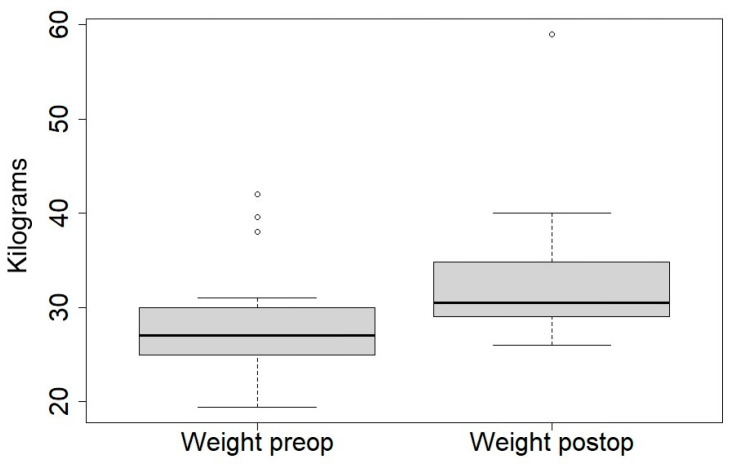 Figure 1
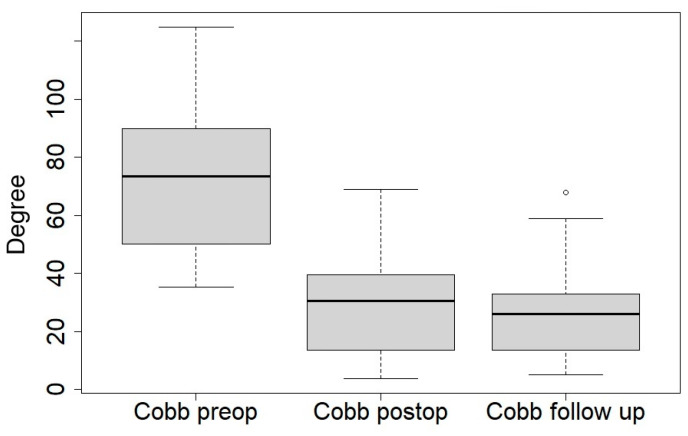 Figure 2
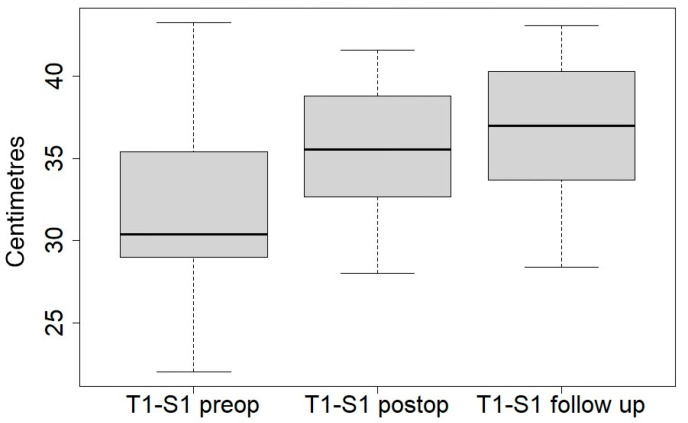 Figure 3
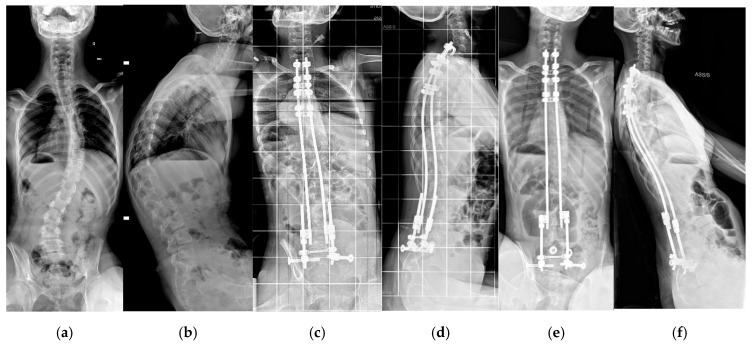 Figure 4
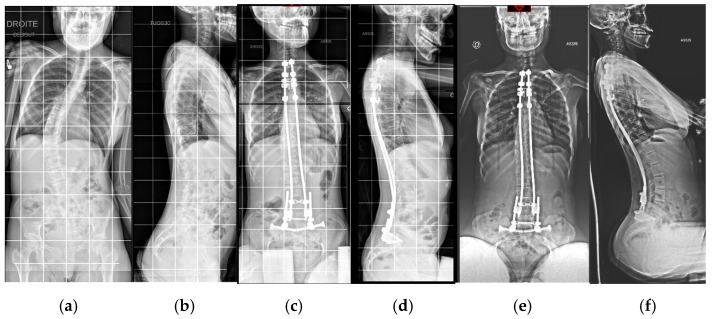 Figure 5
Peer Reviews
No public reviews on file for this paper yet. If you reviewed it on a platform where reviews are public (OpenReview, ICLR, NeurIPS, ICML), you can paste yours below so the community can read it here.
Videos
No videos yet. Explain this paper in a talk, walkthrough, or lecture? Add one.
Taxonomy
TopicsGenetics and Neurodevelopmental Disorders · Family and Disability Support Research · Congenital Anomalies and Fetal Surgery