Left Ventricular Twist and Circumferential Strain from MRI Tagging Predict Early Cardiovascular Disease in Duchenne Muscular Dystrophy
Zhan-Qiu Liu, Patrick Magrath, Nyasha G. Maforo, Michael Loecher, Holden H. Wu, Ashley Prosper, Pierangelo Renella, Nancy Halnon, Daniel B. Ennis

TL;DR
This study shows that MRI-based measurements of heart function can detect early signs of heart disease in boys with Duchenne Muscular Dystrophy before traditional indicators show problems.
Contribution
The study introduces new MRI-derived biomarkers for early detection of heart disease in DMD patients before LVEF or LGE abnormalities occur.
Findings
Peak LV twist was significantly impaired in LGE(−) DMD patients compared to healthy volunteers.
LV biomarkers like twist and Ecc outperformed traditional metrics in distinguishing DMD patients from healthy controls.
Age correlated with worsening heart function in LGE(+) DMD patients but not in LGE(−) patients.
Abstract
Background/Objectives: Duchenne Muscular Dystrophy (DMD) is a prevalent fatal genetic disorder, and heart failure is the leading cause of mortality. Peak left ventricular (LV) circumferential strain (Ecc), twist, and circumferential-longitudinal shear angle (θCL) are promising biomarkers for the improved and early diagnosis of incipient heart failure. Our goals were as follows: 1) to characterize a spectrum of functional and rotational LV biomarkers in boys with DMD compared with healthy age-matched controls; and 2) to identify LV biomarkers of early cardiomyopathy in the absence of abnormal LVEF or LGE. Methods: Boys with DMD (N = 43) and age-matched healthy volunteers (N = 16) were prospectively enrolled and underwent a 3T CMR exam after obtaining informed consent. Breath-held MRI tagging was used to estimate left ventricular Ecc at the mid-ventricular level as well as the twist,…
Genes, proteins, chemicals, diseases, species, mutations and cell lines named across the full text — each resolved to its canonical identifier and authoritative record.
Click any figure to enlarge with its caption.
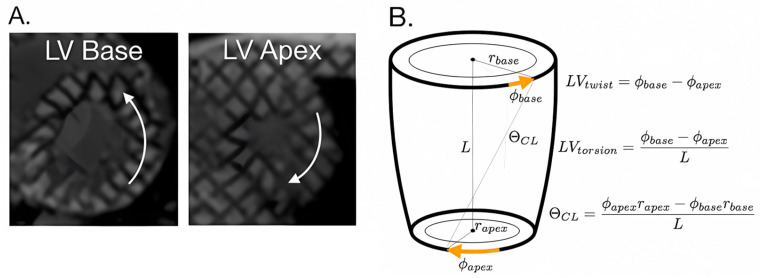 Figure 1
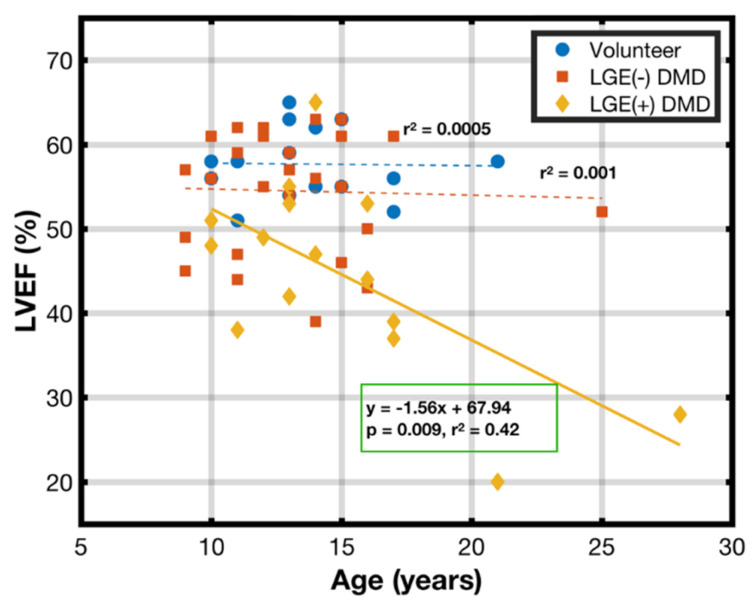 Figure 2
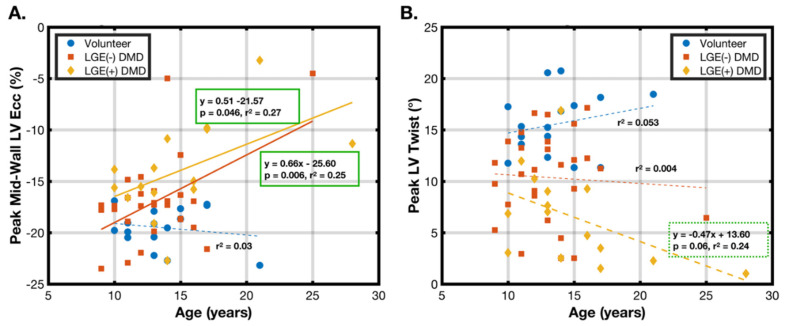 Figure 3
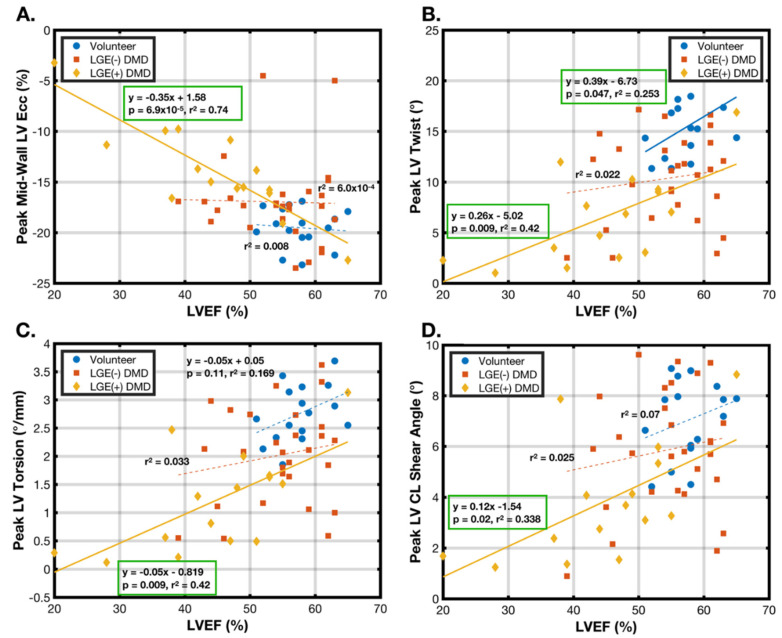 Figure 4
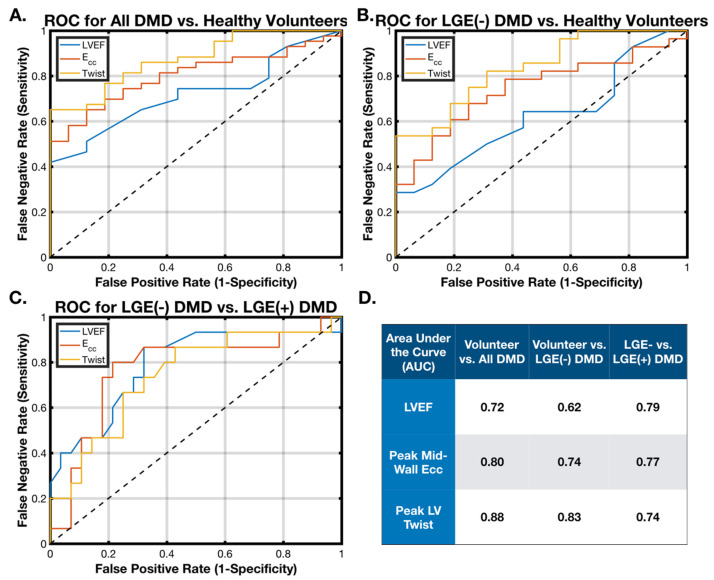 Figure 5
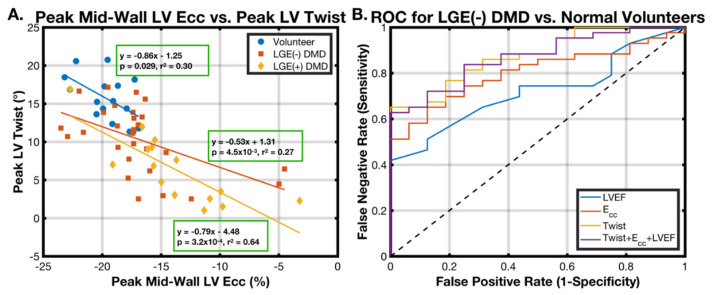 Figure 6
Peer Reviews
No public reviews on file for this paper yet. If you reviewed it on a platform where reviews are public (OpenReview, ICLR, NeurIPS, ICML), you can paste yours below so the community can read it here.
Videos
No videos yet. Explain this paper in a talk, walkthrough, or lecture? Add one.
Taxonomy
TopicsCardiomyopathy and Myosin Studies · Cardiovascular Function and Risk Factors · Cardiovascular Effects of Exercise