Characterization of Syphilitic Chorioretinitis as a White Dot Syndrome with Multimodal Imaging: Case Series
Robert J. Contento, Neha Gupta, Mark P. Breazzano

TL;DR
This study uses advanced imaging to show that syphilitic chorioretinitis can be classified as a white dot syndrome, aiding in its diagnosis and treatment monitoring.
Contribution
The study classifies syphilitic chorioretinitis as a white dot syndrome using multimodal imaging, particularly ultra-widefield fundus autofluorescence.
Findings
UWFAF revealed hyperautofluorescent white dots and spots in all five eyes with syphilitic chorioretinitis.
Hyperautofluorescence resolved after treatment with intravenous penicillin.
Classic placoid lesions were not observed in two of the five eyes.
Abstract
Background/Objectives: To investigate the role of multimodal imaging, including ultra-widefield fundus autofluorescence (UWFAF), in diagnosing and monitoring syphilitic chorioretinitis, focusing on the detection of placoid appearance and white dots/spots. We aim to classify syphilitic chorioretinitis as a white dot syndrome, given evident features in the context of recent case reports and previously unavailable multimodal imaging. Methods: This single-institution study was conducted as a consecutive, observational case series. Five eyes from three patients were diagnosed with syphilitic chorioretinitis using multimodal imaging, including ultra-widefield pseudocolor fundus photography and intravenous fluorescein angiography, UWFAF, and swept-source optical coherence tomography, upon laboratory results. Results: In all five eyes with serologically confirmed syphilitic chorioretinitis,…
Genes, proteins, chemicals, diseases, species, mutations and cell lines named across the full text — each resolved to its canonical identifier and authoritative record.
Click any figure to enlarge with its caption.
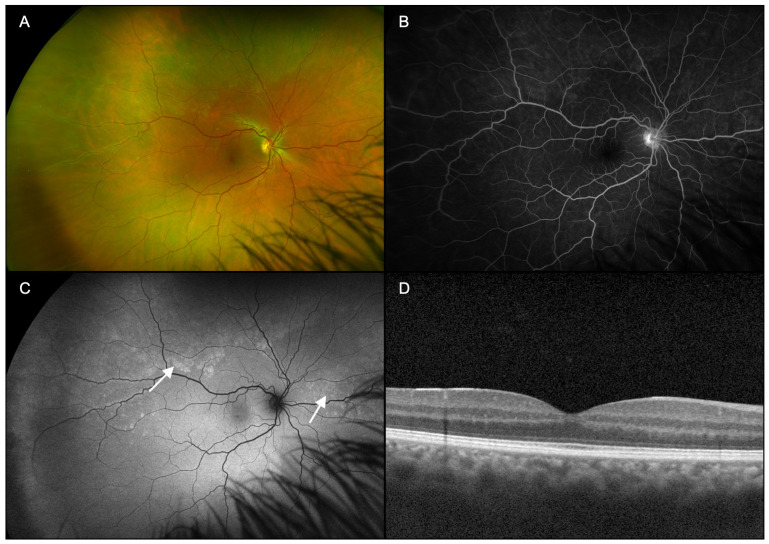 Figure 1
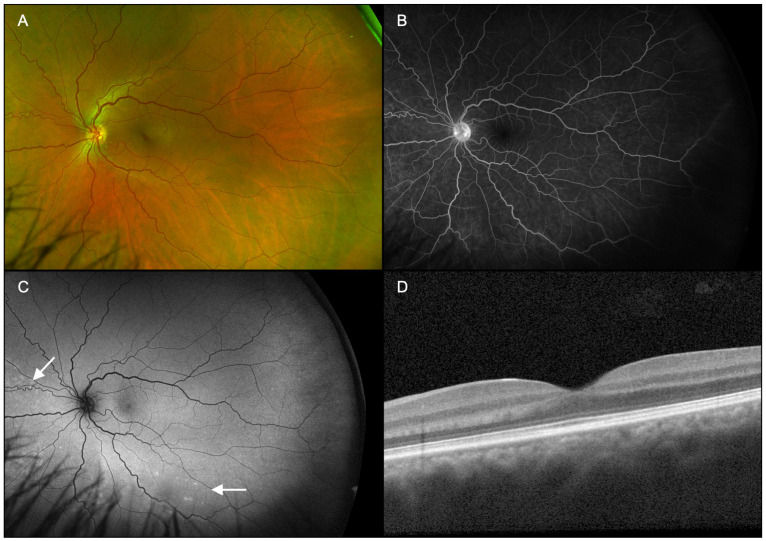 Figure 2
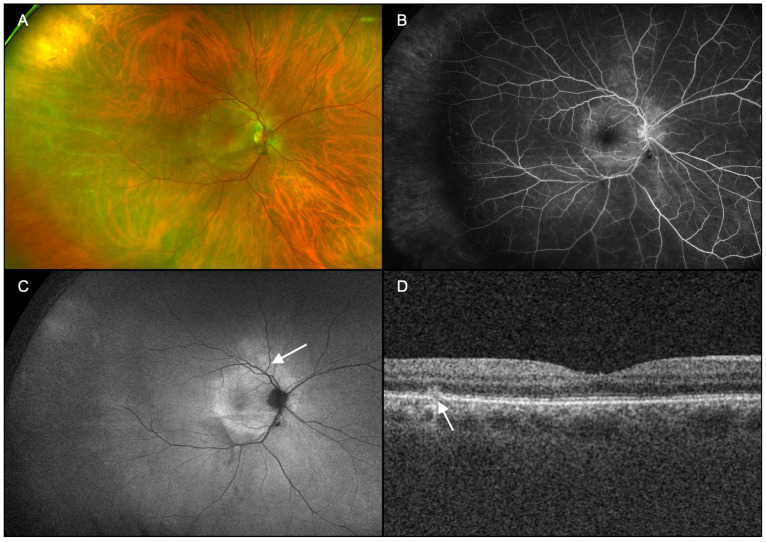 Figure 3
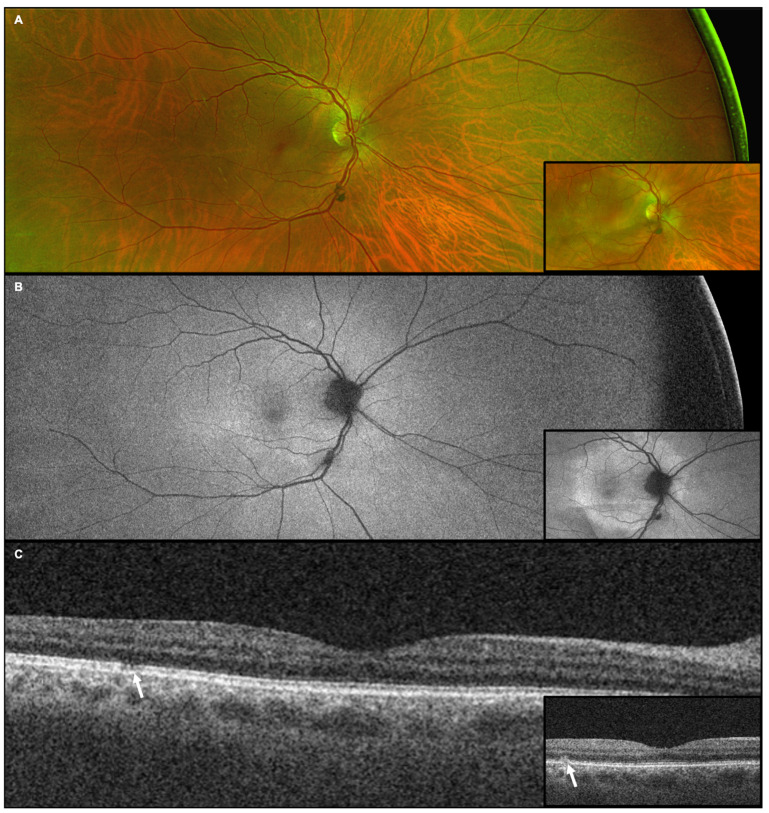 Figure 4
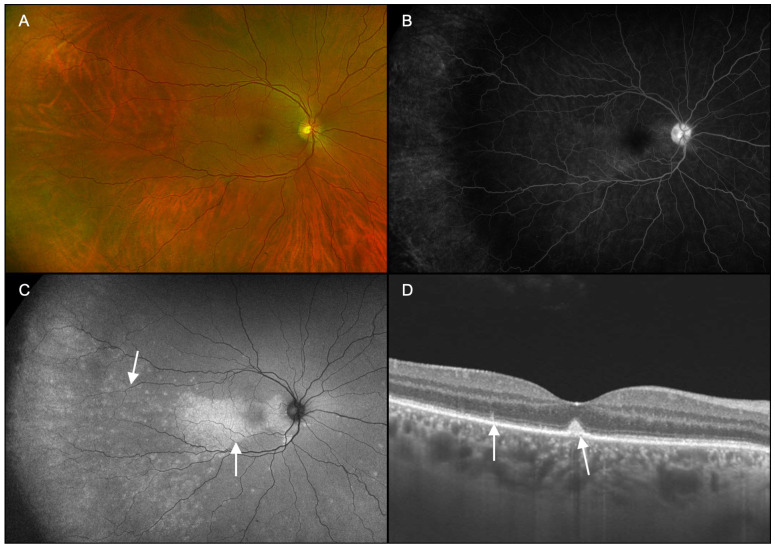 Figure 5
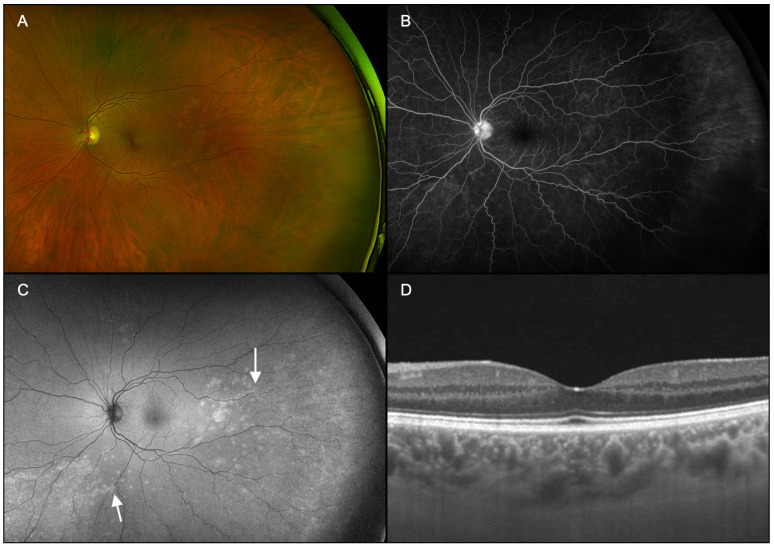 Figure 6
Peer Reviews
No public reviews on file for this paper yet. If you reviewed it on a platform where reviews are public (OpenReview, ICLR, NeurIPS, ICML), you can paste yours below so the community can read it here.
Videos
No videos yet. Explain this paper in a talk, walkthrough, or lecture? Add one.
Taxonomy
TopicsSyphilis Diagnosis and Treatment · Ocular Diseases and Behçet’s Syndrome · Reproductive tract infections research