A Single-Center Sham and Active-Controlled Double-Blind Randomized Crossover Trial of the Magnetic Levator Prosthesis for Severe Blepharoptosis
Kevin E. Houston, Shrinivas Pundlik, Prerana Shivshanker, Alex R. Bowers, Sarah LaRosa, Mara Robinson, James Chodosh, Lynn Brandes, Patrick Lee, Eleftherios I. Paschalis

TL;DR
A clinical trial found that a magnetic eyelid prosthesis improved eye opening more than a tape or a placebo in patients with severe eyelid drooping.
Contribution
This is the first randomized controlled clinical trial evaluating the magnetic levator prosthesis for severe blepharoptosis.
Findings
The magnetic levator prosthesis improved eye opening more than sham and KT tape.
MLP improved spontaneous blinks significantly better than KT tape.
MLP had fewer incomplete blinks and was perceived as beneficial by patients.
Abstract
To evaluate the safety and efficacy of the magnetic levator prosthesis (MLP) relative to active control with KT Tape, an elastic therapeutic tape used clinically to mechanically open the lids, and to a sham MLP worn in-office only. This was a double-masked, randomized crossover single-center trial of patients with severe unilateral or bilateral paralytic blepharoptosis defined as occlusion of the visual axis without frontalis recruitment. Patients were allocated to MLP or tape first and then crossed over after 2 weeks of use and a 2-week washout. Primary outcome was maximum eyelid closure on spontaneous blink measured in video frames with ImageJ. Primary patient-reported outcome was the Glasgow Benefit Inventory and, secondarily, comparison of the amount of eye opening and proportions of complete volitional blinks. Of 16 patients randomized, 15 completed the crossover. MLP and tape…
Genes, proteins, chemicals, diseases, species, mutations and cell lines named across the full text — each resolved to its canonical identifier and authoritative record.
Click any figure to enlarge with its caption.
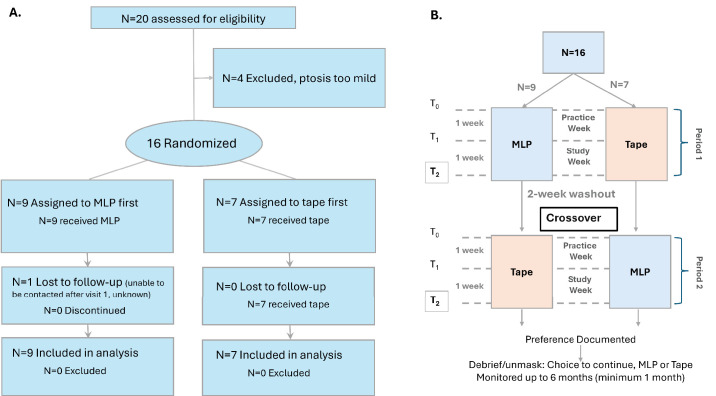 Figure 1
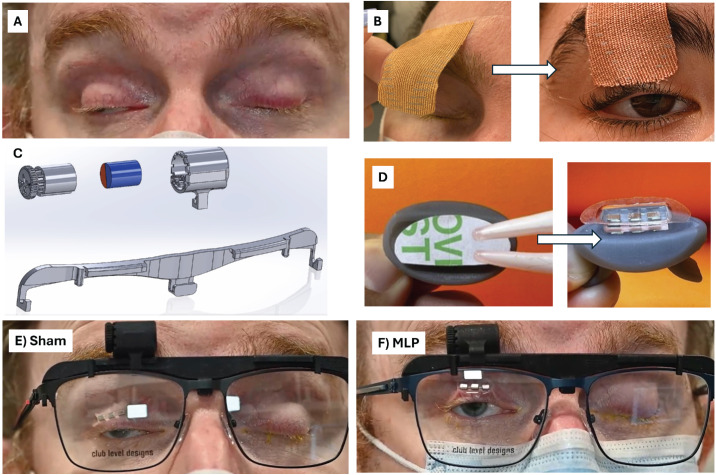 Figure 2
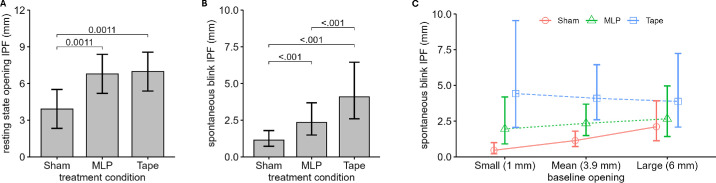 Figure 3
Peer Reviews
No public reviews on file for this paper yet. If you reviewed it on a platform where reviews are public (OpenReview, ICLR, NeurIPS, ICML), you can paste yours below so the community can read it here.
Videos
No videos yet. Explain this paper in a talk, walkthrough, or lecture? Add one.
Taxonomy
TopicsBotulinum Toxin and Related Neurological Disorders · Facial Rejuvenation and Surgery Techniques · Ophthalmology and Eye Disorders