A Novel Method to Represent the Three-Dimensional Inclination of the Distal Radius Joint Surface
Akira Ikumi, Reo Asai, Yusuke Eda, Tooru Uchida, Sho Kohyama, Takeshi Ogawa, Yuichi Yoshii

TL;DR
This study introduces a 3D method to measure the distal radius joint surface, revealing gender differences and offering a new approach for treating wrist fractures.
Contribution
A novel 3D method to quantify the inclination of the distal radius joint surface, including rotational alignment.
Findings
Significant gender differences were found in the 3D vector components and angles of the distal radius joint surface.
The new 3D method showed strong correlations with traditional 2D parameters like palmar tilt and radial inclination.
The method enables assessment of rotational alignment, which is not possible with conventional 2D techniques.
Abstract
Objectives: This study aims to define three-dimensional (3D) parameters for the inclination of the distal radius joint surface. The goal is to develop standardized parameters for fracture reduction through comprehensive 3D evaluations of the joint surfaces. Methods: We analyzed 112 CT scans of unaffected wrists (56 males and 56 females) to construct 3D models of the distal radius. Using 3D coordinates, the normal vectors and angles were calculated based on three reference points on the distal radius joint surface. These normal vector components were then converted into unit vector components A, B, and C for the x, y, and z axes, respectively. Additionally, the angles of these unit vectors were assessed in the xy, yz, and xz planes. The 3D measurements were compared between males and females and against traditional two-dimensional (2D) parameters such as palmar tilt and radial…
Genes, proteins, chemicals, diseases, species, mutations and cell lines named across the full text — each resolved to its canonical identifier and authoritative record.
Click any figure to enlarge with its caption.
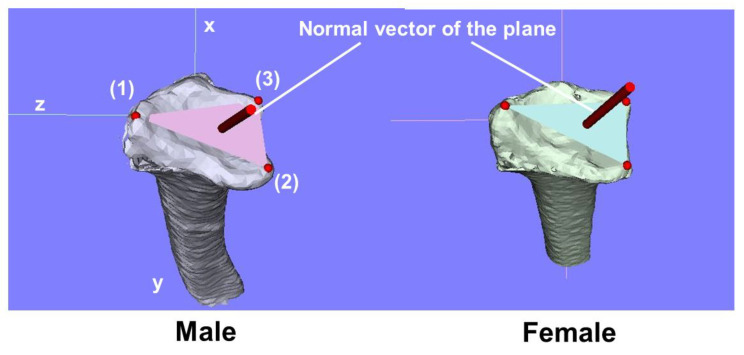 Figure 1
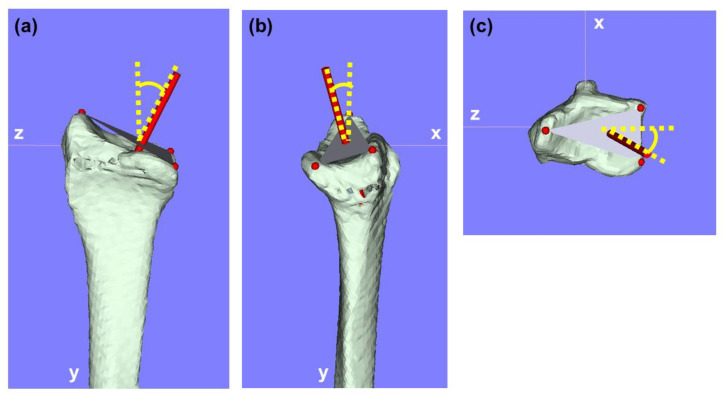 Figure 2
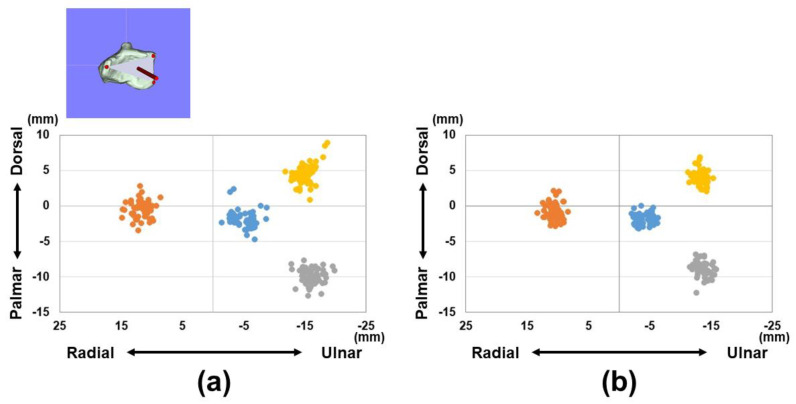 Figure 3
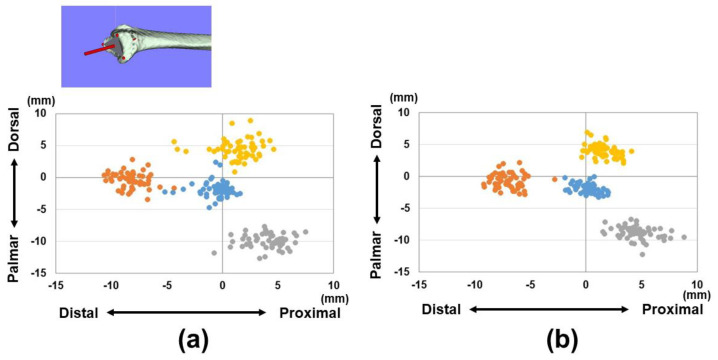 Figure 4
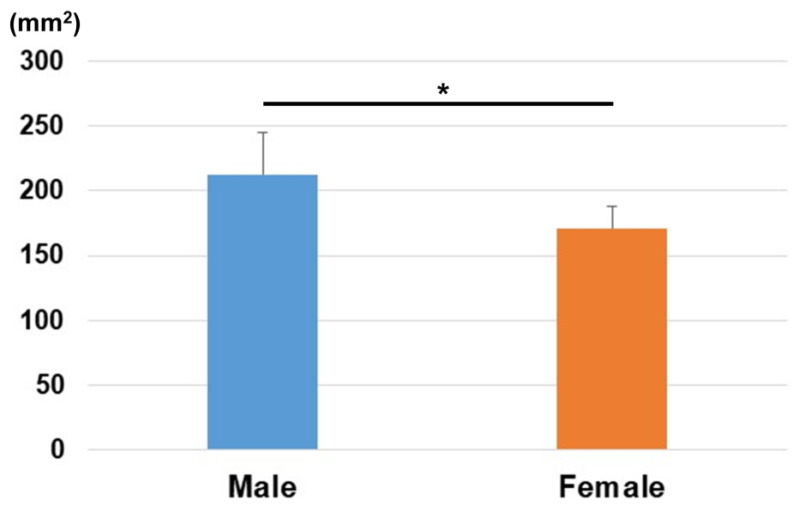 Figure 5
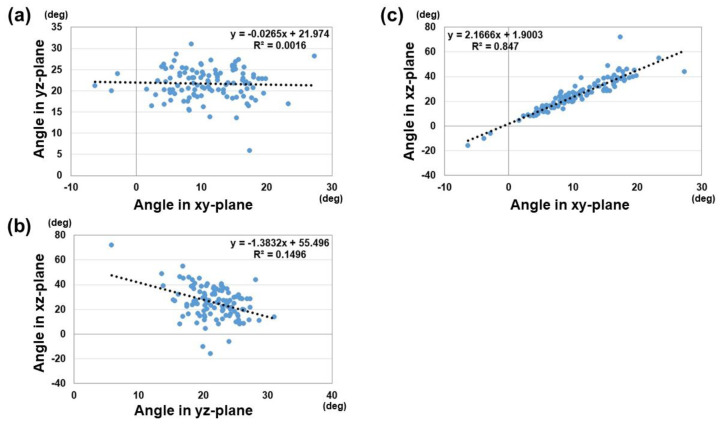 Figure 6
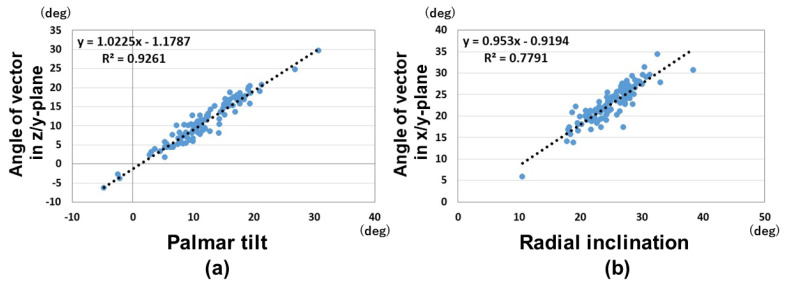 Figure 7
Peer Reviews
No public reviews on file for this paper yet. If you reviewed it on a platform where reviews are public (OpenReview, ICLR, NeurIPS, ICML), you can paste yours below so the community can read it here.
Videos
No videos yet. Explain this paper in a talk, walkthrough, or lecture? Add one.
Taxonomy
TopicsOrthopedic Surgery and Rehabilitation · Bone fractures and treatments · Medical Malpractice and Liability Issues