Study on the Status of Gamete Freezing and Reproductive Health of Korean Adults Aged 19–49 Years
Jiyoung Song, Eunwon Lee

TL;DR
This study examines gamete freezing and reproductive health among Korean adults aged 19–49 using national survey data.
Contribution
It provides the first national-level data on gamete freezing prevalence and associated factors in South Korea.
Findings
Only 0.7% of 14,040 participants had frozen their gametes, with women making up 61.4% of this group.
Most gamete-freezing participants were highly educated, urban-dwelling, and married, with a high infertility perception among women.
29.7% of gamete-freezing participants reported genital infections, highlighting potential reproductive health concerns.
Abstract
Background: With advances in biomedical technology and social changes, such as a high rate of late marriages, the interest in gamete freezing is increasing. Therefore, this study aimed to investigate the status of gamete freezing and reproductive health of adult Koreans aged 19–49 years using data from the 2021 National Family and Fertility survey. Method: The SPSS program was used to analyze the data using descriptive statistics, Fisher’s Exact p-value, and the t-test. Results: Of the 14,040 study subjects, 101 (0.7%) had frozen their gametes. The average age of this group was 38.1 years, 61.4% were women and 38.6% were men. In addition, 83.2% of the group had a university degree or higher, 85.1% lived in urban areas, 94.1% were married, and 66.3% were economically active. The participant-reported incidence of genital infections in this group was 29.7%. The obstetric history revealed…
Genes, proteins, chemicals, diseases, species, mutations and cell lines named across the full text — each resolved to its canonical identifier and authoritative record.
Click any figure to enlarge with its caption.
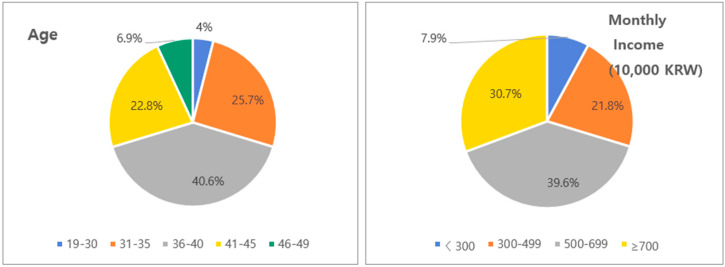 Figure 1
Peer Reviews
No public reviews on file for this paper yet. If you reviewed it on a platform where reviews are public (OpenReview, ICLR, NeurIPS, ICML), you can paste yours below so the community can read it here.
Videos
No videos yet. Explain this paper in a talk, walkthrough, or lecture? Add one.
Taxonomy
TopicsHealth and Wellbeing Research · Reproductive Health and Technologies · Diverse Approaches in Healthcare and Education Studies