A Closed Reduction of Cervical Spine Subluxation in an Arabian Foal with an External Neck Stabilizer
Natalia Domańska-Kruppa, Elżbieta Stefanik, Małgorzata Wierzbicka, André Kleinpeter

TL;DR
A two-day-old Arabian foal with a cervical spine subluxation was successfully treated with a non-surgical external neck stabilizer, leading to full recovery.
Contribution
This case report presents a successful nonsurgical treatment of cervical spine subluxation in a foal, a rare and underreported condition in veterinary literature.
Findings
The foal showed significant improvement in ataxia symptoms after closed reduction and neck stabilization.
Radiographs confirmed successful realignment of the C2/C3 vertebrae following treatment.
The foal was discharged without neurological deficits after 16 days of stabilization.
Abstract
Foals and young horses that sustain cervical spine injuries as a result of high-speed accidents are prone to developing neurological signs that range from mild to severe or even result in sudden death. This case report describes a successful nonsurgical reduction of subluxation between the second and third cervical vertebrae in a foal and its short-term outcome. The foal was discharged home without any neurological deficits after treatment. Cervical spine injuries that impact young horses and foals can result in mild to severe neurological signs or even result in sudden death. There are only a few reports on conservative treatment options for this condition in the scientific literature. If the condition is left untreated, it can lead to the development of degenerative joint disease, resulting in chronic neurological symptoms and discomfort. We present the case of a two-day-old Arabian…
Genes, proteins, chemicals, diseases, species, mutations and cell lines named across the full text — each resolved to its canonical identifier and authoritative record.
Click any figure to enlarge with its caption.
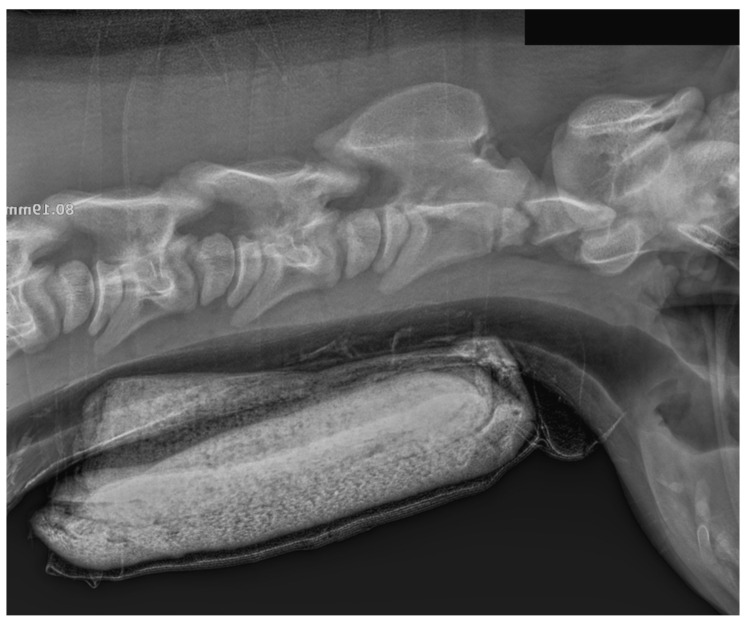 Figure 3
Peer Reviews
No public reviews on file for this paper yet. If you reviewed it on a platform where reviews are public (OpenReview, ICLR, NeurIPS, ICML), you can paste yours below so the community can read it here.
Videos
No videos yet. Explain this paper in a talk, walkthrough, or lecture? Add one.
Taxonomy
TopicsVeterinary Equine Medical Research · Veterinary Orthopedics and Neurology · Spine and Intervertebral Disc Pathology
1. Introduction
Cervical spine injuries that cause spinal cord injury in young horses and foals can cause neurological signs or even sudden death [1,2]. These injuries include subluxations or luxations, fractures of the cervical vertebrae and separation of the growth plates, and sometimes there is no overt bony injury at all [3]. Subluxation is a condition in which the joint surfaces are displaced relative to each other without completely losing contact with each other [4]. Subluxation can be congenital or acquired. Subluxation of the atlantoaxial joint has been described as being a result of a hereditary malformation of the occipitoatlantoaxial joints in Arabian foals. Acquired incomplete dislocations of the cervical spine are rare and are most often the consequence of trauma [5].
2. Materials and Methods
Case Presentation
A two-day-old Arabian foal sustained a severe neck injury after its dam was startled in the stall and ran into the foal. The foal subsequently fell and rolled multiple times while trying to stand back up. Immediately after the accident, the owner described disorientation and an unsteady gait, but the foal was able to nurse on its own. The following day, the owner described swelling on the right side of the neck and pain when touching the swollen area. Because the foal could suckle on its own, a decision was made to observe it temporarily. On the fourth day after the injury, the clinical signs of ataxia became significantly more severe and the neck assumed an abnormal, stiff hyperextended position with the head stretched forward (Figure 1).
The referring veterinarian performed a radiological examination in the stable. Latero-lateral and dorsoventral oblique views (Figure 2) of the neck were obtained. The latero-lateral view showed significant subluxation between C2 and C3 and surgical consultation was recommended.
The owners took the foal to the equine clinic on the seventh day of life. At admission, the foal’s clinical examination parameters were within physiological ranges and the foal was calm and attentive during the examination. The heart rate was 66 beats/min, the respiratory rate was 36 breaths/min, the body temperature was 38.1 °C, and the mucous membranes were pink. Blood tests (cell blood count and biochemistry) did not reveal any abnormalities. Significant proprioceptive ataxia of the fore and hindlimbs were evident during the walk, especially in small circles. The degree of ataxia was graded as 2 out of 6 according to the Modified Mayhew Ataxia Scale [1]. Regardless of the direction of the circle, the severity of ataxia remained the same. During the trot, the foal’s gait was very stiff and attempts to move to a faster gait were unsuccessful. During the whole examination, the foal could not lift its head above the shoulder joint and the neck muscles were tensed. No pathological changes were observed in cranial nerves.
Neck tenderness was slightly increased on both sides; on the right side at the C2/C3 level, painful enlargement of soft tissues was palpable. Based on the examination results, a decision was made to administer anti-inflammatory and analgesic treatment. Meloxicam (Rheumocam 15 mg/mL, Chanelle Pharmaceuticals Manufacturing Ltd., Galway, Republic of Ireland) was administered orally at a dose of 0.6 mg/kg b.w. for 14 days, and dimethyl sulfoxide (DMSO) was administered intravenously three times every 48 h at 1 g/kg b.w.
Due to the high plasticity of tissues in a several-day-old foal, the veterinary surgeon made a decision regarding conservative treatment and the closed repositioning of the dislocation under general injection anesthesia. The foal was premedicated with xylazine 0.5 mg/kg b.w. i.v. (Xylapan 20 mg/mL, Vetoquinol Biowet, Gorzów Wielkopolski, Poland) and flunixine meglumine 1.1 mg/kg b.w. i.v. (Vetaflunix 50 mg/mL, VET-AGRO, Lublin, Poland) and injection anesthesia was induced with diazepam 0.05 mg/kg b.w. i.v. (Solupam 5 mg/mL, Dechra, Northwich, UK). The foal was positioned in left lateral recymbency and correction of the C3 subluxation was performed manually. With the neck in maximum extension, both hands were placed on the transverse processes on each side of C3. Using a maximum force, the C3 was pushed ventrally and a series of latero-lateral radiographs were taken until a position was found in which all cervical vertebrae were in a physiological alignment. While maintaining this head and neck position, a fiberglass semicircular gutter was created to stabilize the neck in the desired position (Figure 3).
Radiograph of the neck in the latero-lateral projection. The radiograph was taken immediately after manual repositioning of the neck and stabilization with a semicircular fiberglass gutter on the ventral surface of the neck. Visible cervical vertebrae are in a physiological position. The fiberglass gutter was fixed to the neck using a cohesive bandage for durable retention of synthetic splints (Haftelast, Lohmann and Rauscher, Neuwied, Germany) (Figure 4).
The anesthesia and assisted recovery was completed without any complications. The foal could move freely and suckle from the mare in the applied stabilizer without any problems. The ataxia began to improve around day 12 post manipulation, and the fiberglass stabilizer was removed after 16 days post manipulation. After removing the external fixator, radiographs were taken to confirm the correct positioning of the cervical vertebrae (Figure 5).
The C2/C3 subluxation was no longer visible radiologically. After removing the fixator, the foal could assume a physiological neck posture (Figure 6).
After a week of observation in the hospital, the foal was discharged home. Follow-up videos from the owner were obtained 2 months after clinic discharge showing the foal moving freely without any neurological deficits.
3. Discussion
The described case of closed reduction in a cervical spine subluxation is relatively rare, and, with appropriate management, it can be treated with good results. Dislocations or fractures of vertebrae are an uncommon condition in horses, but the most common type of spine injury is damage to the cervical spine [1]. Foals usually suffer from injuries in the cervical spine. These can include subluxations, luxations, fractures of the cervical vertebrae and separation of the growth plates within the cervical vertebrae [3]. Subluxation can cause local compression of the spinal cord. In the further course of the disease, depending on the stability and position of the head and neck, permanent compression of the spinal cord can occur. Spinal cord compression can result from direct vertebrae damage or a post-traumatic hematoma within the spinal cord canal [2]. Depending on the location, extent and degree, luxation or subluxation results in varying degrees of spinal cord damage [1,6,7]. Clinical signs include abnormal neck flexion, hyperextension of the neck, tenderness on palpation and diffuse swelling of the injured area, mild or severe motor incoordination, recumbency, and even sudden death [1,8]. The factors that have the most significant impact on the clinical signs are the location and degree of spinal cord compression, which are of great importance for the degree of ataxia and, thus, the prognosis [9,10]. In untreated, chronic cases, due to the instability, degenerative joint disease develops, characterized by varying degrees of pain and neurological symptoms [11,12]. The etiology of cervical spine injuries is most often traumatic. These may include collisions with hard objects with a flexed neck, kicks, hyperflexion or excessive hyperextension of the neck during a fall after tripping, as well as collisions with another horse in a paddock [6,7]. In order to localize the site of spinal cord compression and determine whether it was caused by a fracture or displacement of the vertebra, various imaging techniques can be used, such as radiography, myelography, computed tomography or scintigraphy [8]. Fractures or subluxations of the cervical vertebrae can be treated both surgically and conservatively. The choice of treatment method depends on the degree of movement incoordination, stability of the fragments at the site of injury, and prognosis. In cases of severe discomfort and inability to move freely and safely, the animal should be euthanized. In acute post-traumatic cases, dexamethasone, non-steroidal anti-inflammatory drugs and/or DMSO are primarily used to reduce the swelling inside the spinal canal and limit the inflammatory reaction. A manual vertebral reposition is only possible in the case of relatively early-stage injuries with no permanent scarring of the surrounding tissues. Manual reposition was performed as Licka described [13]. However, as the author herself noted, the lack of head and neck stabilization after the procedure led to re-subluxation and had a fatal outcome as a consequence. In a similar case described a few years later by the same author, an external neck fixator was used which allowed the re-subluxation and its negative effects to be avoided [11]. Therefore, repositioning should be performed under X-ray control, and, after its completion, appropriate temporary external stabilization by a synthetic cast should be applied. In the absence of stabilization, re-subluxation or complete dislocation may occur, which may result in worsening neurological symptoms and even death [13]. In the case of foals, performing manual repositioning is relatively simple. Compared to older horses, it does not require extra external force, where an additional source of force may be necessary using an electrically powered hand pallet truck, as described by Gerlach [14]. If clinical signs do not improve despite the implementation of the described treatment, or scarring is observed in the surrounding soft tissues, surgical treatment options should be considered [15]. The goal of surgical therapy is to stabilize the lumen of the vertebral canal, which can be achieved by performing an internal fixation and intervertebral body fusion. However, challenges that remain with surgical vertebral interbody fusion surgeries include the invasiveness, costs and the lack of ability to predict the degree of improvement of neurological status, as well as future horse use [15]. In cases of long-lasting, severe motor ataxia, the prognosis is poor regardless of the method of therapy [1,16].
4. Conclusions
Manual repositioning of the cervical vertebrae in a case of subluxation is a less invasive alternative when surgical stabilization is not required. Stabilizing the foal’s neck in the repositioned posture with a ventral fiberglass stabilizer has effectively healed subluxation within the cervical spine.
The reference list from the paper itself. Each links out to its DOI / PubMed record.
- 1Pinchbeck G. Murphy D. Cervical Vertebral Fracture in Three Foals Equine Vet. Educ.20011381210.1111/j.2042-3292.2001.tb 01874.x · doi ↗
- 2Krunajevic T. Bergsten G. Luxation of The Cervical Spinal Column as a Cause of Wobbles in a Foal Acta Vet. Scand.1968911212510.1186/BF 035478775750319 PMC 8753679 · doi ↗ · pubmed ↗
- 3Cordula Gather T. Weinberger T. Nolting B. Halswirbelfraktur Bei Einem Pferd—Fallbericht Pferdeheilkund 200016487494
- 4Barnes H.K. Crosby K. Talbot A. Baldwin C.M. Atlanto-Occipital Subluxation in an Adult Thoroughbred Gelding Equine Vet. Educ.20233565666110.1111/eve.13804 · doi ↗
- 5Watson A.G. Mayhew I.G. Familial Congenital Occipitoatlantoaxial Malformation (OAAM) in the Arabian Horse Spine 19861133433910.1097/00007632-198605000-000073750063 · doi ↗ · pubmed ↗
- 6Nixon A.J. Fractures of the Vertebrae Equine Fracture Repair Saunders Philadelphia, PA, USA 1996299312
- 7Robertson J.L. Samii V. Traumatic Disorder of the Spinal Column Equine Surgery Auer J.A. Stick J.A. Kümmerle J.M. Prange T. Saunders Philadelphia, PA, USA 2005677683
- 8Dyson S.J. The Cervical Spine and Soft Tissue of the Neck Diagnosis and Management of Lameness in the Horse Ross M.W. Dyson S.J. Elsevier St. Louis, MI, USA 2010606616