White coat color in Vietnamese native buffalo is attributed to the LINE1 insertion in ASIP
Thuy Thanh Nguyen, Quan Viet Le, Van Huu Nguyen, Hai Thanh Duong, Takehito Tsuji

TL;DR
Vietnamese native buffaloes with white coat color have a genetic mutation in the ASIP gene, which may help them cope better with heat stress.
Contribution
The study identifies a LINE1 insertion in the ASIP gene as the cause of white coat color in Vietnamese native buffalo.
Findings
LINE1 insertion in ASIP is found exclusively in white Vietnamese buffalo.
ASIP expression is significantly higher in white buffalo hair follicles.
No TYR gene variants are associated with the white coat color.
Abstract
The coat color of the swamp buffalo is commonly dark gray, while the white coat color variant, which may have potential heat stress advantages, is also present in some Asian countries, including Vietnam. This study analyzed the most likely candidate genes, ASIP and TYR, responsible for the white coat color of Vietnamese native buffaloes. We found that LINE1 insertion in ASIP, a mutation previously reported in white swamp buffalo from other Asian countries, was exclusively found in white Vietnamese buffalo. Moreover, significantly higher expression of ASIP was confirmed in the hair follicles of white buffalo. On the other hand, no variants associated with the white phenotype were found in TYR. These findings indicate that the LINE1 insertion in ASIP is responsible for the white coat color in Vietnamese native buffalo, and that provides a crucial step towards their utilization and…
Genes, proteins, chemicals, diseases, species, mutations and cell lines named across the full text — each resolved to its canonical identifier and authoritative record.
Click any figure to enlarge with its caption.
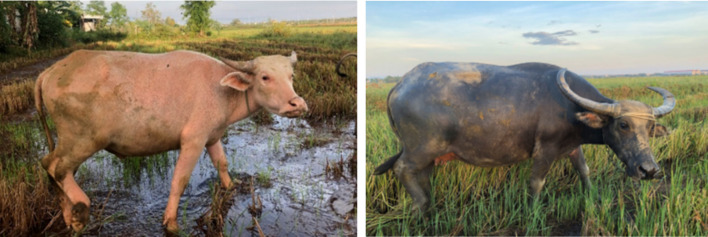 Figure 1
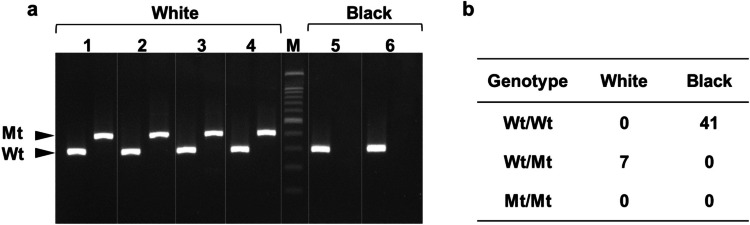 Figure 2
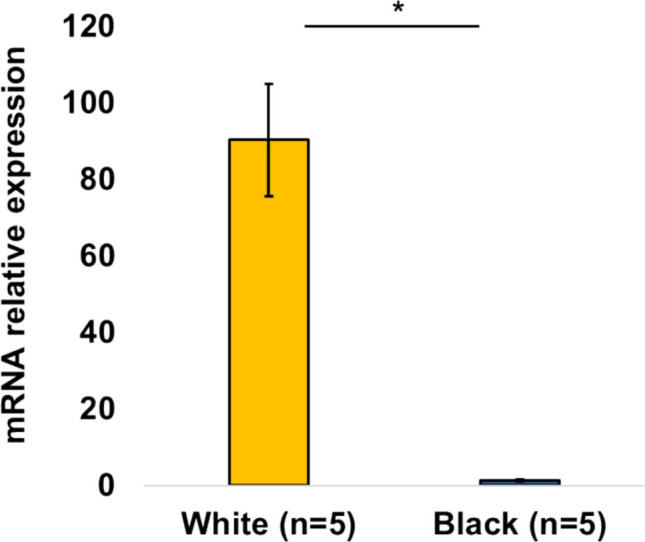 Figure 3
- —http://dx.doi.org/10.13039/501100012330Okayama University
Peer Reviews
No public reviews on file for this paper yet. If you reviewed it on a platform where reviews are public (OpenReview, ICLR, NeurIPS, ICML), you can paste yours below so the community can read it here.
Videos
No videos yet. Explain this paper in a talk, walkthrough, or lecture? Add one.
Taxonomy
Topicsmelanin and skin pigmentation · Genetic and phenotypic traits in livestock · Animal Genetics and Reproduction
Introduction
Water buffalo (Bubalus bubalis) are classified into two primary subtypes: river type and swamp type. Vietnamese native buffalo belong to the swamp type and are primarily used for draught power and meat production. Approximately 2.23 million buffaloes are raised in Vietnam in 2022, but their numbers are decreasing yearly mainly due to agricultural mechanization and urbanization. Despite this decline, buffalo meat consumption is higher than beef in Vietnam (Nguyen 2000), with production increasing by 147.7% between 2000 and 2021 (Vietnam General Statistics Office). Therefore, effectively utilizing Vietnamese native buffalo by enhancing their characteristics remains crucial.
The coat color of swamp buffalo is commonly dark gray, but a white coat color variant has also been reported in some countries, including Vietnam (Fig. 1). While buffaloes are adapted to hot and humid climates, their dark coat absorbs more solar radiation, potentially reducing productivity under heat stress (Marai and Haeeb 2010; Upadhyay et al. 2007). In contrast, lighter or white coats are known to mitigate these effects in cattle (Finch et al. 1984; Becerril et al. 1993; Maia et al. 2005). In Vietnam, up to 35% of native buffalo populations exhibit a white coat color in some areas (Berthouly 2008), yet the genetic factors underlying this trait remain unknown, despite its potential implications for breeding strategies in tropical climates.Fig. 1. White and black coat colors of Vietnamese buffalo
Regarding genetic mutations causing white coat color, tyrosinase (TYR) is a well-known gene in humans and animals (Damé et al. 2012). In water buffalo, a nonsense mutation in TYR were reported in white individuals of Murrah buffalo (Damé et al. 2012). Recently, the insertion of a LINE1 transposon element into Agouti signaling protein (ASIP) was found to cause the white coat color of swamp buffalo from China, Bangladesh, and Thailand (Liang et al. 2021). This LINE1 insertion in ASIP could be the likely cause of the white phenotype in Vietnamese native buffalo. However, swamp buffalo have a strong geographic genomic diversity, and those in Vietnam were dispersed from the domestication area via different routes than those in China, Bangladesh, and Thailand (Zhang et al. 2016). Therefore, we considered the two possibilities: the Vietnamese white buffalo either inherited the LINE1 insertion in ASIP from a common ancestor with other Asian white buffalo or developed a new mutation in a gene such as TYR and ASIP after divergence. This study analyzed these genes in the Vietnamese native buffalo with white coat color to identify the causative mutation.
Materials and methods
Hair follicle samples from 48 Vietnamese native buffaloes (41 black and seven white) were collected from 16 households in Thua Thien Hue province, Vietnam, ensuring minimal genetic relatedness based on farmer-provided lineages. All procedures were approved by the Animal Committee of Okayama University.
The LINE1 insertion in ASIP was detected by PCR using the primers from Liang et al. (2021). The PCR conditions were modified as follows: 94ºC for 2 min followed by 35 cycles of 94ºC for 30 s, 55ºC for 30 s, and 72ºC for 30 s. Genotypes were determined by electrophoresis of PCR products on 2% agarose gel.
The coding regions of TYR and ASIP in three white buffaloes were amplified by PCR and analyzed by Sanger sequencing. Identified missense mutations were subsequently genotyped in 48 buffaloes using the MinION Mk1C Nanopore sequencer (Oxford Nanopore Technologies). The passed reads were mapped to the Bubalus bubalis reference genome (NDDB_SH_1) using minimap2. Variant calling and genotyping were performed using the CLC Genomic Workbench software.
Total RNA was extracted from the hair follicles of five black and five white buffaloes. RT-qPCR was conducted with the Light Cycler 480 (Roche). The buffalo β-actin gene was used as an internal reference. Each assay was performed in triplicate. Relative mRNA expression was determined using the 2^−ΔΔCt^ method. Pairwise comparisons were conducted using Welch's t-test, assuming unequal variances between the two samples. The primers used in this study are listed in Table S1.
Results
As shown in Fig. 2, only a 296-bp DNA band from the normal sequences was detected in all the black buffaloes. In contrast, a 387-bp DNA band from the LINE1 insertion in ASIP was exclusively detected in all the white buffaloes. These results were consistent with those reported in white buffaloes from China, Bangladesh, and Thailand (Liang et al. 2021). Liang et al. 2021 reported a tenfold increase in ASIP mRNA expression in the skin of the white swamp buffalo due to the LINE1 insertion. To confirm this, we analyzed ASIP mRNA expression levels in the hair follicles of the Vietnamese white and black buffalo. Figure 3 shows a 70-fold higher ASIP expression in white buffalo than in black buffalo.Fig. 2. Genotyping of the LINE1 insertion in ASIP in Vietnamese buffalo. a Electrophoresis of PCR products of the LINE1 insertion, Wt: wild-type allele (296-bp), Mt: mutant-type allele (387-bp), M: 100-bp DNA ladder. b Genotype distribution of the LINE1 insertion in the buffalo populationFig. 3ASIP expression level in hair follicles of white (yellow) and black (blue) Vietnamese buffaloes. The data are presented as the mean ± SEM. * p < 0.01
We found five novel nonsynonymous variants in TYR and none in ASIP from three white buffaloes (Table S2). Three (R255H, E319Q, I479T) in TYR were classified as either deleterious or probably damaging by one of the prediction tools. However, these variant alleles were presented in both white and black buffaloes, indicating no clear association between these variants and white coat color in Vietnamese buffalo (Table S2). Additionally, the known mutation reported in river buffalo was not found in these individuals. Thus, we concluded that the white coat color of Vietnamese native buffalo is attributed to the LINE1 insertion in ASIP.
Discussion
The existence of white individuals in Vietnam has long been recognized, yet the genetic factors underlying this trait remained unclear until our study. In this study, we confirmed that the LINE1 insertion in ASIP was specifically found in Vietnamese white buffalo, while the novel mutation identified in TYR was not associated with the white coat color. Therefore, we established that the LINE1 insertion in ASIP is responsible for the white coat color in Vietnamese native buffalo.
Swamp buffalo is generally less productive in terms of milk and meat compared to river buffalo (Marai and Haeeb 2010). Interestingly, research has shown that under heat stress, cattle with lighter or white coat colors exhibit improved growth (Finch et al. 1984) and enhanced milk production (Becerril et al. 1993; Maia et al. 2005). These suggest that white swamp buffalo might provide unique economic advantages in tropical and subtropical regions. Notably, ASIP plays a role in fat metabolism (Sumida et al. 2004). Girardot et al. (2006) reported that brindle Normande cattle exhibited elevated expression of ASIP caused by a LINE1 insertion could be potential for enhancing milk and meat production. Japanese Black cattle with higher intramuscular fat levels exhibit over ninefold ASIP mRNA expression levels than Holstein cattle (Albrecht et al. 2012). Our study and Liang et al. 2021 found 70-fold and tenfold higher expressions of ASIP in the hair follicle and the skin of the white swamp buffaloes, respectively, indicating potential advantages of these white buffaloes in milk and meat production. Unlike river buffalo, where a nonsense mutation in TYR causes the white coat color (Damé et al. 2012), our study found no mutations in TYR linked to the white phenotype of Vietnamese native buffalo, reinforcing the uniqueness of the LINE1 insertion in ASIP in the swamp buffalo. If white swamp buffalo with this mutation demonstrate superior productivity in tropical regions, this trait could offer economic benefits not seen in river buffalo.
Our findings provide new insights into the genetic basis of white coat color in Vietnamese native buffalo. However, the small sample size of white individuals (n = 7) in this study may make it difficult to apply these results to all Vietnamese white buffalo. This limitation should be addressed in future studies by including a larger and more diverse population of white buffalo from different regions across Vietnam.
Given the expected rise in global temperatures, the potential advantages of white swamp buffalo in tropical regions warrant further investigation. Vietnam, where buffalo meat consumption exceeds beef and is increasing, is particularly relevant for these studies. Further research in areas with up to 35% white buffalo in Vietnam (Berthouly 2008) could provide valuable insights into their economic and environmental benefits. Although economic data on white swamp buffalo in Vietnam is lacking, our results offer a crucial step toward their utilization and improved productivity in Vietnam.
Supplementary Information
Below is the link to the electronic supplementary material.Supplementary file1 (DOCX 23 KB)
The reference list from the paper itself. Each links out to its DOI / PubMed record.
- 1Berthouly C (2008) Characterisation of the cattle, buffalo and chicken populations in the northern Vietnamese province of Ha Giang. Dissertation, Agro Paris Tech. https://theses.hal.science/pastel-00003992/. Accessed 12 Dec 2023
- 2Liang D, Zhao P, Si J, Fang L, Pairo-Castineira E, Hu X, Xu Q, Hou Y, Gong Y, Liang Z, Tian B, Mao H, Yindee M, Faruque MO, Kongvongxay S, Khamphoumee S, Liu GE, Wu DD, Barker JSF, Han J, … Zhang Y (2021) Genomic analysis revealed a convergent evolution of LINE-1 in coat color: a case study in water buffaloes (Bubalus bubalis). Mol Biol Evol 38(3):1122–1136. 10.1093/molbev/msaa 27910.1093/molbev/msaa 279PMC 794778133212507 · doi ↗ · pubmed ↗
- 3Zhang Y, Lu Y, Yindee M, Li KY, Kuo HY, Ju YT, Ye S, Faruque MO, Li Q, Wang Y, Cuong VC, Pham LD, Bouahom B, Yang B, Liang X, Cai Z, Vankan D, Manatchaiworakul W, Kowlim N, Duangchantrasiri S, … Barker JS (2016) Strong and stable geographic differentiation of swamp buffalo maternal and paternal lineages indicates domestication in the China/Indochina border region. Mol Ecol 25(7):1530–1550. 10.1111/mec.1351810.1111/mec.1351826677084 · doi ↗ · pubmed ↗