In-vitro investigation of bone temperature changes in osteotomies performed with different brands of implant burs
Ömer Faruk Şarkbay, Ahmet Mihmanli, Hakan Cora

TL;DR
This study measured bone temperature changes during drilling with implant burs from different manufacturers and found no significant differences in temperature rise between brands or usage conditions.
Contribution
The study provides empirical evidence that implant burs from different manufacturers do not significantly affect bone temperature under controlled conditions.
Findings
No significant temperature differences were observed between implant drills from different manufacturers.
Irrigated and non-irrigated systems were both safe under recommended conditions.
Temperature changes at 5th and 10th mm depths were similar across all groups.
Abstract
The aim of this study was to investigate in-vitro the temperature changes occurring in the bone during drilling with implant drills manufactured by different companies. Bone blocks obtained from fresh bovine ribs were used in the study. Bone blocks were drilled with drills manufactured by Ankylos, Astra Tech, Nobel Biocare, Bredent and Straumann implant brands at an ambient temperature of 30 ± 2° C under a constant pressure of 2 kg. Two K-type thermocouple sensors were placed on the bone blocks at 5th and 10th mm depths and the temperature changes were measured at a distance of 1 mm from the implant drill. In the study, working models were created under different conditions for implant socket preparation. In group 1, the first time drills were used at 150 rpm without irrigation, in group 2, the first time drills were used at 1200 rpm with 40 ml/min irrigation, in group 3, the 30th time…
Genes, proteins, chemicals, diseases, species, mutations and cell lines named across the full text — each resolved to its canonical identifier and authoritative record.
Click any figure to enlarge with its caption.
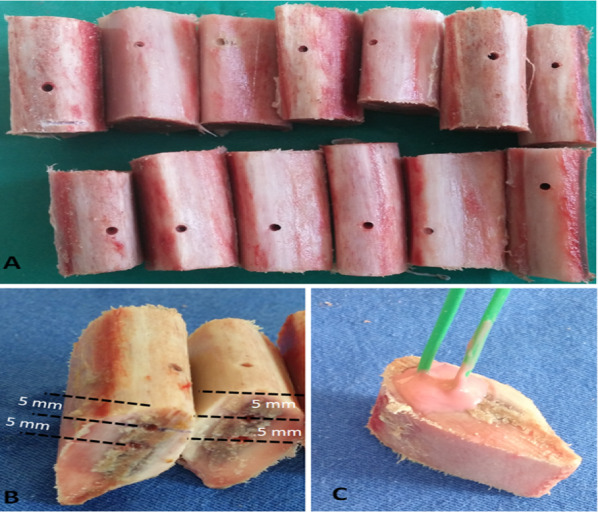 Figure 1
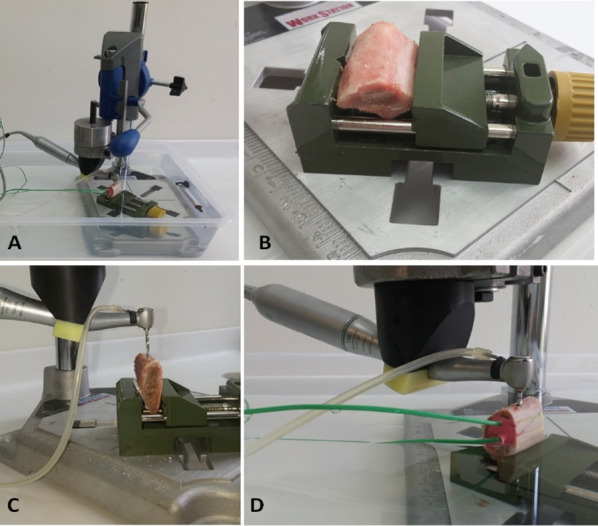 Figure 2
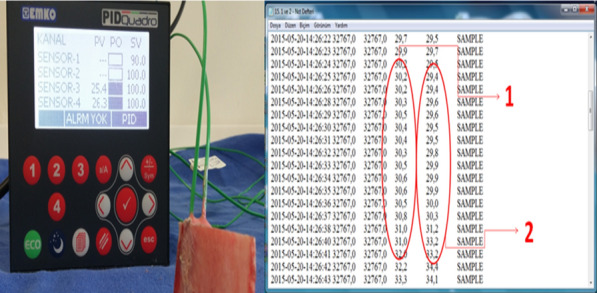 Figure 3
Peer Reviews
No public reviews on file for this paper yet. If you reviewed it on a platform where reviews are public (OpenReview, ICLR, NeurIPS, ICML), you can paste yours below so the community can read it here.
Videos
No videos yet. Explain this paper in a talk, walkthrough, or lecture? Add one.
Taxonomy
TopicsDental Implant Techniques and Outcomes · Bone Tissue Engineering Materials · Dental materials and restorations
Introduction
The surgical stage plays an important role in the success of dental implant applications. For this reason, researchers have focused on safe surgical procedures performed on the jaw bones during dental implant placement [1–3]. At the same time, it has been emphasized that the surgical techniques used are important not only in ensuring successful osteointegration but also in the prognosis of the implants placed [4, 5]. It is known that protein denaturation occurs at high temperatures in living tissues [6, 7]. In the literature, the effect of temperature changes in the bone during osteotomy with drilling on osteointegration and thus on implant success has been a subject of debate [8, 9]. At this stage, it is thought that many factors such as the material from which the implant drills are made, bone morphology in which the implant socket is prepared, implant groove structure, working speed, amount and temperature of irrigation solution may be effective [10, 11].
In this in-vitro study, it was aimed to compare the temperature changes in the bone caused by irrigated and non-irrigated systems at different speeds (150 rpm and 1200 rpm) during drilling with implant drills produced by five different implant brands (Ankylos, Astra Tech, Nobel Biocare, Bredent, Straumann).
Materials and methods
Findings
This study is derived from a master's thesis. In the study, the temperature changes in the bone caused by the burs of 5 different implant brands were evaluated and measured under different working conditions and at different usage numbers.
Measured average temperature values
First group
In this group, waterless operation was performed at 150 rpm and the milling cutters were used for the first time. The average highest and lowest temperature values obtained as a result of the experiment show the average temperature values observed in the first working group. T_max_:The highest temperature, T_min_:The lowest temperature, T_ort_:The average temperature during the working time, SD:Standard deviation, Tmax-min:The difference between the highest and lowest temperatures.
Second group
In this group, 40 ml/min irrigation at 1200 rpm was used and milling cutters were used for the first time. The average highest and lowest temperature values obtained as a result of the experiment are shown in the average temperature values observed in the second study group. T_max_:Highest temperature, Tmin:Lowest temperature, T_ort_:Average temperature during the study period, SD:Standard deviation, Tmax-min:Difference between the highest and lowest temperatures.
Group three
In this group, irrigation was not used at 150 rpm and milling cutters that had been used 30 times before were used. The average highest and lowest temperature values obtained as a result of the experiment are shown in the average temperature values observed in the third working group. T_max_:Highest temperature, T_min_:Lowest temperature, T_ort_:Average temperature during the working period, SD:Standard deviation, Tmax-min:Difference between the highest and lowest temperatures.
Group four
In this group, the milling cutters that had been used 30 times before were used under 40ml/min irrigation at 1200 rpm. The average highest and lowest temperature values obtained as a result of the experiment are shown in the average temperature values observed in the fourth working group. Tmax: Highest temperature, Tmin: Lowest temperature, Tort: Average temperature during the working period, SD: Standard deviation, Tmax-min: Difference between the highest and lowest temperatures.
After the preparation of the bone blocks, the areas where osteotomy would be performed were determined on the bone. Guide implant holes with standard diameters of 2 mm were created in these determined areas using the marking bur and pilot bur used as standard in implant site preparation (Fig. 1a). Then, the holes where the thermocouple sensors that would measure the temperature changes in the bone-bur contact areas at 5 and 10 mm would enter were prepared (Fig. 1b). The thermocouple sensors placed in the prepared holes were fixed with a silicone-based impression material (Fig. 1c).Fig. 1. View of guide slots (a), opening of standard sensor slots from heights of 5 and 10 mm (b), placing and fixing thermocouple sensors (c)
A specially manufactured system was used in the preparation of implant sockets (Fig. 2a). After the blocks were placed in the bone holder compartment in the system, they were tightened and fixed (Fig. 2b). The system was operated under constant pressure (with a 2 kg weight). Figure 2c shows the preparation of 2.0 mm sockets using implant guide burs. During the experimental phase, the container containing the device was filled with 30 ± 2 C0 water in order to keep the temperature constant. The temperature of the system was controlled with the water heater and thermometer placed. The temperature values in the bone were recorded with thermocouple sensors placed in the bone block (Fig. 3d).Fig. 2. General view of the contra-angle holder system (a), fixation of bone blocks (b), opening of guide slots (c) and operation of the experimental setup (d) are shownFig. 3Data transferred to the computer via thermocouple (EPLC9600-PID QUADRO) connection and flash memory; Data number 1 shows the temperature values at a depth of 5 mm, and data number 2 shows the temperature values at a depth of 10 mm
Difference between the highest and lowest temperature values
The values observed at the sensors located at the 5th and 10th mm (S1 and S2, respectively) placed in the bone blocks and obtained by subtracting the lowest temperature value from the highest temperature value are shown in Table 1.Table 1. Differences between different brands of implant burs and the highest and lowest temperatures recorded in the studyAnkylosAstra TechNobel BiocareBredentStraumannGroup NoS_1_S_2_S_1_S_2_S_1_S_2_S_1_S_2_S_1_S_2_17,94,712,32,37,85,716,011,25,914,828,911,510,912,16,09,46,66,39,63,236,76,210,86,010,73,55,98,812,614,146,66,31,83,84,78,14,32,37,58,2
Relationship between measured temperature values and working groups
There was no significant relationship between the measured temperature values and the study groups. The results of the statistical analysis are given in Table 2.Table 2. Relationship between study groups in different conditions + Pillai's Trace test and Bonferroni analysis (Group 1: First use, without irrigation, 150 rpm; Group 2: First use, 40 mL/min irrigation, 1200 rpm; Group 3: 30th use, without irrigation, 150 rpm; Group 4: 40 mL/min irrigation, 1200 rpmWorking groups^+^pGroup 1 Group 2158 Group 31000 Group 4267Group 2 Group 1158 Group 3074 Group 41000Group 3 Group 11000 Group 2074 Group 4131Group 4 Group 1267 Group 21000 Group 3131No significant correlation was observed between the mean temperature values observed in the study groups and implant brands. The results of the statistical analysis are given in. During the study, no significant difference was observed between the mean temperature values of cases irrigated at 1200 rpm (Group 2 and Group 4) and cases irrigated at 150 rpm (Group 1 and Group 3) (Independent T-test; p=0.682)
Calculation of temperature differences
The temperature changes in all brands in the study were obtained by subtracting the lowest temperature value measured during the study from all temperature values (Tables 3 and 4).Table 3. Relationship between temperature changes and implant brands^+^ Pillai's Trace and Bonferroni testsBRAND^+^pBRAND^+^pBRAND^+^pAnkylosAstra708AstraAnkylos708Nobel1000Nobel936Bredent752Bredent1000Straumann1000Straumann995NobelAnkylos1000BredentAnkylos752Astra936Astra1000Bredent940Nobel940Straumann1000Straumann991StraumannAnkylos1000Astra995Repeated measuresp < 0.05Nobel1000Bredent991When compared according to the number of uses of the burs, no significant difference was found between the mean temperature values of the cases performed at the 1st use (Group 1 and Group 2) and 30th use (Group 3 and Group 4) (Independent T-test p=0.668)The temperature changes in the sensors used in an example study group (Group 1) at depths of 5 and 10 mm are shown in Graph 1. In all groups, it was observed that the temperature values measured in both sensors were close to each other. It was also observed that there was no significant difference between the temperature values measured in the sensorsTable 4Difference between the temperature values measured at Sensors 1 and 2 (S_1_, S)2^+^ Bonferroni analysisWorking GroupsDifference between measured values at the sensor (+ p)Group 10.069Group 20.611Group 30.713Group 40.708
Milling cutter brands and temperature differences
Temperature differences were obtained by subtracting the initial temperatures from the temperatures measured in the working groups. The temperature differences and significance levels of different brands of milling cutters are given in Tables 5 and 6.Table 5. Table showing milling cutter brands and temperature differencesAnkylosAstra TechNobel BiocareBredentStraumann + pGroup NoS_1_S_2_S_1_S_2_S_1_S_2_S_1_S_2_S_1_S_2_15,116,103,733,583,984,175,086,973,124,750.13720,423,080,522,605,455,030,020,573,770,720.19136,057,332,285,557,184,354,085,901,632,620.17643,284,924,086,273,232,005,723,033,205,550.496^+^Kruskal Wallis TestTable 6Relationship between study groups and mean temperature differencesGroup NoNumber of Milling Cutter UsesMode of OperationRevolutions (rpm)Average Temperature Difference + p1First useWithout irrigation15027,7**,028**2First use40 mL/min irrigation120022,20330. UsageWithout irrigation15024,90430. Usage40 mL/min irrigation120021,20Kruskal–Wallis testThe mean temperature changes in the study groups were found to be higher (p < 0.05). This indicates that the temperature values increased more in the non-irrigated study
Discussion
In traumatic dental implant surgeries, connective tissue formation is seen around the implant during the healing process and this may cause failures in implant treatments. It is inevitable that the heat generated during implant drilling affects the living bone tissue in the implant placement area [8, 12]. It is thought that this heating occurs due to the friction between the bone tissue and the drill during drilling and the healing of the bone tissue is adversely affected at temperatures above 47 °C [13, 14]. The purpose of irrigation during drilling is to reduce the temperature increases that may occur in the bone [15]. When the temperature change graphs in the groups irrigated with 40 ml/min isotonic solution in our study were examined, it was observed that the temperature values on the bone surface were in the direction of decrease. On the other hand, it was observed that there would not be a significant temperature increase in the bone if irrigation was not applied at low cycles.Studies have shown that implant losses occur in the first year after implant placement at a high rate. It shows the importance of the surgical procedure to achieve success in implant applications [11]. Markovic et al. [16] placed a total of 288 self-tapping and non-self-tapping implants of Bredent and Straumann brands with torque forces of 30, 35 and 40 N in an in vitro study in porcine ribs. They measured the temperature changes observed at 1, 5 and 10 mm depths during placement. As a result of the study, they concluded that thermal effects would be observed less at low insertion torques in self-tapping implants. Trisi et al. [17] placed implants in the iliac crest of sheep at different temperatures in their in vivo study. They prepared a total of 15 implant sites in the study. During the opening of the implant socket, they kept the temperature of 5 of these sites at 50 °C for one minute and 5 of these sites at 60 °C for one minute. The remaining 5 implant sites were prepared without any temperature increase. No implant loss was observed in the study. However, they concluded that in the regions prepared at 60 °C for one minute, implant crestal bone loss increased in the later period after osteointegration and bone implant contact was less in this group. Sumer et al. [18] placed a total of 64 implants in bovine femur in their in vitro study. They divided 4.1 and 4.8 mm diameter implants into different groups and placed them manually at speeds of 30, 50 and 100 rpm. As a result of the study, they found that the highest temperature change (9.81 ± 2.29 °C) occurred in implants with a diameter of 4.1 mm and a speed of 100 rpm. As a result of the study, they argued that implant placement performed manually or at speeds of 30 and 50 rpm was safer than placement performed at 100 rpm. Allsobrook et al. [19] in an in vitro study on bovine head, Allsobrook et al. [19] examined the trauma caused by tungsten carbide and steel drills on the bone depending on the number of times they were used by SEM method. In all of their applications, they ensured that the temperature did not exceed 27.7 °C. After the study, they argued that the burs did not reach damaging temperature values even after 50 times of use. The data obtained from this study also showed that there was no significant change in the temperature increases in the bone after the first and 30th use of the burs. Chacon et al. [20] argued that the geometric structure of the burs and the wear caused by the use of the burs were effective in the temperature changes that occurred during the resurfacing process. In their study on cortical bone in bovine femur, they used a serum irrigated system with a speed of 2500 rpm and a constant force of 2.4 kg. Accordingly, they suggested that after 25 uses, the temperature value in the bone in triple twist drills without a relief angle can rise above 47 °C and healing may be impaired. This suggests that critical temperature increases may affect implant success. Matsuoka et al. [21] placed self-drill mini implants at speeds of 50, 100, 150, and 250 rpm into bone containing cortical layers of different thickness and observed the temperature change. They reported that the temperature increase was higher in the insertions made in the region where the cortical bone was thicker. At 250 rpm, they reported that temperature increases of more than 10 °C occurred, therefore, the instrument speed should be kept below 150 rpm in self-drilling miniscrew placements. In our study, the speed was set as 150 rpm in the groups without irrigation and it was observed that no significant temperature increase occurred in the bone when working at this speed.
Gaspar et al. [22] examined the temperature changes during the resurrection of a total of 36 implants placed in the rabbit tibia and the histologic changes observed in the early period. Accordingly, they reported that irrigation-free operation at 50 rpm and irrigated operation at 800 rpm gave approximate results in terms of temperature change. During osteotomy for implant applications, bone heating occurs due to the friction of the drill against the bone. To prevent this heating in the bone, the implant socket should be prepared by cooling with saline irrigation. Even if cooling is performed during bone preparation, some necrosis occurs around the implant socket. The size of the necrotic area depends on factors such as both heat and blood supply of the implanted area [23]. When necrosis occurs, the response of the bone to the necrotic area can be in 3 different ways:
- Fibrous tissue formation: A certain amount of fibrous tissue forms in the bone, especially in cases of high trauma. The formation of fibrous tissue around the implant is easier than the formation of bone tissue.
- Sequestration formation: If the blood supply to the tissue is insufficient and the surgery is traumatic, the bone necrosizes and does not heal.
- New bone formation: Cortical bone formation around the implant is achieved with atraumatic surgery and adequate revascularization [24].
After implantation, remodeling around the implant is desired. Bone repair of necrotic implant cortex depends on the presence of sufficient number of cells in the area, adequate nutrition of these cells and sufficient stimulus for bone repair [25]. Many researchers have reported different opinions regarding the drilling speed during implant osteotomy. Albreksston et al. Albreksston et al. reported that the maximum drill speed should be 2000 revolutions during bone cavity preparation, whereas Babush et al. They reported 1500–1600 revolutions per minute in internally cooled milling systems, a maximum of 500 revolutions per minute in externally cooled systems and no more than 20 revolutions per minute during implant placement [7]. During implant osteotomy, if the bone tissue is exposed to a temperature higher than 43°C in one minute, a temperature that can cause denaturation of bone cells is reached. Since the high temperature causes alkaline phosphatase destruction in the bone and prevents calcium synthesis, new bone formation around the implant does not occur. Thus necrotic tissue forms around the implant. This situation prevents the formation of osteointegration and causes fibroosteosis integration [26].
Sandalli, on the other hand, stated that the quality of bone in different anatomical regions is different and a standard milling application cannot be sufficient, and the lowest speed that can cut the bone is the most appropriate speed [27]. It has been reported that when resistance is encountered while preparing the implant cavity, the pressure on the milling increases the heat generated in the bone and causes an increase in the amount of necrotic area. Other methods to reduce the high temperature that may occur during osteotomy include using a drill suitable for the implant system, using the drills sequentially, working under abundant irrigation, using a torque-adjustable physiodispenser and the sharpness of the drills used [26].As in bone, it is important that soft tissue surgery is atraumatic. The incision should be sharp and properly limited, and the mucoperiosteal flap should be lifted precisely. Maximum effort should be made not to damage the periosteum [28].
In the literature, bovine ribs were used in a significant number of in vitro studies in which temperature changes in bone were measured. In this study, bovine rib was used [29, 30]. In the studies, the similarity of the density of bovine ribs with the implanted bones was reported. In this study, it was macroscopically observed that the cortical/cancellous bone ratios in the bovine rib were similar to the mandible. On the other hand, in our study, it was seen that bovine ribs are easily obtainable at low costs and can also be made ready to work quickly.
There are also studies in the literature in which a device that applies constant force during drilling is used. Karaca et al. [31] prepared a device similar to the device in our study in their study in which they measured the effect of the drill diameter, speed of the drill and applied forces on temperature changes. As a result of their study, they reported that the temperature increased the most at the depth value between 4.5 mm and 6.5 mm and that the temperature increased more in titanium coated drills. In their study, they performed the drills in dry and extracellular tissue fluid-containing environments and reported that the environment in which the drills were made did not significantly affect the temperature changes. Oliveira et al. [32]. used bovine ribs in an in-vitro study in which they prepared an implant socket. They reported that there was no difference in temperature change between the first and 30th use of implant drills. In this study, they also observed a greater temperature increase in steel drills. In our study, the results obtained for the number of uses of the drills were similar to the results of this study. In cases where the amount of cortical bone is high, it is expected that the temperature increase during drilling will also be high. In their study, Abboud et al. [33] reported that the temperature increase is higher in cases with increased cortical bone density; on the other hand, the temperature will increase more with the prolongation of the drilling time. Based on this study, it should be kept in mind that the temperature increase may also increase in bones with high cortical thickness (Type 1 and Type 2).
Conclusion
No significant difference was observed between the temperature changes in the bone during the operation of the drills manufactured by different companies and used in the preparation of the implant socket. This indicates that there is no significant difference in the implant drills used. In both the high-speed irrigated and the low-speed non-irrigated systems, the temperature values in the bone during drilling generally do not exceed the critical threshold of 47 °C. This demonstrates that both systems can be used safely by clinicians regardless of the manufacturer. However, it should be kept in mind that the temperature changes in non-irrigated systems are higher than in irrigated systems.
In the future, drilling procedures under different conditions can be performed to examine histologically the conditions that develop due to temperature increases in the bone.
The reference list from the paper itself. Each links out to its DOI / PubMed record.
- 1Peker Tekdal G, Bostanci N, Belibasakis GN, Gurkan A. The effect of piezoelectric surgery implant osteotomy on radiological and molecular parameters of peri-implant crestal bone loss: a randomized, controlled, split-mouth trial. Clin Oral Implants Res. 2015.10.1111/clr.1262026077862 · doi ↗ · pubmed ↗
- 2Gaspar J, Borrecho G, Oliveira P, Salvado F, Martins dos Santos J. Osteotomy at low-speed drilling without irrigation versus high-speed drilling with irrigation: an experimental study. Acta Medica Portuguesa. 2013;26(3):231–6.23815837 · pubmed ↗
- 3In Vitro Assessment with the Infrared Thermometer of Temperature Differences Generated During Implant Site Preparation: The Traditional Technique Versus the Single-Drill Technique.10.1111/cid.1224625040939 · doi ↗ · pubmed ↗
- 4Olivera N, Algarra FA, Bueno JM, Padro EF, Alfaro FH. Thermal changes and drill wear in bovine" bone during implant site preparation A comparative in vitro study: twisted stainless steel and ceramic drill 10.1111/j.1600-0501.2011.02248.x 21806686 · doi ↗ · pubmed ↗
- 5Şarkbay ÖF. Farklı Marka İmplant Frezleri ile Yapılan Osteotomilerde Kemikte Meydana Gelen Sıcaklık Değişimlerinin In-Vitro Olarak İncelenmesi. Master’s thesis, Bezmialem Vakıf Üniversitesi, 2015.