Gender, kinship, and other social predictors of incrimination in the inquisition register of Bologna (1291–1310): Results from an exponential random graph model
David Zbíral, Katia Riccardo, Tomáš Hampejs, Zoltán Brys

TL;DR
This study examines how social factors like gender and kinship influenced who was accused in medieval Bologna's heresy trials.
Contribution
The paper introduces the use of exponential random graph models to analyze incrimination patterns in medieval inquisition records.
Findings
Female-to-female incrimination was more common than male-to-male incrimination.
Middle-class Cathars were more likely to be incriminated than non-middle-class individuals.
People tended to incriminate members of their own kinship group.
Abstract
The medieval inquisition of heresy strongly relied on depositions, where witnesses were expected to report on the crimes of others and oneself. The resulting patterns of incrimination could be influenced by various factors, including the characteristics of the underlying dissident social network; the investigators’ choices and biases; the trial circumstances, some of which must have exerted considerable pressure upon deponents; and the deponents’ decisions to protect some suspects more than others. This case study aimed at disentangling selected social factors of incrimination in the register of the inquisition in Bologna, 1291–1310. We used social network analysis and, more specifically, an Exponential Random Graph Model (ERGM) to assess the influence of four social predictors: gender, churchperson status, membership of the urban “middle class”, and kinship ties between incriminators…
Genes, proteins, chemicals, diseases, species, mutations and cell lines named across the full text — each resolved to its canonical identifier and authoritative record.
Click any figure to enlarge with its caption.
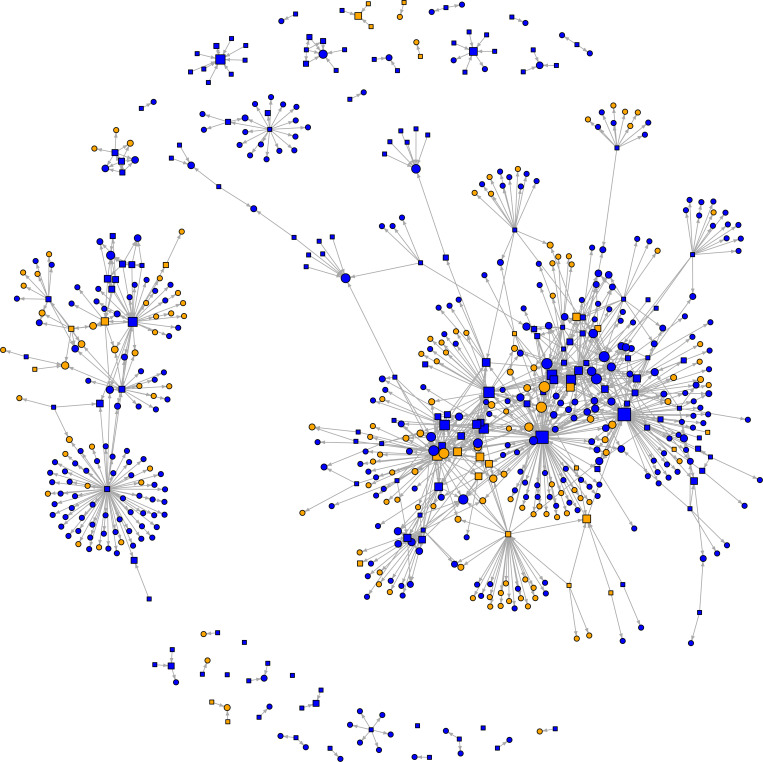 Figure 1
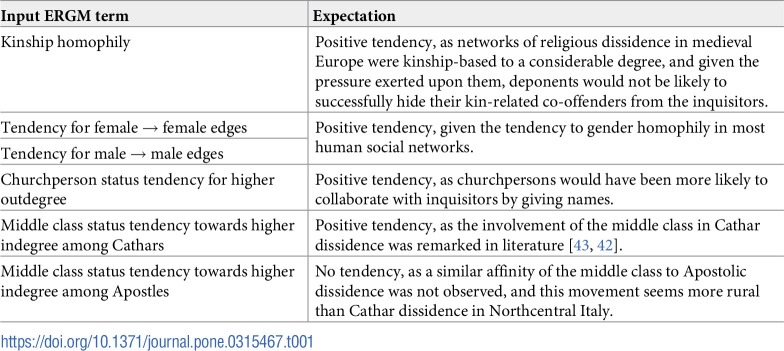 Figure 2
 Figure 3
 Figure 4
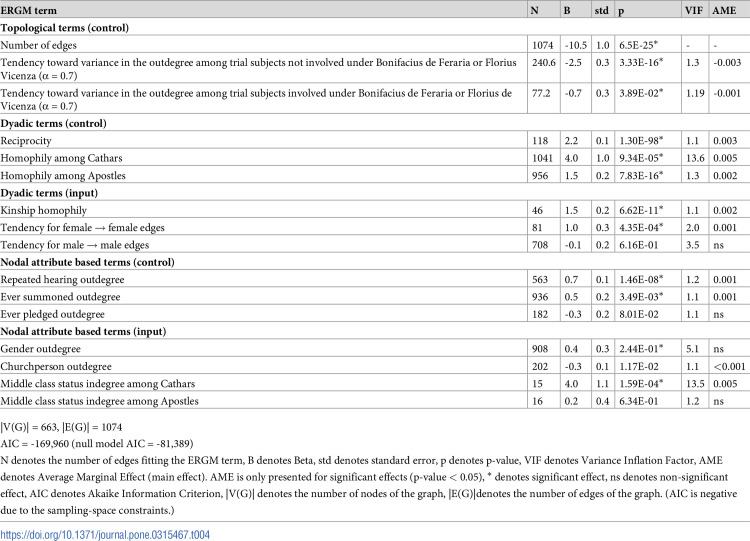 Figure 5
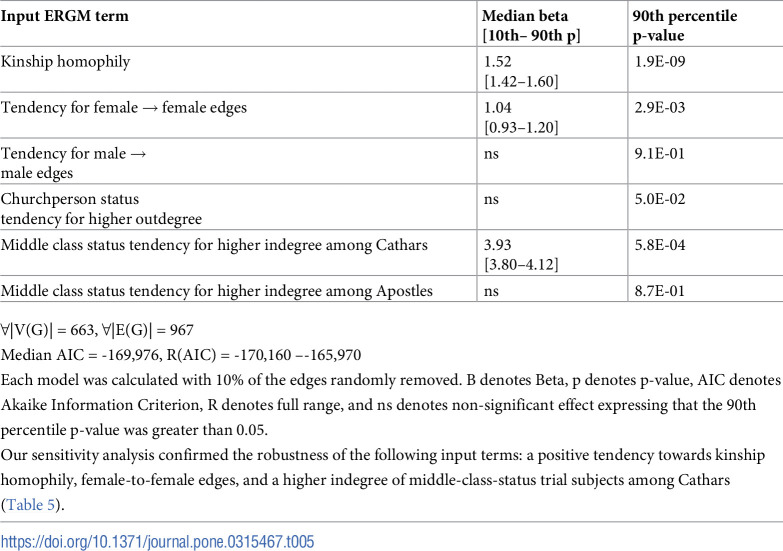 Figure 6
Peer Reviews
No public reviews on file for this paper yet. If you reviewed it on a platform where reviews are public (OpenReview, ICLR, NeurIPS, ICML), you can paste yours below so the community can read it here.
Videos
No videos yet. Explain this paper in a talk, walkthrough, or lecture? Add one.
Taxonomy
TopicsCrime Patterns and Interventions · Psychopathy, Forensic Psychiatry, Sexual Offending · HIV, Drug Use, Sexual Risk