Extended receptor repertoire of an adenovirus associated with human obesity
A. Manuel Liaci, Naresh Chandra, Sharvani Munender Vodnala, Michael Strebl, Pravin Kumar, Vanessa Pfenning, Paul Bachmann, Rémi Caraballo, Wengang Chai, Emil Johansson, Mikael Elofsson, Ten Feizi, Yan Liu, Thilo Stehle, Niklas Arnberg, Robert F. Kalejta, Ekaterina E. Heldwein

TL;DR
This study reveals how a human adenovirus linked to obesity uses unique receptors to infect a wide range of animals and possibly humans.
Contribution
The paper identifies a novel receptor, a rare sialic acid variant, used by HAdV-D36 for host cell attachment.
Findings
HAdV-D36 uses sialic acid-containing glycans and CAR for host cell attachment.
The virus prefers a rare sialic acid variant, 4-O,5-N-diacetylneuraminic acid, not found in humans.
HAdV-D36 has evolved to recognize distinct receptors, explaining its unique host range and pathogenicity.
Abstract
Human adenovirus type 36 (HAdV-D36) has been putatively linked to obesity in animals and has been associated with obesity in humans in some but not all studies. Despite extensive epidemiological research there is limited information about its receptor profile. We investigated the receptor portfolio of HAdV-D36 using a combined structural biology and virology approach. The HAdV-D36 fiber knob domain (FK), which mediates the primary attachment of many HAdVs to host cells, has a significantly elongated DG loop that alters known binding interfaces for established adenovirus receptors such as the coxsackie- and adenovirus receptor (CAR) and CD46. Our data suggest that HAdV-D36 attaches to host cells using a versatile receptor pool comprising sialic acid-containing glycans and CAR. Sialic acids are recognized at the same binding site used by other HAdVs of species D such as HAdV-D37. Using…
Genes, proteins, chemicals, diseases, species, mutations and cell lines named across the full text — each resolved to its canonical identifier and authoritative record.
Click any figure to enlarge with its caption.
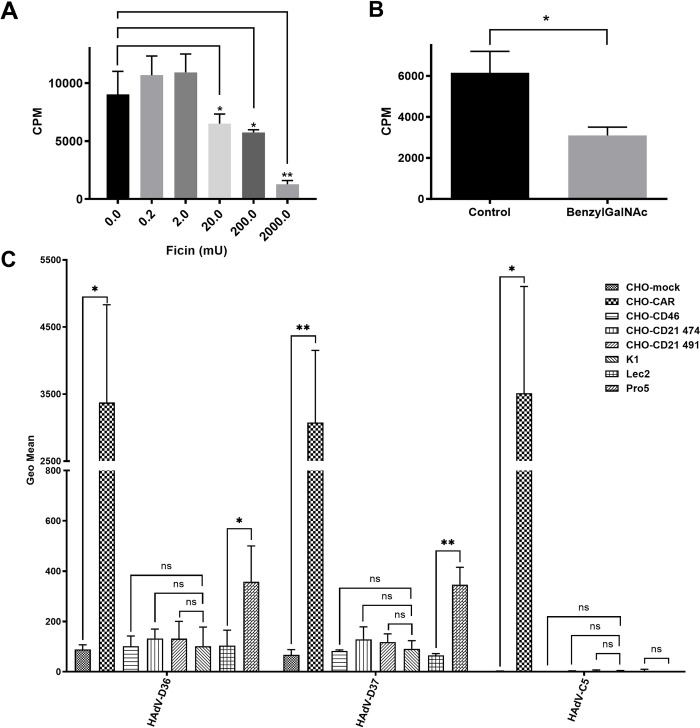 Figure 1
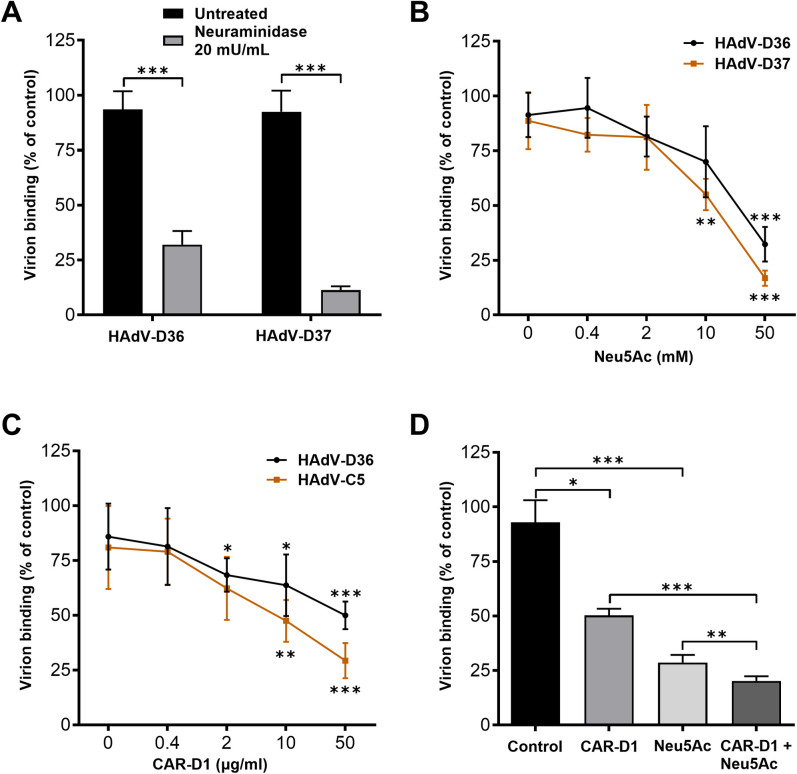 Figure 2
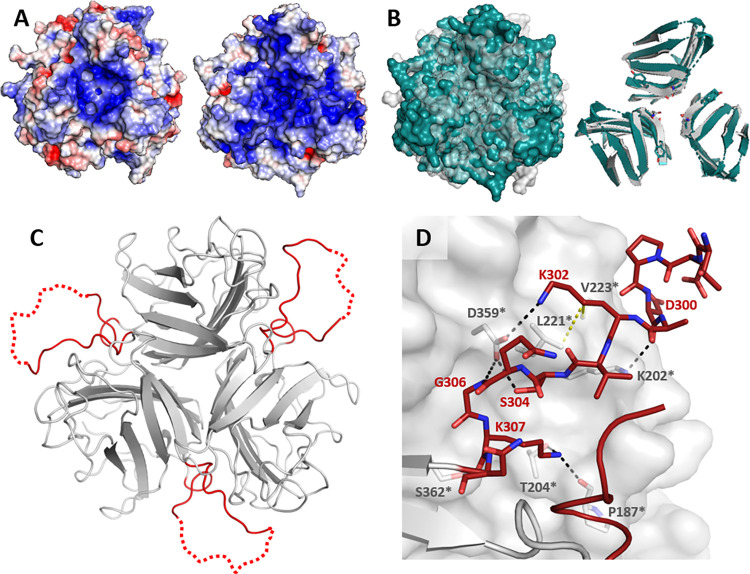 Figure 3
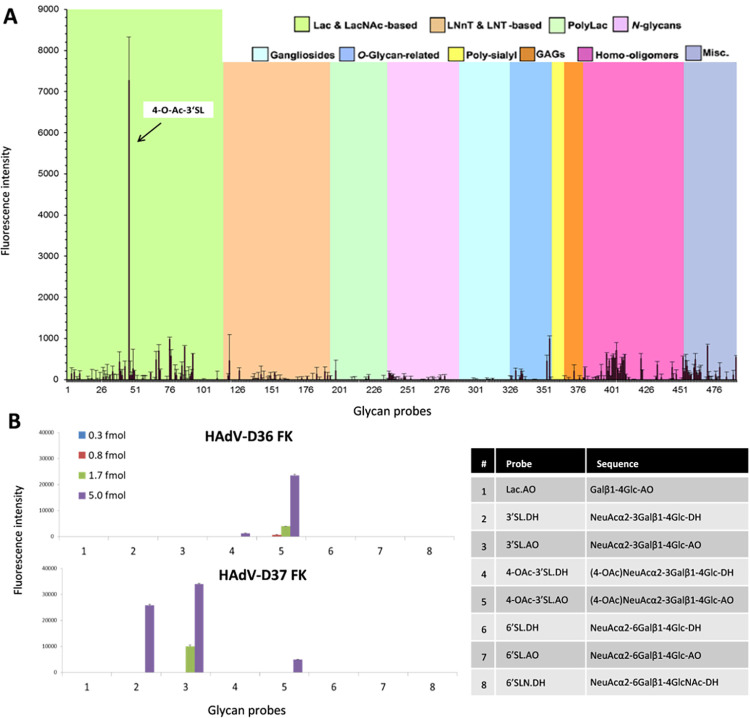 Figure 4
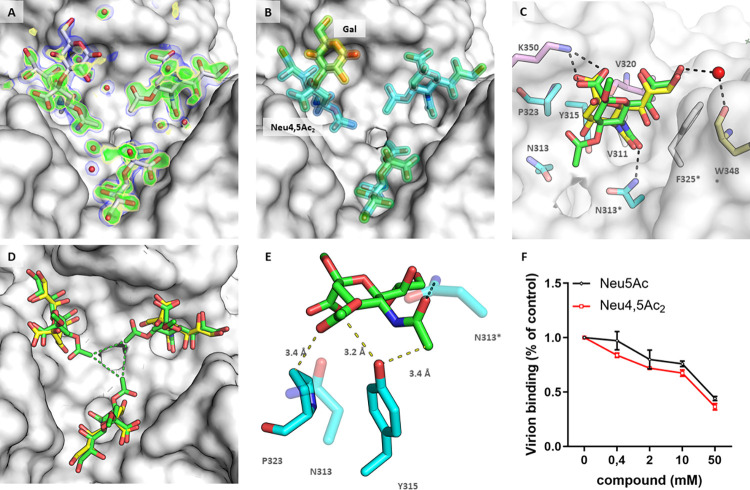 Figure 5
Peer Reviews
No public reviews on file for this paper yet. If you reviewed it on a platform where reviews are public (OpenReview, ICLR, NeurIPS, ICML), you can paste yours below so the community can read it here.
Videos
No videos yet. Explain this paper in a talk, walkthrough, or lecture? Add one.
Taxonomy
TopicsVirus-based gene therapy research · Viral Infectious Diseases and Gene Expression in Insects · Viral Infections and Immunology Research