Associations between spice or pepper (Capsicum annuum) consumption and diabetes or metabolic syndrome incidence
Azam Ildarabadi, Firoozeh Hosseini-Esfahani, Shahrzad Daei, Parvin Mirmiran, Fereidoun Azizi, Guoying Wang, Guoying Wang, Zohreh Sajadi Hezaveh, Zohreh Sajadi Hezaveh, Zohreh Sajadi Hezaveh

TL;DR
This study found no overall link between eating spices or peppers and a lower risk of diabetes or metabolic syndrome, but some components showed increased risks at higher intakes.
Contribution
The study provides new insights into the potential adverse effects of high spice and pepper consumption on metabolic health.
Findings
Spice and pepper intake was not associated with reduced incidence of type 2 diabetes or metabolic syndrome.
Higher spice consumption was linked to increased risks of high triglycerides and high blood pressure.
Greater pepper consumption was associated with a decreased risk of low HDL-C.
Abstract
Spice and pepper are recognized as sources of antioxidants and anti-inflammatory compounds. This study investigated the association between spice or pepper intake and metabolic syndrome (MetS), related risk factors, or type 2 diabetes (T2D) incidences. The qualified Tehran Lipid and Glucose Study (TLGS) participants were included. In all examinations, dietary, anthropometrical, and biochemical variables were measured. Multivariable Cox proportional hazards regression models were exploited to determine the relationship between spice or pepper consumption and the hazard ratios for Type 2 Diabetes (T2D), Metabolic Syndrome (MetS), or its components. The analysis was performed on 5340 individuals, with a mean age of 39.9±13.4 and 406 incident cases of T2D. Also, 4353 participants were included for MetS analysis with 1211 incident cases and a median follow-up of 5.8 years. After adjusting…
Genes, proteins, chemicals, diseases, species, mutations and cell lines named across the full text — each resolved to its canonical identifier and authoritative record.
Click any figure to enlarge with its caption.
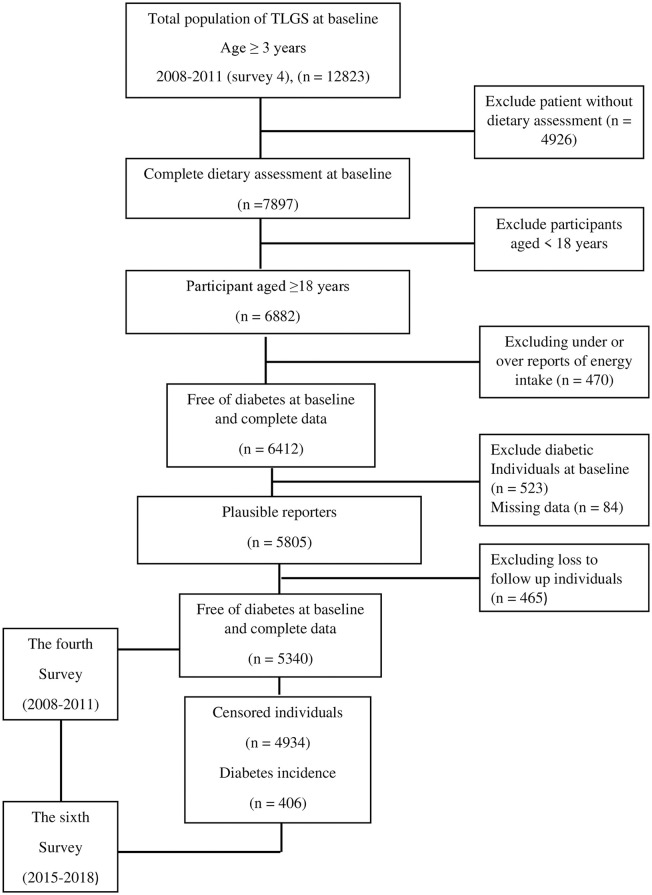 Figure 1
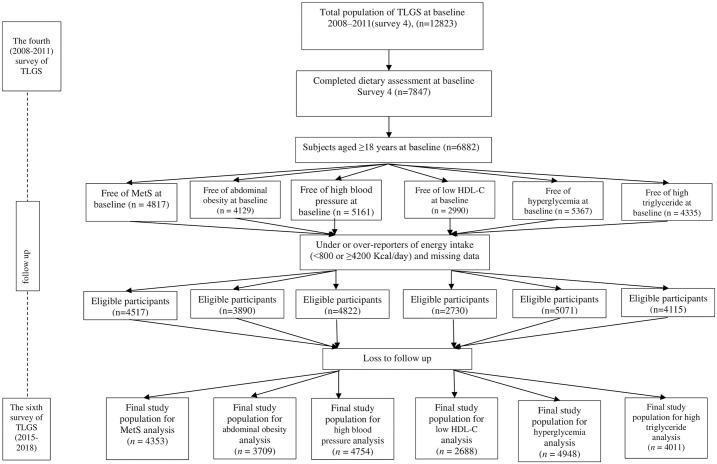 Figure 2
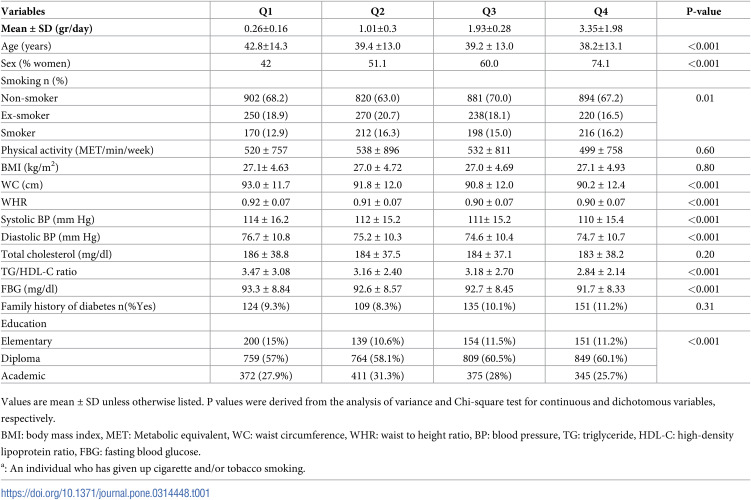 Figure 3
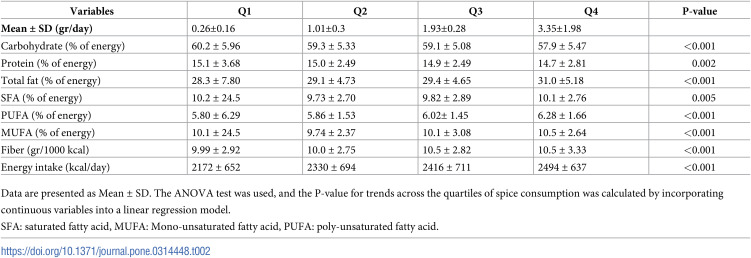 Figure 4
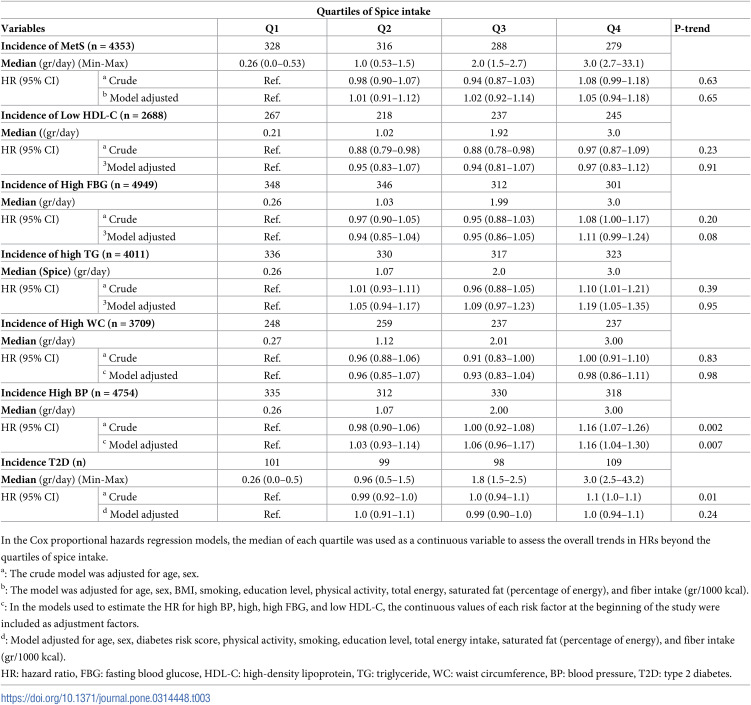 Figure 5
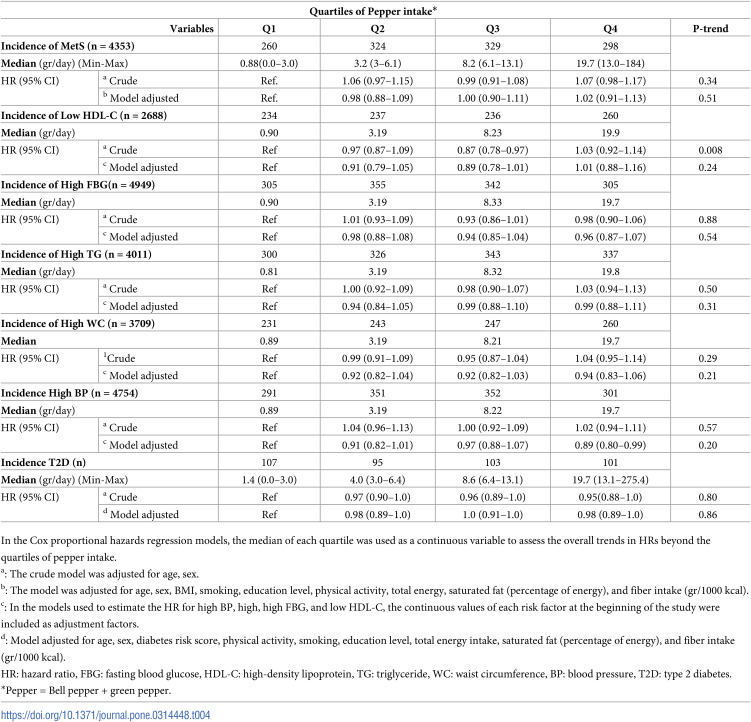 Figure 6
Peer Reviews
No public reviews on file for this paper yet. If you reviewed it on a platform where reviews are public (OpenReview, ICLR, NeurIPS, ICML), you can paste yours below so the community can read it here.
Videos
No videos yet. Explain this paper in a talk, walkthrough, or lecture? Add one.
Taxonomy
TopicsPiperaceae Chemical and Biological Studies · Natural Antidiabetic Agents Studies · Biochemical Analysis and Sensing Techniques