Analogical reasoning in first and second languages
Miki Ikuta, Koji Miwa, Sergio Consoli, Sergio Consoli, Sergio Consoli

TL;DR
This study found that people perform better on analogy tasks in their first language compared to their second language, especially when dealing with perceptual similarities.
Contribution
The study reveals how language proficiency affects the processing of perceptual and relational similarities in analogical reasoning.
Findings
Participants had higher accuracy and faster response times in their first language (L1) than in their second language (L2).
Processing perceptual similarities in L2 is more challenging than in L1.
Relational processing in L2 may require explicit instruction due to higher cognitive demands.
Abstract
This study investigated how linguistic predictors such as word frequencies, the difficulty and creativity of problems, and the category of problems contribute to analogical reasoning in L1 and L2. This study also investigated how different types of similarities (i.e., perceptual and relational similarities) are processed in analogical reasoning. In Experiment 1, Japanese participants were asked to solve 100 multiple-choice A:B::C:D analogy problems (e.g., skeleton: bone:: tornado: wind) in their first language, Japanese (L1). In this experiment, participants also rated the difficulty and creativity of problems. In Experiment 2, Japanese participants completed the same tasks, but the problems were shown in their second language, English (L2). The results showed that problems presented in L1 elicited higher accuracies and faster response times than in L2. A significant interaction was…
Genes, proteins, chemicals, diseases, species, mutations and cell lines named across the full text — each resolved to its canonical identifier and authoritative record.
Click any figure to enlarge with its caption.
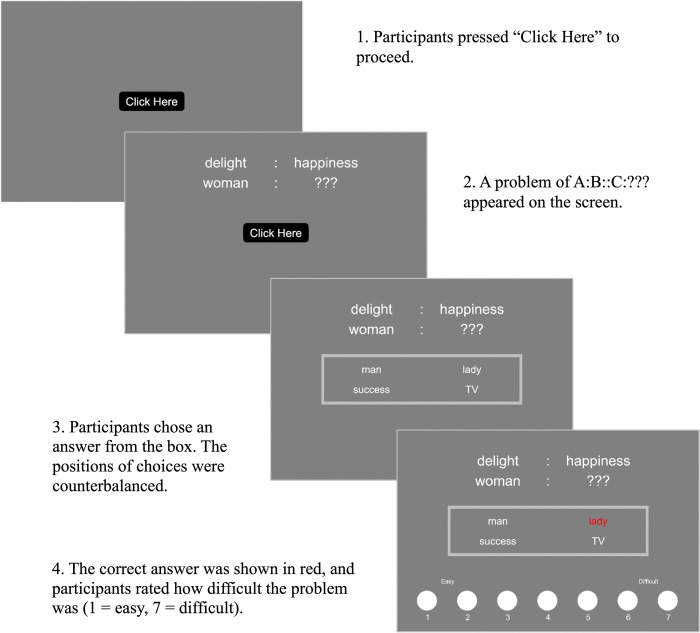 Figure 1
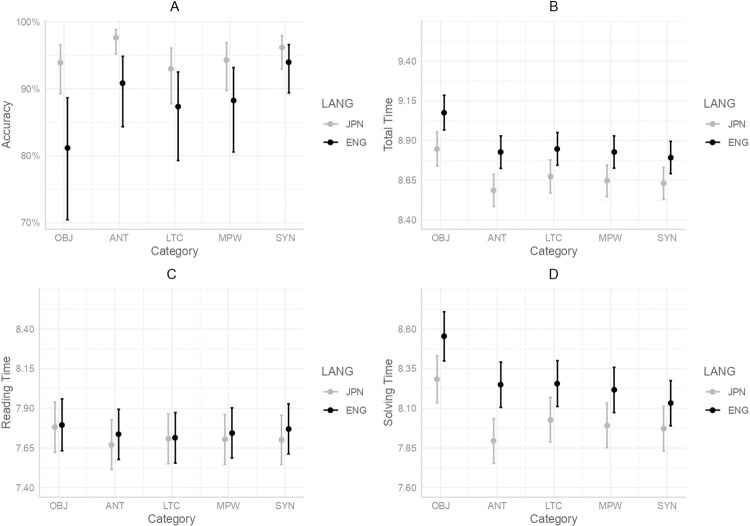 Figure 2
 Figure 3
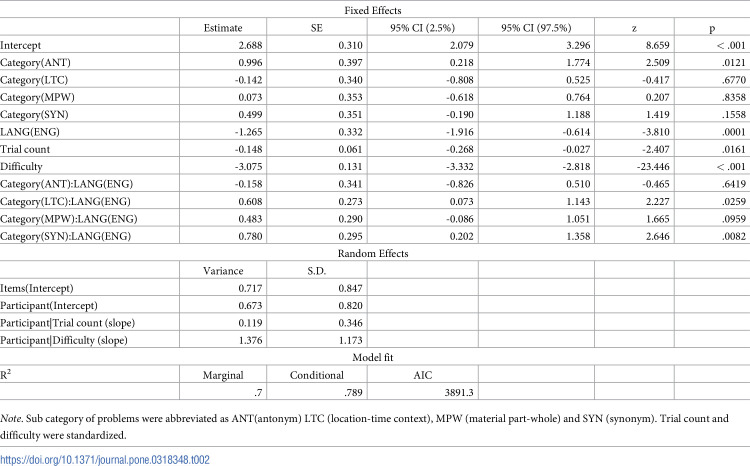 Figure 4
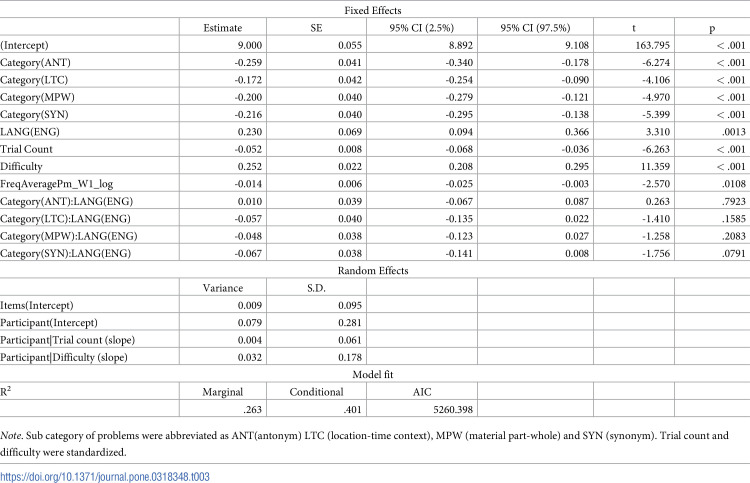 Figure 5
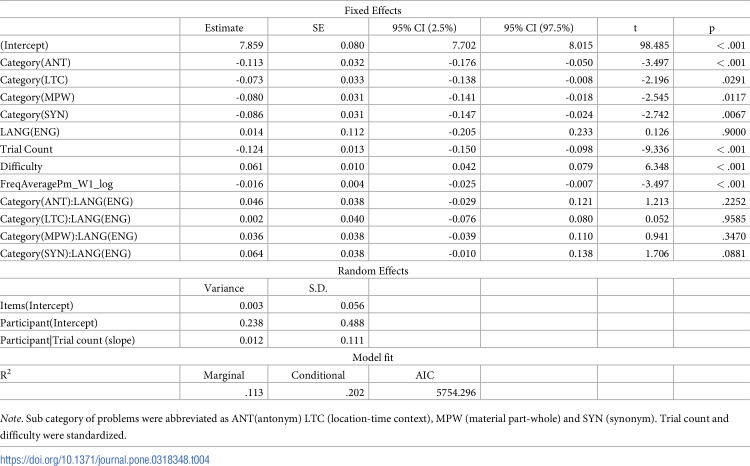 Figure 6
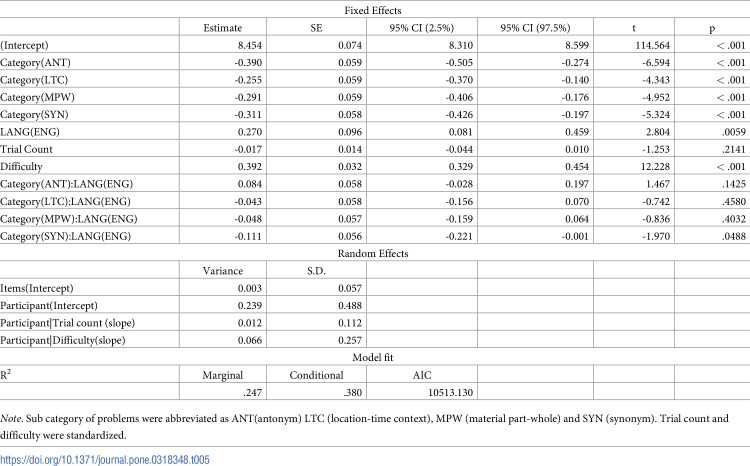 Figure 7
Peer Reviews
No public reviews on file for this paper yet. If you reviewed it on a platform where reviews are public (OpenReview, ICLR, NeurIPS, ICML), you can paste yours below so the community can read it here.
Videos
No videos yet. Explain this paper in a talk, walkthrough, or lecture? Add one.
Taxonomy
TopicsLanguage, Metaphor, and Cognition · Neurobiology of Language and Bilingualism · Second Language Acquisition and Learning