Diagnostic testing in the genetically complex age-related macular degeneration
Christina Kiel, Bernhard H. F. Weber

TL;DR
This paper discusses how genetic risk scores can improve AMD diagnosis and treatment timing.
Contribution
The paper highlights the use of polygenic risk scores for early AMD diagnosis and treatment planning.
Findings
Polygenic risk scores (PRS) can assess individual genetic risk for AMD.
Early genetic confirmation of AMD can lead to timely treatment initiation.
AMD-PRS is most accurate for individuals with very high genetic risk.
Abstract
Age-related macular degeneration (AMD) is a leading cause of visual impairment with the risk of developing the disease influenced by a combination of genetic and environmental factors. With the recent expansion of treatment options, enhancing diagnostic accuracy and improving access to treatment are increasingly becoming the focus of interest. By using data from genome-wide association studies (GWAS) to generate polygenic risk scores (PRS), an assessment of an individual’s genetic risk for AMD is feasible. While the predictive accuracy of the AMD-PRS is most robust for individuals at very high genetic risk, genetic diagnostic testing is warranted due to the large number of affected individuals resulting from the high prevalence of AMD. Early genetic confirmation of AMD-related pathology can facilitate timely treatment initiation, potentially improving patient outcomes.
Genes, proteins, chemicals, diseases, species, mutations and cell lines named across the full text — each resolved to its canonical identifier and authoritative record.
Click any figure to enlarge with its caption.
 Figure 1
 Figure 2
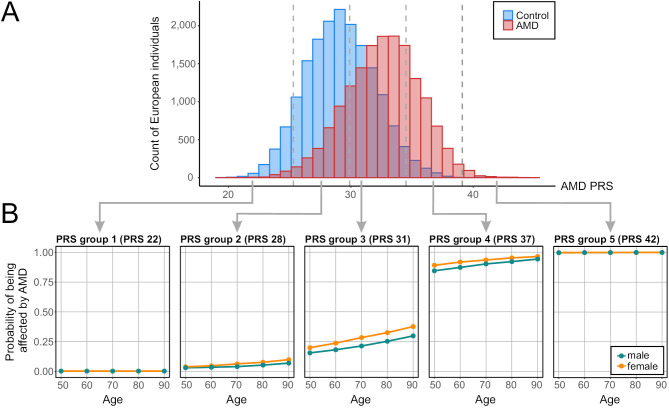 Figure 1
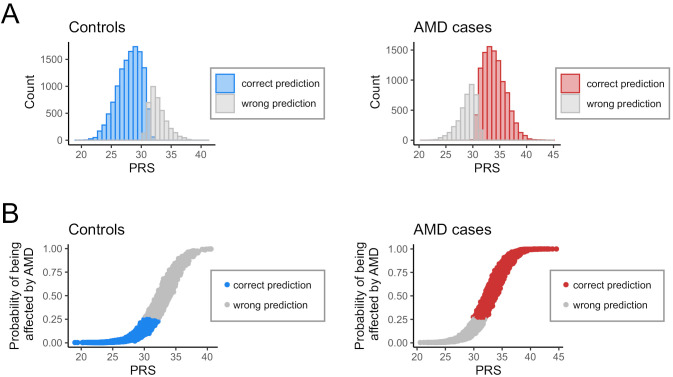 Figure 2
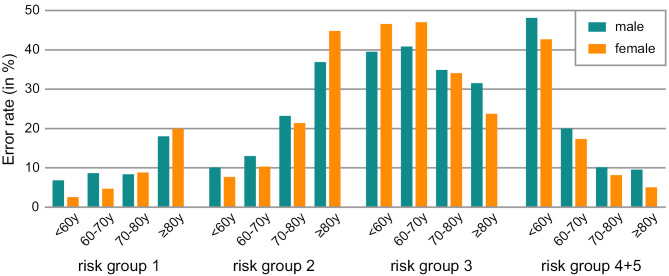 Figure 3
Peer Reviews
No public reviews on file for this paper yet. If you reviewed it on a platform where reviews are public (OpenReview, ICLR, NeurIPS, ICML), you can paste yours below so the community can read it here.
Videos
No videos yet. Explain this paper in a talk, walkthrough, or lecture? Add one.
Taxonomy
TopicsRetinal Diseases and Treatments · Retinal Imaging and Analysis · Systemic Lupus Erythematosus Research