Early Intervention With Boiogito to Suppress Knee Osteoarthritis Progression: An Experimental Approach Using a Medial Meniscus Instability Rat Model
Kanako Izukashi, Takayuki Okumo, Tokito Tatsuo, Itaru Kachi, Yuta Iida, Takumi Nishio, Hideshi Ikemoto, Naoki Adachi, Koji Kanzaki, Masataka Sunagawa

TL;DR
This study shows that early use of Boiogito, a traditional Japanese medicine, can slow knee osteoarthritis progression in rats by improving joint function and reducing bone and cartilage damage.
Contribution
The study demonstrates the efficacy of early Boiogito administration in preventing knee osteoarthritis progression in a rat model.
Findings
Early Boiogito treatment improved motor function and reduced cartilage degradation in rats.
Early administration lowered subchondral bone osteoclast numbers and MMP-13 levels.
Late Boiogito treatment showed limited effectiveness compared to early intervention.
Abstract
Background Knee osteoarthritis (KOA) is a prevalent and chronic condition characterized by swelling, pain, and limited range of motion of the knee due to degenerative changes in joint structures, leading to impairment in performing daily activities. Although conservative treatments, such as exercise therapy and nonsteroidal anti-inflammatory drugs are employed, there are few effective therapeutic options for preventing disease progression. During early KOA, there is osteoclast proliferation in the subchondral bone, disruption in cartilage homeostasis, elevation of matrix metalloproteinase-13 (MMP-13) levels, and reduction in tissue inhibitors of matrix metalloproteinase-1 (TIMP-1) levels. Boiogito (BOT), which is a traditional Japanese medicinal formula, attenuates KOA progression, however, its effects when administered after KOA progression remain unclear. This study aimed to assess…
Genes, proteins, chemicals, diseases, species, mutations and cell lines named across the full text — each resolved to its canonical identifier and authoritative record.
Click any figure to enlarge with its caption.
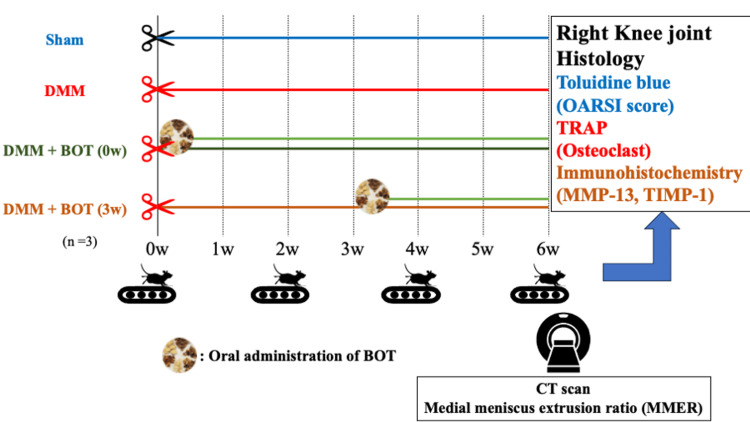 Figure 1
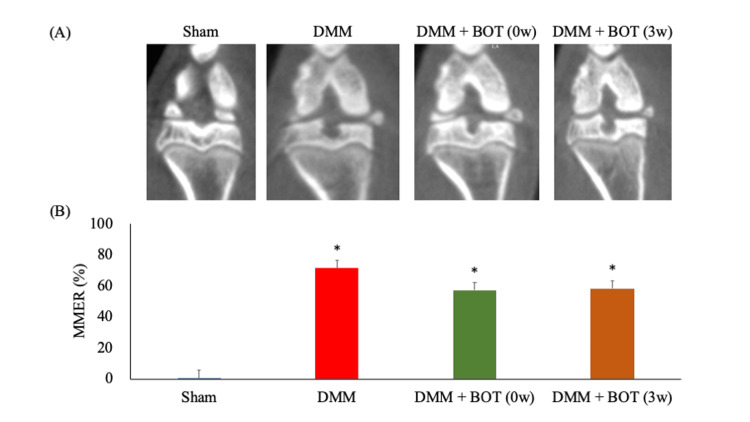 Figure 2
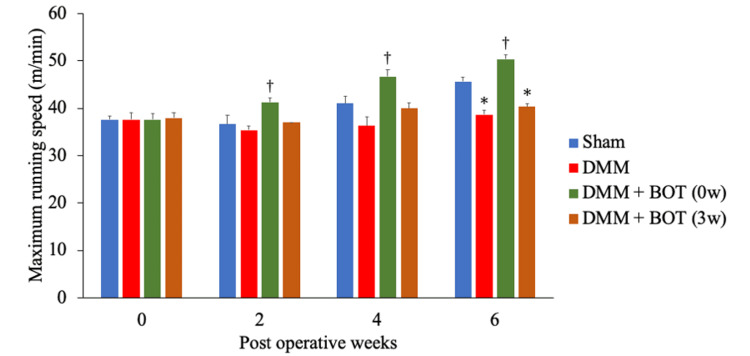 Figure 3
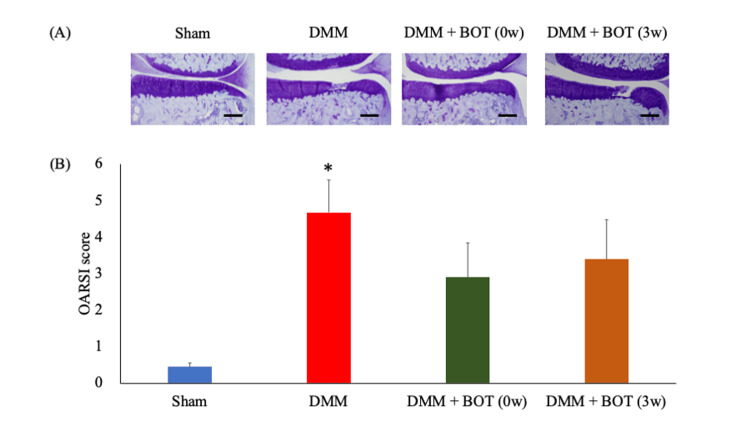 Figure 4
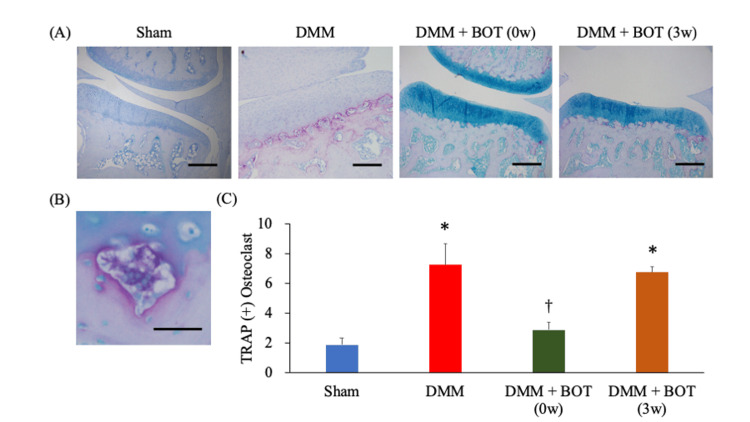 Figure 5
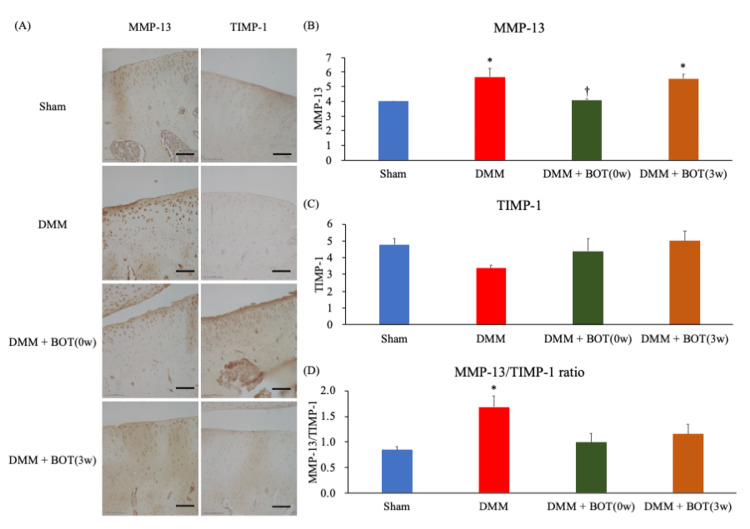 Figure 6
Peer Reviews
No public reviews on file for this paper yet. If you reviewed it on a platform where reviews are public (OpenReview, ICLR, NeurIPS, ICML), you can paste yours below so the community can read it here.
Videos
No videos yet. Explain this paper in a talk, walkthrough, or lecture? Add one.
Taxonomy
TopicsOsteoarthritis Treatment and Mechanisms · Knee injuries and reconstruction techniques · Total Knee Arthroplasty Outcomes