Detoxome Capacity of the Adult Rumen Fluke Calicophoron daubneyi Extends into Its Secreted Extracellular Vesicles
Nathan Rhys Allen, Kathryn M. Huson, Lukas Prchal, Mark W. Robinson, Peter M. Brophy, Russell M. Morphew

TL;DR
The study explores the detoxification enzymes in the rumen fluke Calicophoron daubneyi, including those in its extracellular vesicles, to better understand its resistance to drugs.
Contribution
This is the first study to characterize the detoxome of Calicophoron daubneyi, including extracellular vesicle enzyme profiles.
Findings
Transcriptome analysis identified Phase I and II xenobiotic metabolizing enzymes in C. daubneyi.
Six GST isoforms were identified in adult rumen fluke, with additional variants found through global proteomics.
Extracellular vesicles of C. daubneyi contain a similar GST profile but lack some isoforms and include a sulfotransferase.
Abstract
Helminth parasites have long adapted to survive hostile host environments and can likely adapt against the chemical anthelmintic challenge. One proposed adaptation route is via Phase I and II xenobiotic metabolizing enzymes (XMEs). For successful Helminth pharmacotherapy discovery programs, a working understanding of Helminth-derived chemical detoxification, the Helminth detoxome, is a must. At present, the detoxome of a newly emerging Helminth parasite, the rumen fluke Calicophoron daubneyi, remains unexplored. Thus, a combined bioinformatics, sub-, and global-proteomic approach has been employed to examine the detoxome of adult C. daubneyi. Transcriptome analysis revealed a complement of Phase I (cytochrome P450s and monoamine oxygenases) and Phase II (glutathione transferases [GSTs] and sulfotransferases) XMEs. Affinity-led subproteomic exploration of the GSTs revealed six GST…
Genes, proteins, chemicals, diseases, species, mutations and cell lines named across the full text — each resolved to its canonical identifier and authoritative record.
Click any figure to enlarge with its caption.
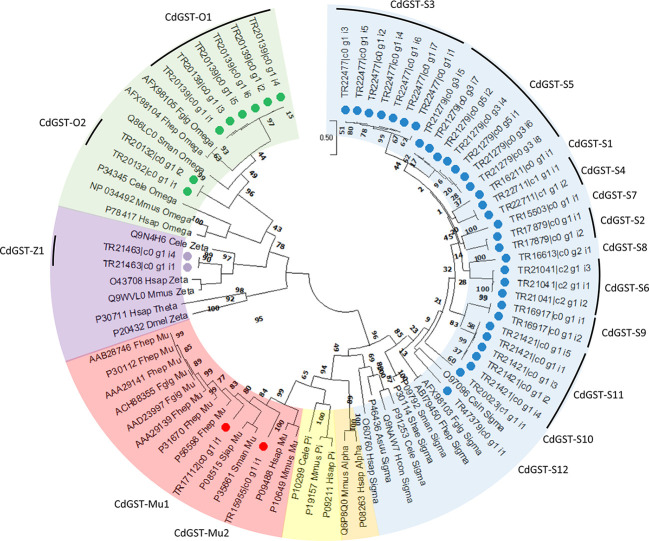 Figure 1
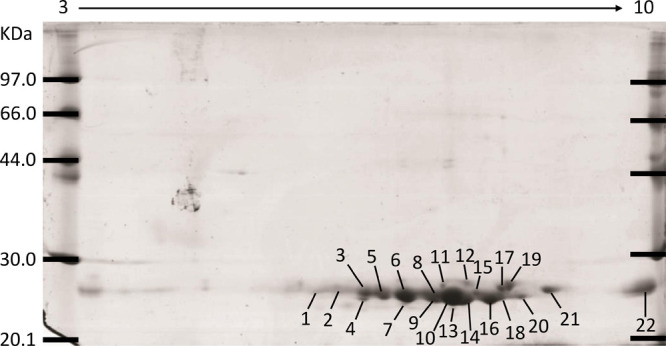 Figure 2
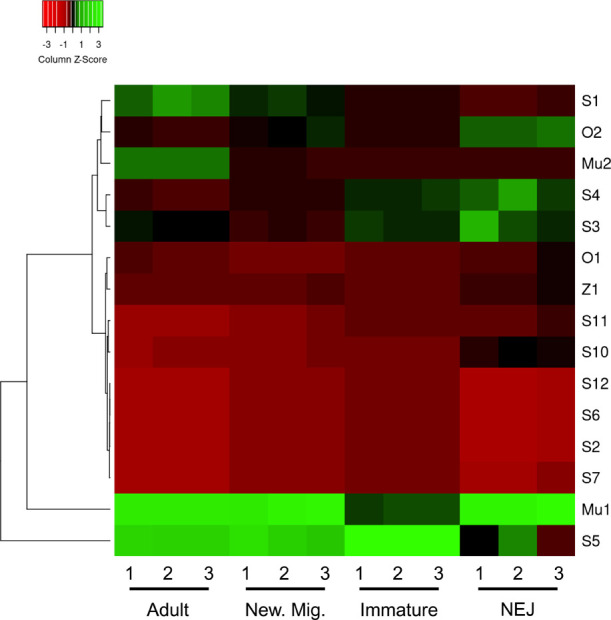 Figure 3
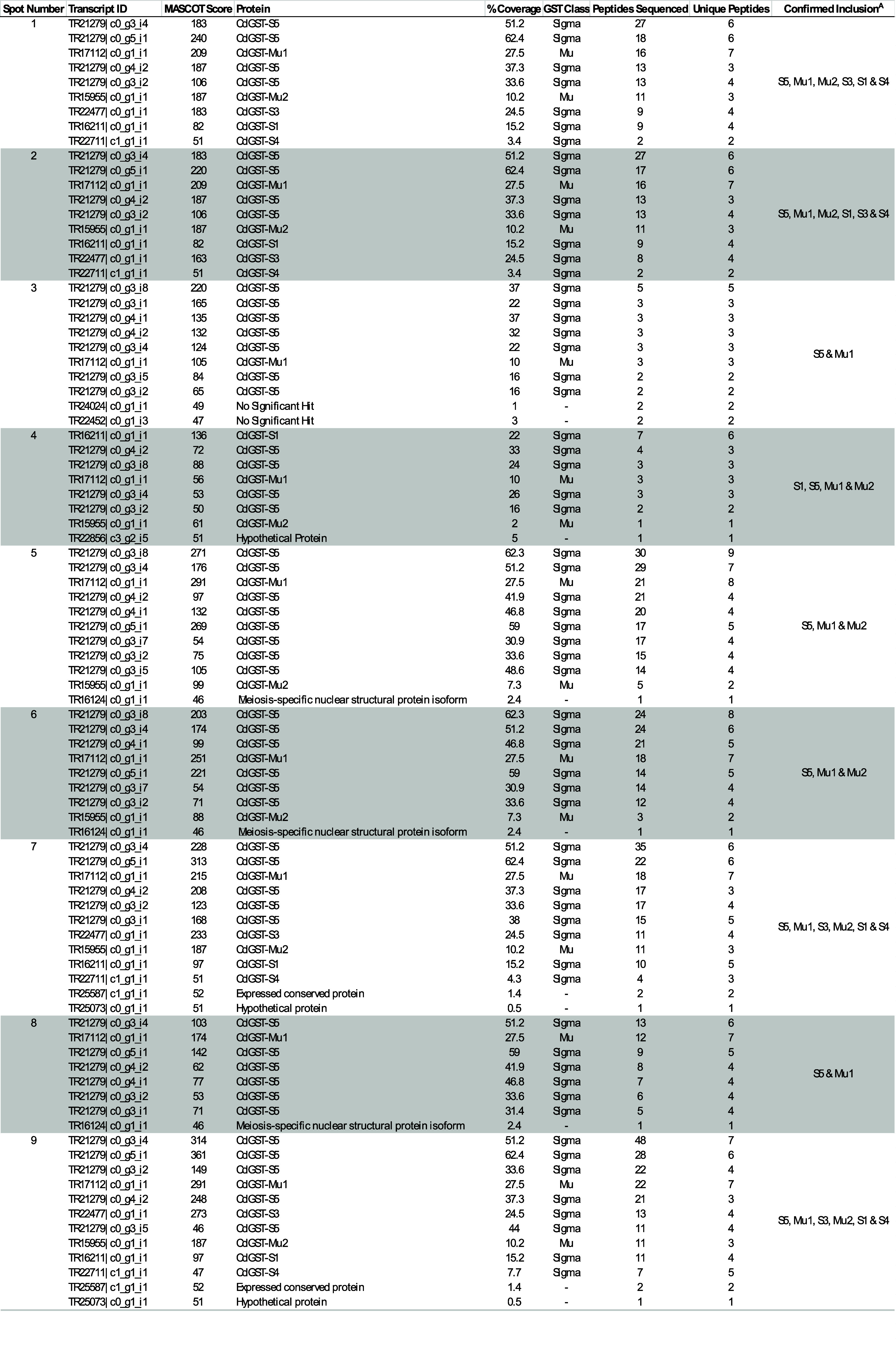 Figure 4
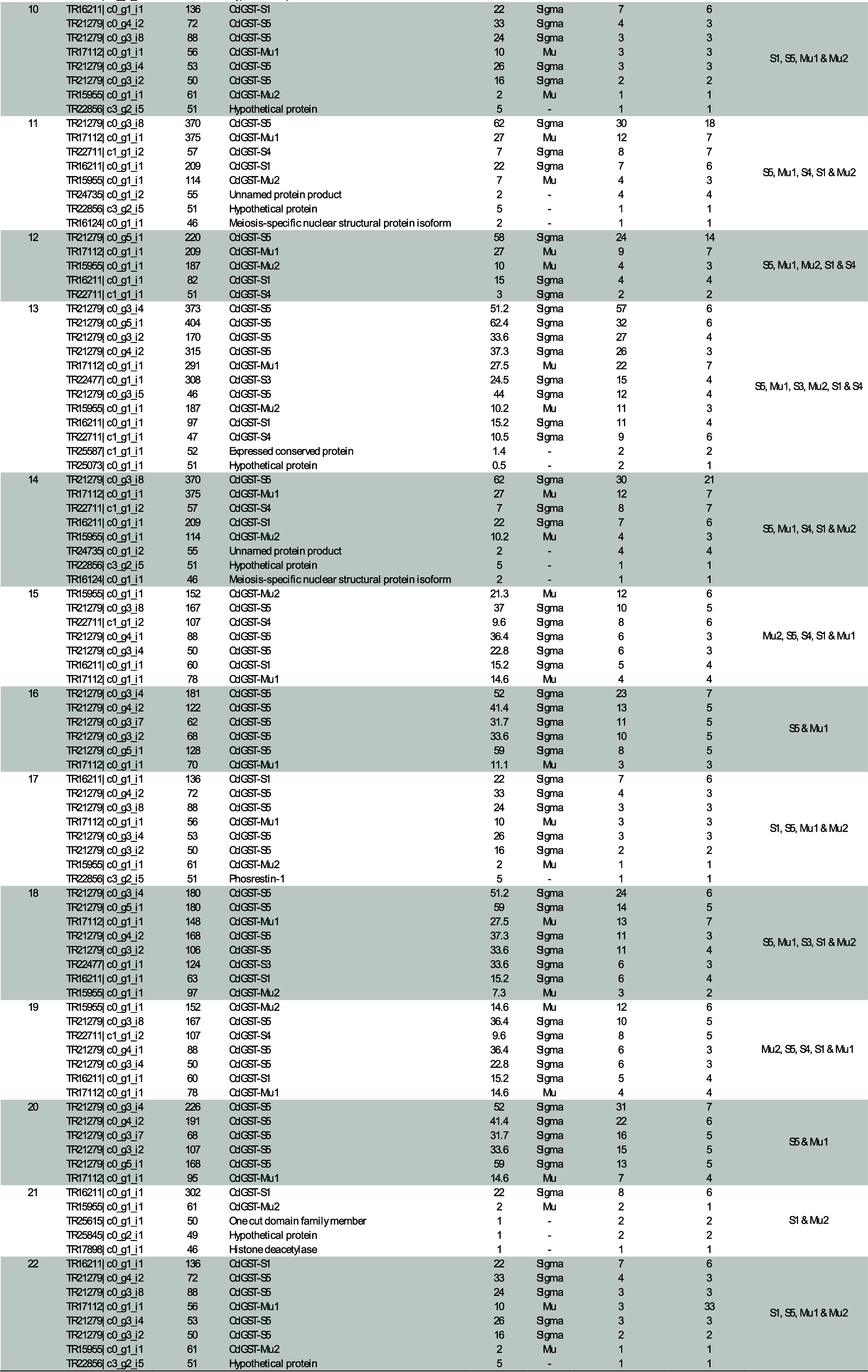 Figure 5
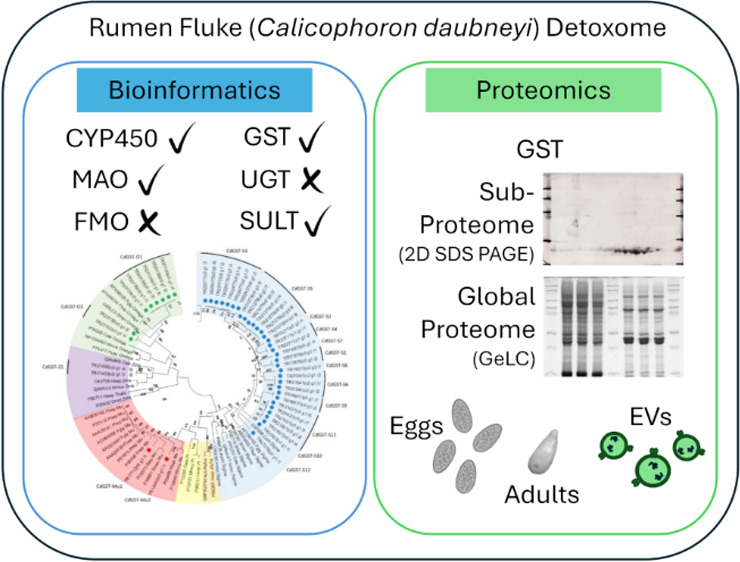 Figure 6
Peer Reviews
No public reviews on file for this paper yet. If you reviewed it on a platform where reviews are public (OpenReview, ICLR, NeurIPS, ICML), you can paste yours below so the community can read it here.
Videos
No videos yet. Explain this paper in a talk, walkthrough, or lecture? Add one.
Taxonomy
TopicsVector-borne infectious diseases · Insect and Pesticide Research · Plant and Fungal Interactions Research