A Predictive Model for Surgical Approach Selection in Robotic Partial Nephrectomy and Its Perioperative Outcomes Based on Single‐Center Retrospective Data
Fan Shu, Zhuo Liu, Peichen Duan, Yichang Hao, Xin Ma, Hongxian Zhang, Guoliang Wang, Xiaojun Tian, Lei Liu, Shudong Zhang

TL;DR
This study compares two surgical approaches for robotic partial nephrectomy and builds a model to predict which approach is better based on patient and tumor characteristics.
Contribution
A novel predictive model is developed to guide surgical approach selection in robotic partial nephrectomy using single-center retrospective data.
Findings
The transperitoneal approach had higher estimated blood loss and hemoglobin change compared to the retroperitoneal approach.
The prediction model achieved area under the curve values of 0.84 (internal validation) and 0.77 (external validation).
Retroperitoneal approach is recommended for smaller tumors in the upper pole/posterior and with an accessory renal artery.
Abstract
To compare the perioperative and postoperative outcomes of transperitoneal and retroperitoneal robotic partial nephrectomy (RPN) and develop a prediction model for reference to select the approach. We retrospectively reviewed our single‐institutional RPN database. The patients were divided into training and validation sets. In training set, transperitoneal and retroperitoneal cases were matched using propensity score matching to balance confounding factors. The intraoperative and postoperative outcomes of both approaches were compared. A prediction model was constructed to predict the probability of the retroperitoneal approach. The model was then externally validated using the data from the validation set. A total of 318 patients were included in the training set, and after propensity score matching, 200 cases were left. Additionally, 92 patients were included in the validation set.…
Genes, proteins, chemicals, diseases, species, mutations and cell lines named across the full text — each resolved to its canonical identifier and authoritative record.
Click any figure to enlarge with its caption.
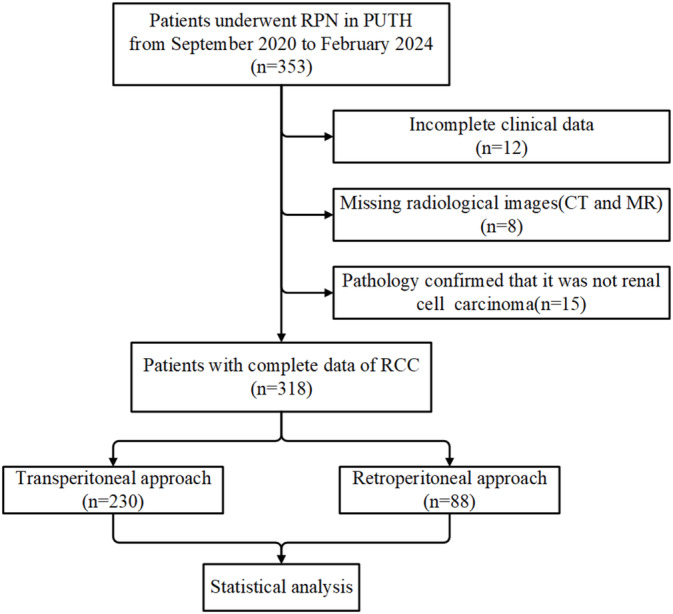 Figure 1
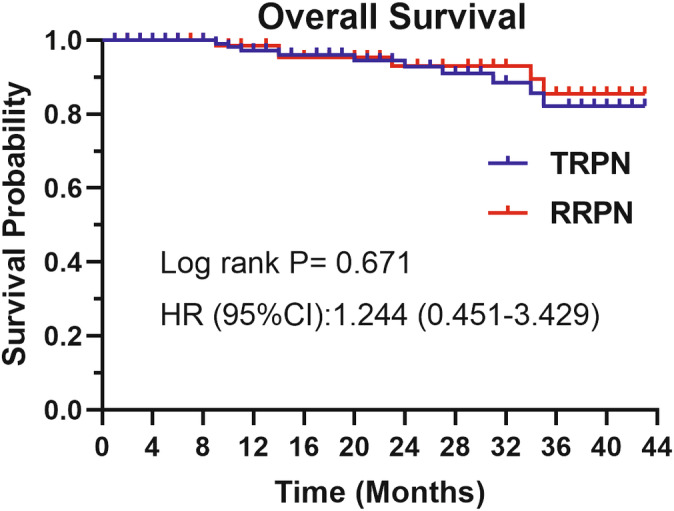 Figure 2
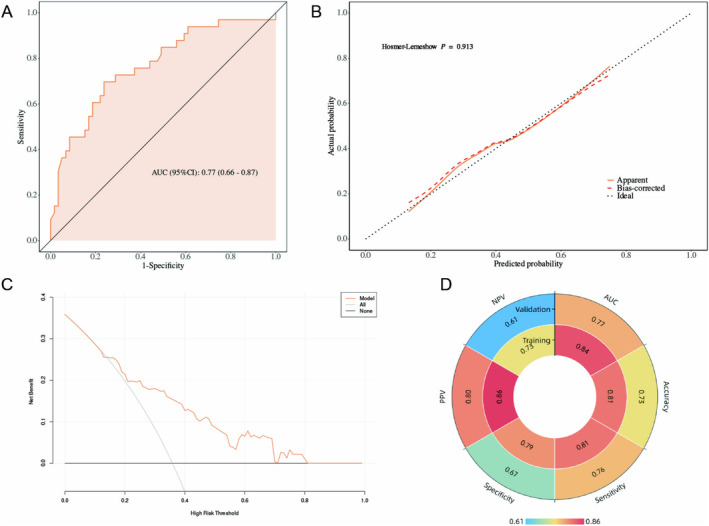 Figure 3
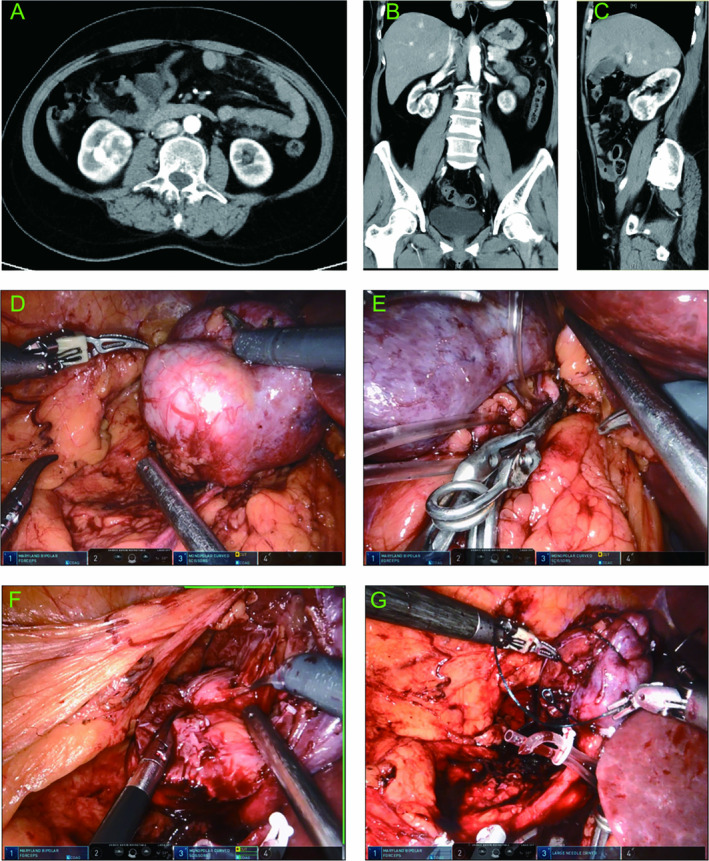 Figure 4
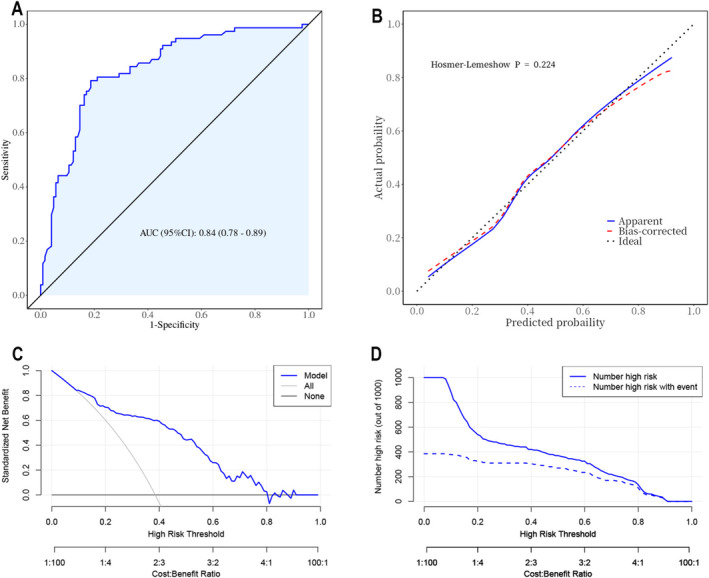 Figure 5
 Figure 6
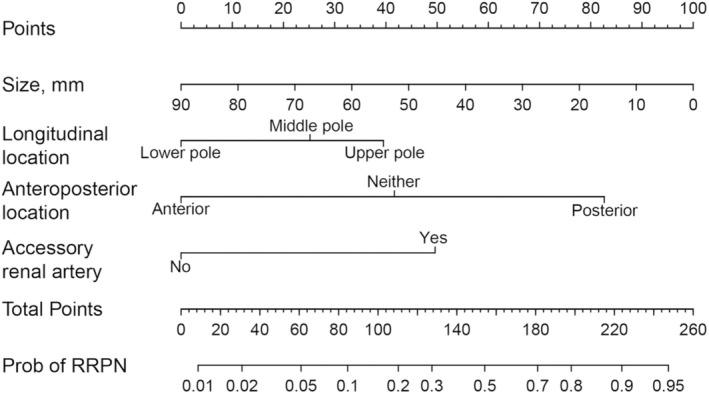 Figure 7
Peer Reviews
No public reviews on file for this paper yet. If you reviewed it on a platform where reviews are public (OpenReview, ICLR, NeurIPS, ICML), you can paste yours below so the community can read it here.
Videos
No videos yet. Explain this paper in a talk, walkthrough, or lecture? Add one.
Taxonomy
TopicsRenal cell carcinoma treatment · Renal and Vascular Pathologies · Aortic aneurysm repair treatments