Management of coexisting patent foramen ovale and pulmonary arteriovenous malformation: a case report of sequential closure
Hiroto Yagasaki, Takeki Suzuki, Keitaro Watanabe, Ryota Watanabe, Toshiyuki Noda

TL;DR
A 72-year-old woman with a heart and lung condition was successfully treated with a two-step procedure, improving her symptoms and preventing further complications.
Contribution
The paper presents a successful staged treatment approach for coexisting PFO and PAVM, emphasizing individualized strategies and long-term follow-up.
Findings
Staged closure of PFO followed by PAVM embolization significantly improved symptoms and resolved shunting.
No residual shunting or symptoms were observed during a 2-year follow-up.
The case highlights the importance of thorough evaluation in patients with cryptogenic stroke and POS.
Abstract
Concurrent patent foramen ovale (PFO) and pulmonary arteriovenous malformation (PAVM) are rare but can cause paradoxical embolism and platypnoea–orthodeoxia syndrome (POS). A 72-year-old female with embolic stroke history developed positional dyspnoea. Evaluation revealed right-to-left shunting through PFO and PAVM in the right middle lobe. Orthodeoxia was confirmed by 6% SpO2 decrease upon position change. A staged approach was adopted: PFO closure with Amplatzer™ Occluder, followed by PAVM embolization 1 month later. Symptoms improved significantly post-procedure. No residual shunting or symptoms have been observed during the 2-year follow-up. This case emphasizes thorough evaluation in patients with cryptogenic stroke and POS, especially when symptoms persist. It demonstrates the effectiveness of staged treatment for concurrent PFO and PAVM, highlighting the importance of…
Genes, proteins, chemicals, diseases, species, mutations and cell lines named across the full text — each resolved to its canonical identifier and authoritative record.
Click any figure to enlarge with its caption.
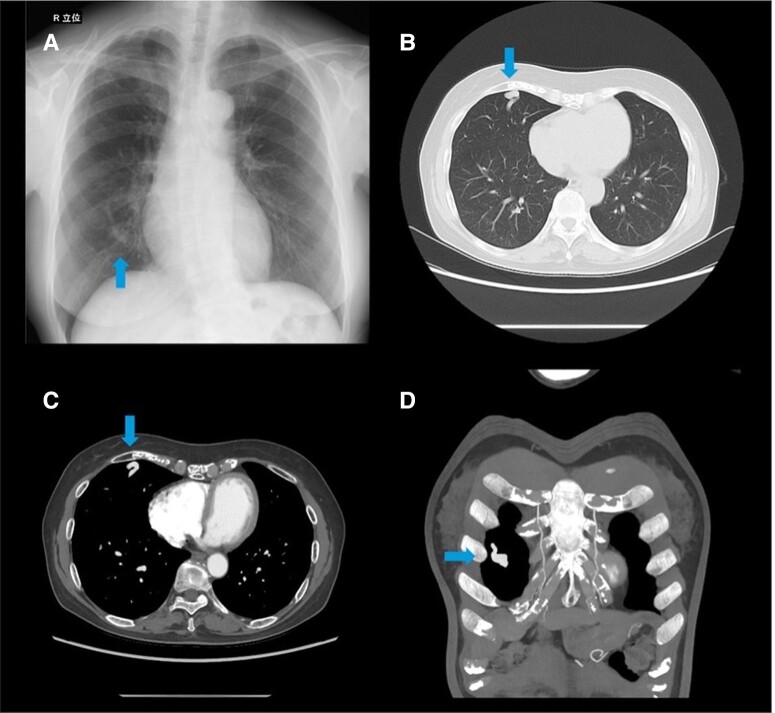 Figure 1
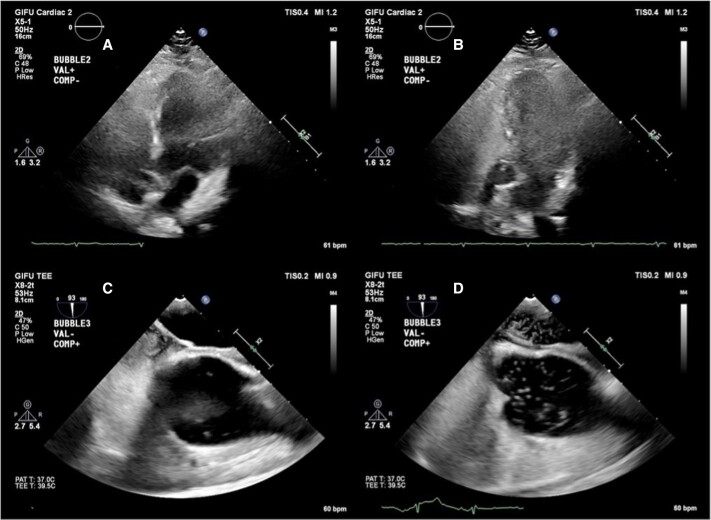 Figure 2
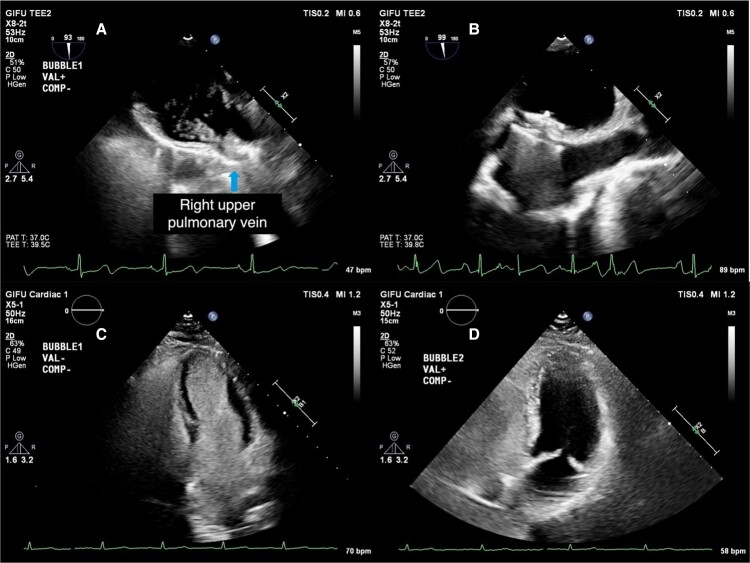 Figure 3
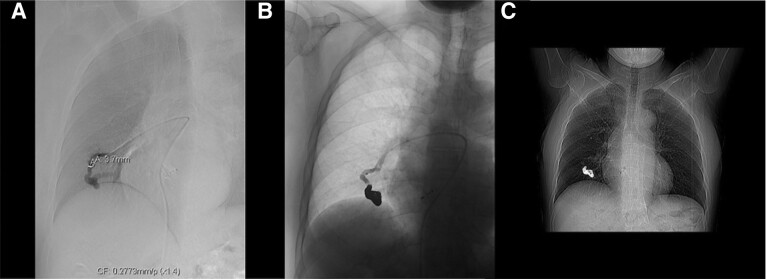 Figure 4
 Figure 5
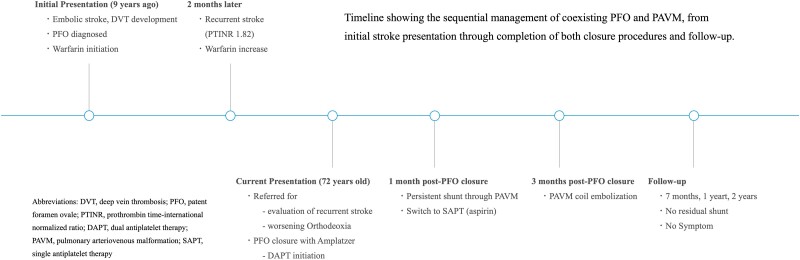 Figure 6
Peer Reviews
No public reviews on file for this paper yet. If you reviewed it on a platform where reviews are public (OpenReview, ICLR, NeurIPS, ICML), you can paste yours below so the community can read it here.
Videos
No videos yet. Explain this paper in a talk, walkthrough, or lecture? Add one.
Taxonomy
TopicsCardiovascular and Diving-Related Complications · Vascular Anomalies and Treatments · Congenital Heart Disease Studies