Reevaluation of the Impact of the Novel Likely Pathogenic Variant c.1286_1288delAGA in the ATP8A2 Gene: A 7‐Year Follow‐Up With Clinical, Genetic, and ACMG Insights in an Iranian Family
Samira Kalayinia, Hamed Hesami, Reza Shervin Badv, Maryam Rabbani, Zahra Rezaei, Zohreh Hosseinkhani, Sedighe Nikbakht, Ameneh Sharifi, Bahman Akbari, Siamak Mirab Samiee, Nejat Mahdieh

TL;DR
This study reports a 7-year follow-up of a male with CAMRQ4 syndrome caused by a genetic variant in ATP8A2, confirming its role in the disorder and highlighting the importance of genetic testing.
Contribution
The study identifies a novel likely pathogenic in-frame deletion variant in the ATP8A2 gene associated with CAMRQ4 syndrome.
Findings
A homozygous in-frame deletion variant (c.1286_1288delAGA) in ATP8A2 was confirmed to be pathogenic through segregation analysis.
The study expands the known mutational spectrum of ATP8A2-related CAMRQ syndrome.
Clinical and genetic data support the importance of comprehensive genetic testing for rare neurological disorders.
Abstract
Cerebellar ataxia, mental retardation, and dysequilibrium (CAMRQ) syndrome is a rare neurodevelopmental disorder characterized by non‐progressive cerebellar ataxia, intellectual disability, and cerebellar atrophy. Despite its rarity, CAMRQ syndrome poses significant challenges due to its heterogeneous genetic etiology and complex clinical presentation. This study details the evolving clinical phenotype over 7 years in a male with CAMRQ4 syndrome caused by an in‐frame deletion variant in ATP8A2 gene. A detailed clinical evaluation was performed, accompanied by tests and imaging studies. Clinical and genetic investigations, including segregation analysis, were carried out to confirm the pathogenicity of the identified variant. The evolving clinical phenotype of the patient, including developmental delay, cerebellar ataxia, and hand‐foot crawling, was thoroughly investigated. A…
Genes, proteins, chemicals, diseases, species, mutations and cell lines named across the full text — each resolved to its canonical identifier and authoritative record.
Click any figure to enlarge with its caption.
 Figure 1
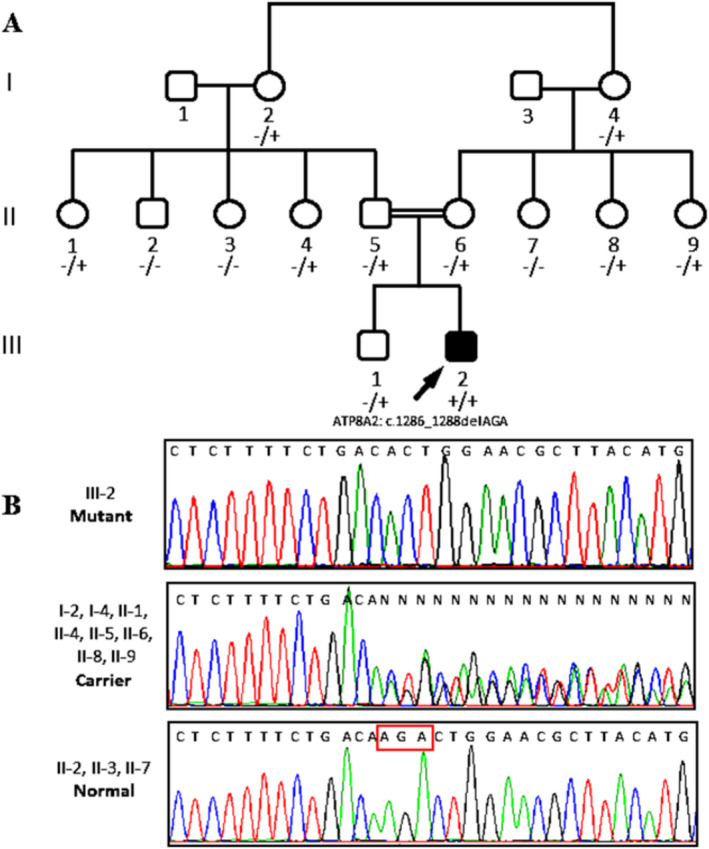 Figure 2
 Figure 3
Peer Reviews
No public reviews on file for this paper yet. If you reviewed it on a platform where reviews are public (OpenReview, ICLR, NeurIPS, ICML), you can paste yours below so the community can read it here.
Videos
No videos yet. Explain this paper in a talk, walkthrough, or lecture? Add one.
Taxonomy
TopicsMitochondrial Function and Pathology · Metabolism and Genetic Disorders · Genetics and Neurodevelopmental Disorders