A guide to selecting high-performing antibodies for Serine/threonine-protein phosphatase 2A 56 kDa regulatory subunit delta isoform (PPP2R5D) for use in Western Blot, immunoprecipitation and immunofluorescence
Riham Ayoubi, Maryam Fotouhi, Charles Alende, Kathleen Southern, Carl Laflamme, Nadia Bouhamdani, Kathleen Southern

TL;DR
This paper evaluates six commercial antibodies for PPP2R5D to help researchers choose the best ones for Western Blot, immunoprecipitation, and immunofluorescence.
Contribution
The study provides a standardized evaluation of PPP2R5D antibodies to improve reproducibility and guide researchers in selecting high-performing reagents.
Findings
Six PPP2R5D antibodies were tested for performance in Western Blot, immunoprecipitation, and immunofluorescence.
Results are shared as an open resource to support antibody reproducibility and guide experimental choices.
The study highlights the importance of validated antibodies for understanding PPP2R5D's role in neurodevelopmental disorders.
Abstract
Protein phosphatase 2A is a serine/threonine phosphatase with activity dependent on an associated regulatory subunit, serine/threonine-protein phosphatase 2A 56 kDa regulatory subunit delta (δ) isoform (PPP2R5D). PPP2R5D is the δ isoform in the B56 family of regulatory subunits. Abundantly expressed in the brain and involved in a broad range of cellular processes, PPP2R5D plays an essential role in modulating key neuronal pathways and signalling. Pathogenic mutations in the PPP2R5D gene are linked to clinical symptoms characterized by neurodevelopmental delay, intellectual disability, and autism spectrum disorders. The etiology of these genetic disorders remains unknown, which can partly be due to the lack of independently characterized antibodies. Here we have characterized six PPP2R5D commercial antibodies for Western Blot, immunoprecipitation, and immunofluorescence using a…
Genes, proteins, chemicals, diseases, species, mutations and cell lines named across the full text — each resolved to its canonical identifier and authoritative record.
Click any figure to enlarge with its caption.
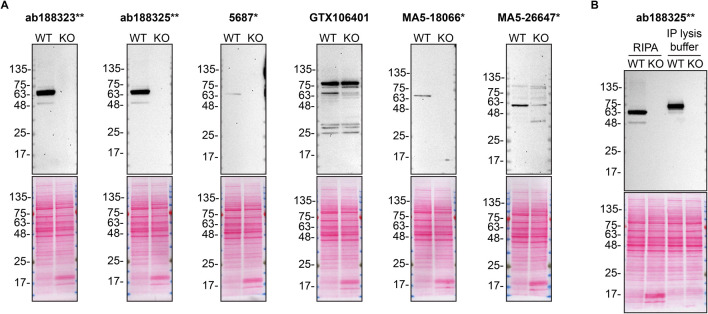 Figure 1
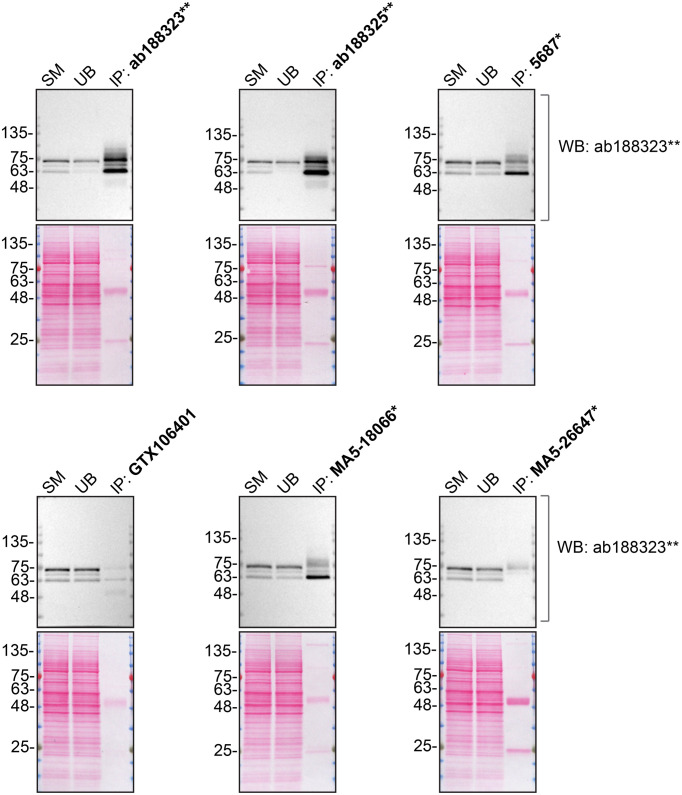 Figure 2
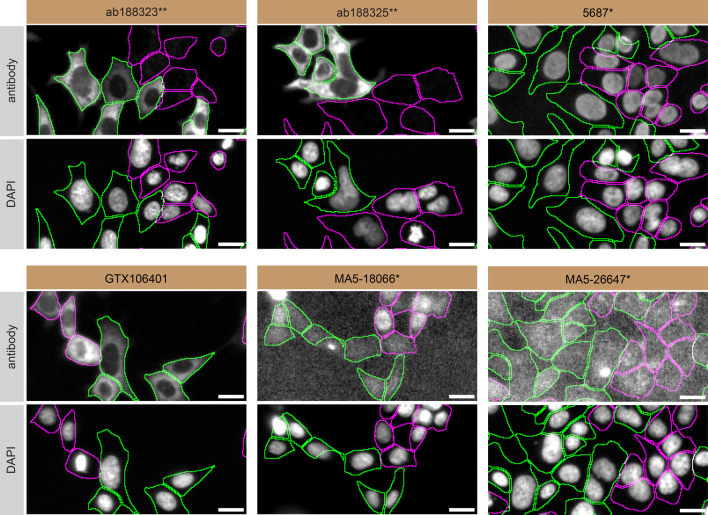 Figure 3
Peer Reviews
No public reviews on file for this paper yet. If you reviewed it on a platform where reviews are public (OpenReview, ICLR, NeurIPS, ICML), you can paste yours below so the community can read it here.
Videos
No videos yet. Explain this paper in a talk, walkthrough, or lecture? Add one.
Taxonomy
TopicsUbiquitin and proteasome pathways · Cellular transport and secretion · Genetics and Neurodevelopmental Disorders