Search for and functional annotation of multi-domain PLA2 family proteins in flatworms
M.E. Bocharnikova, I.I. Turnaev, D.A. Afonnikov

TL;DR
This study systematically identifies and analyzes phospholipase A2 (PLA2) genes in flatworms, revealing patterns of gene duplication and loss linked to parasitism and host interaction.
Contribution
The first systematic identification and functional annotation of multi-domain PLA2 family proteins in flatworms, including insights into gene evolution and host-parasite interactions.
Findings
12 of 13 known animal PLA2 types were identified in flatworms, grouped into 11 orthologous groups.
Parasitic flatworms show gene loss in specific PLA2 groups, while free-living species have multiple gene copies.
Secreted PLA2 in Digenea is associated with cancer transformation in host cells, as seen in Clonorchis sinensis.
Abstract
The phospholipase A2 (PLA2) is a superfamily of hydrolases that catalyze the hydrolysis of phospholipids and play a key role in many molecular processes in the cells and the organism as a whole. This family consists of 16 groups divided into six main types. PLA2 were first isolated from venom toxins and porcine pancreatic juice. The study of these enzymes is currently of great interest, since it has been shown that a number of PLA2 are involved in the processes of carcinogenesis. PLA2 enzymes were characterized in detail in model organisms and humans. However, their presence and functional role in non-model organisms is poorly understood. Such poorly studied taxa include flatworms, a number of species of which are human parasites. Several PLA2 genes have previously been characterized in parasitic flatworms and their possible role in parasite-host interaction has been shown. However, no…
Genes, proteins, chemicals, diseases, species, mutations and cell lines named across the full text — each resolved to its canonical identifier and authoritative record.
Click any figure to enlarge with its caption.
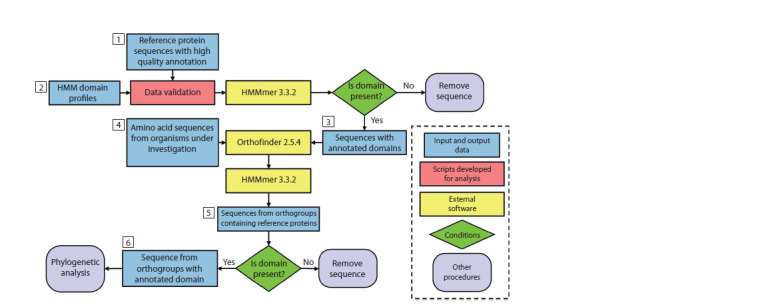 Figure 1
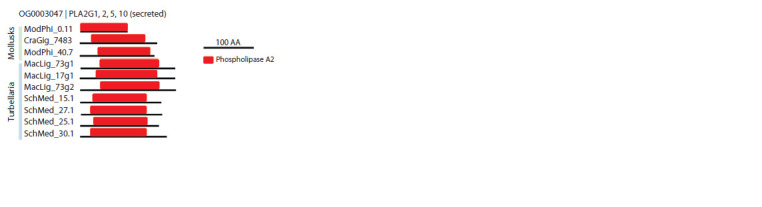 Figure 2
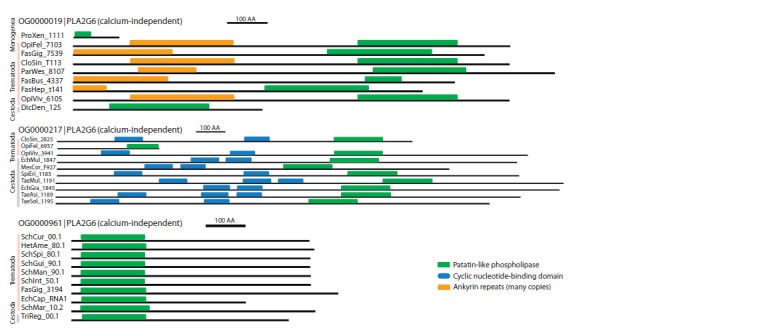 Figure 3
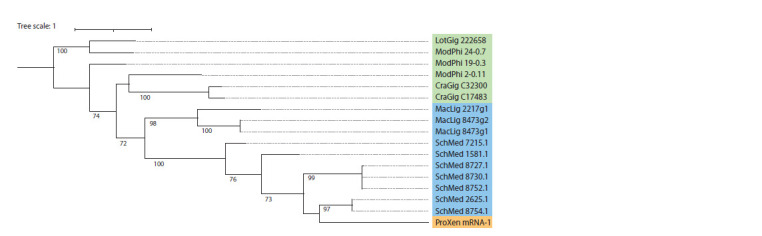 Figure 4
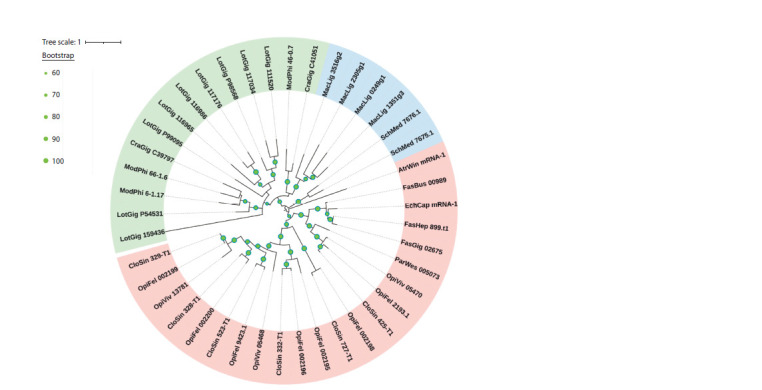 Figure 5
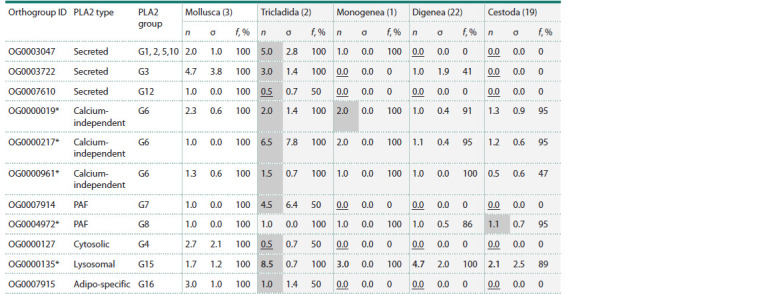 Figure 6
Peer Reviews
No public reviews on file for this paper yet. If you reviewed it on a platform where reviews are public (OpenReview, ICLR, NeurIPS, ICML), you can paste yours below so the community can read it here.
Videos
No videos yet. Explain this paper in a talk, walkthrough, or lecture? Add one.
Taxonomy
TopicsParasite Biology and Host Interactions · Parasites and Host Interactions · Invertebrate Immune Response Mechanisms