Dual-layer dual-energy CT characterization of thrombus composition in acute pulmonary embolism and chronic thromboembolic pulmonary hypertension
Roman Johannes Gertz, Simon Lennartz, Kenan Kaya, Robert Peter Wawer Matos Reimer, Lenhard Pennig, Jonathan Kottlors, Jan Robert Kröger, Carsten Herbert Gietzen, Nils Große Hokamp, Stephan Rosenkranz, Florian Johannes Fintelmann, Michael Pienn, Alexander Christian Bunck

TL;DR
This study shows that dual-layer dual-energy CT can distinguish between acute pulmonary embolism and chronic thromboembolic pulmonary hypertension by analyzing thrombus composition and contrast characteristics.
Contribution
The study introduces dlDECT-based characterization of thrombus composition for differentiating acute and chronic pulmonary thromboembolic conditions.
Findings
Thrombi in CTEPH patients showed lower attenuation and reduced iodine uptake compared to acute PE patients.
Conventional images and VMI50keV reconstructions achieved high accuracy (AUC 0.92 and 0.91) in differentiating acute and chronic thrombi.
Combining MPA diameter with thrombus attenuation improved diagnostic accuracy.
Abstract
To evaluate dual-layer dual-energy computed tomography (dlDECT)-based characterization of thrombus composition for differentiation of acute pulmonary embolism (PE) and chronic thromboembolic pulmonary hypertension (CTEPH). This retrospective single center cohort study included 49 patients with acute PE and 33 patients with CTEPH who underwent CT pulmonary angiography on a dlDECT from 06/2016 to 06/2022. Conventional images), material specific images (virtual non-contrast [VNC], iodine density overlay [IDO], electron density [ED]), and virtual monoenergetic images (VMI50KeV) were analyzed. Regions-of-interest (ROIs) were manually placed in pulmonary artery thrombi, and morphological imaging characteristics for acute and chronic PE were assessed. Area under the receiver operating characteristics curve (AUC) of ROI measurements, morphological imaging features, and their combination in…
Genes, proteins, chemicals, diseases, species, mutations and cell lines named across the full text — each resolved to its canonical identifier and authoritative record.
Click any figure to enlarge with its caption.
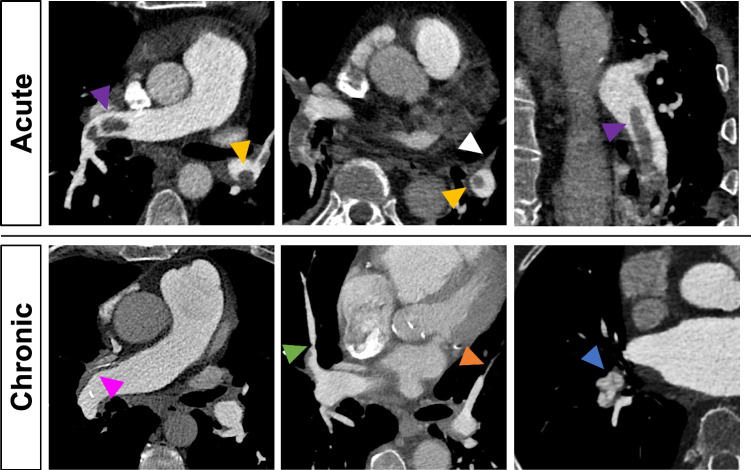 Figure 1
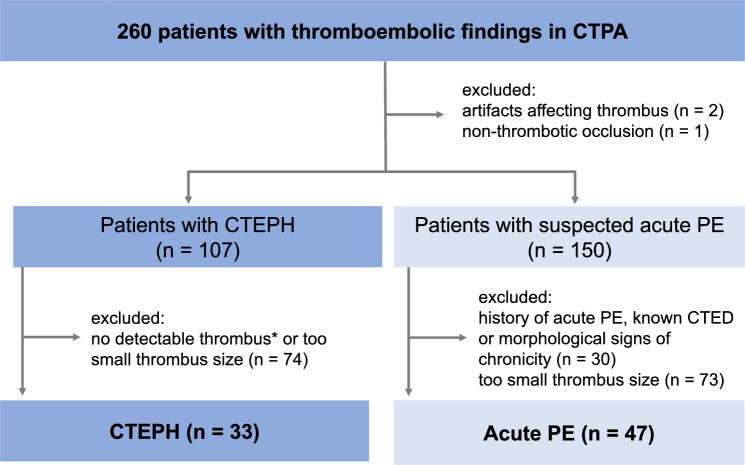 Figure 2
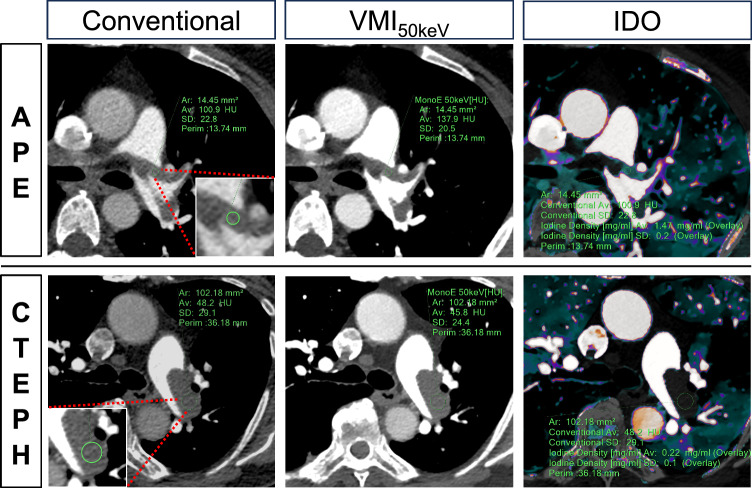 Figure 3
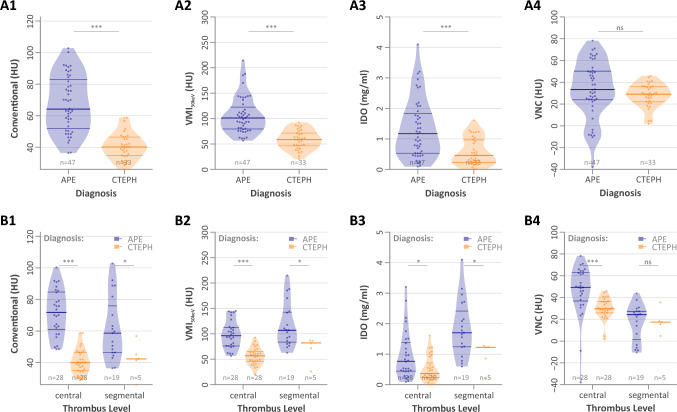 Figure 4
Peer Reviews
No public reviews on file for this paper yet. If you reviewed it on a platform where reviews are public (OpenReview, ICLR, NeurIPS, ICML), you can paste yours below so the community can read it here.
Videos
No videos yet. Explain this paper in a talk, walkthrough, or lecture? Add one.
Taxonomy
TopicsPulmonary Hypertension Research and Treatments · Venous Thromboembolism Diagnosis and Management · Cardiac Imaging and Diagnostics