Orbital Swelling Due to Forceful Sneezing: Is It Possible?
Mashhood U Qazi

TL;DR
A man developed orbital swelling after forceful sneezing, leading to a fracture and air in the orbit, which resolved with conservative treatment.
Contribution
Highlights a rare case of orbital fracture caused by forceful sneezing without trauma.
Findings
CT scan confirmed a fracture of the medial orbital wall and subcutaneous emphysema.
The patient recovered fully after conservative treatment with antibiotics.
No trauma history was present, making this case unusual.
Abstract
A 28-year-old male patient presented to the emergency department with a sudden onset of unilateral orbital swelling associated with pain immediately after he had an episode of forceful sneezing. There was no history of trauma. Physical examination revealed obvious right orbital swelling. The patient had difficulty opening the right eye; however, the eye movements were within normal limits. Visual acuity was intact. In the absence of trauma, orbital cellulitis was considered as the differential diagnosis. However, computed tomography (CT) of the orbit showed a fracture of the medial wall of the right orbit with air squeezing into the nearby right orbit and large subcutaneous periorbital subcutaneous emphysema. The patient was treated conservatively with antibiotics and admitted to the hospital for five days. Subsequently, he made a full recovery with resolutions of all symptoms and was…
Genes, proteins, chemicals, diseases, species, mutations and cell lines named across the full text — each resolved to its canonical identifier and authoritative record.
Click any figure to enlarge with its caption.
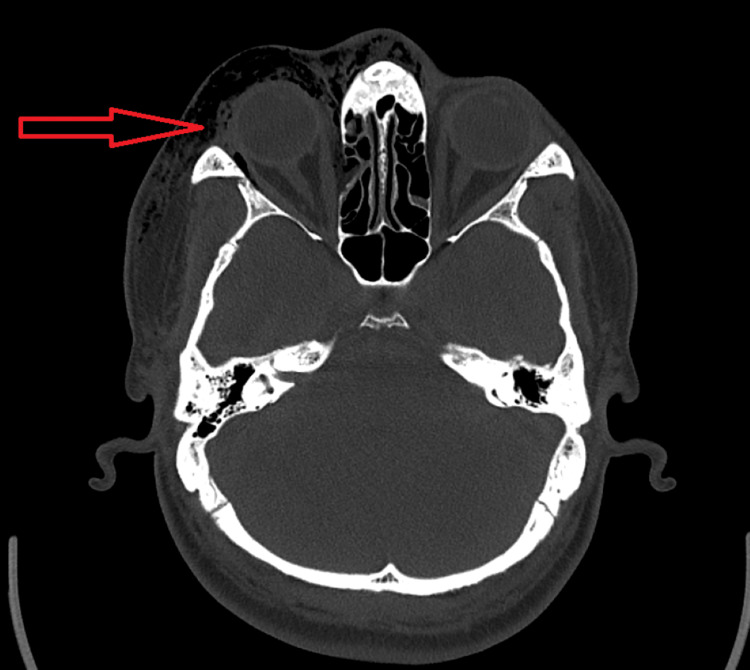 Figure 1
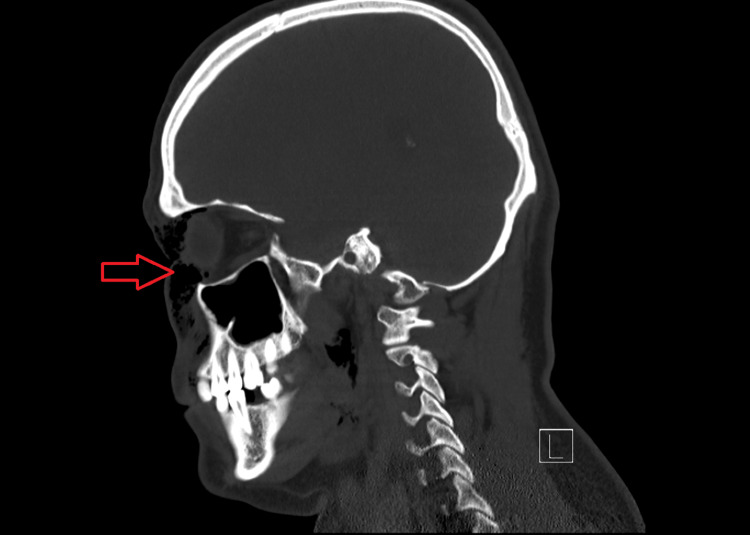 Figure 2
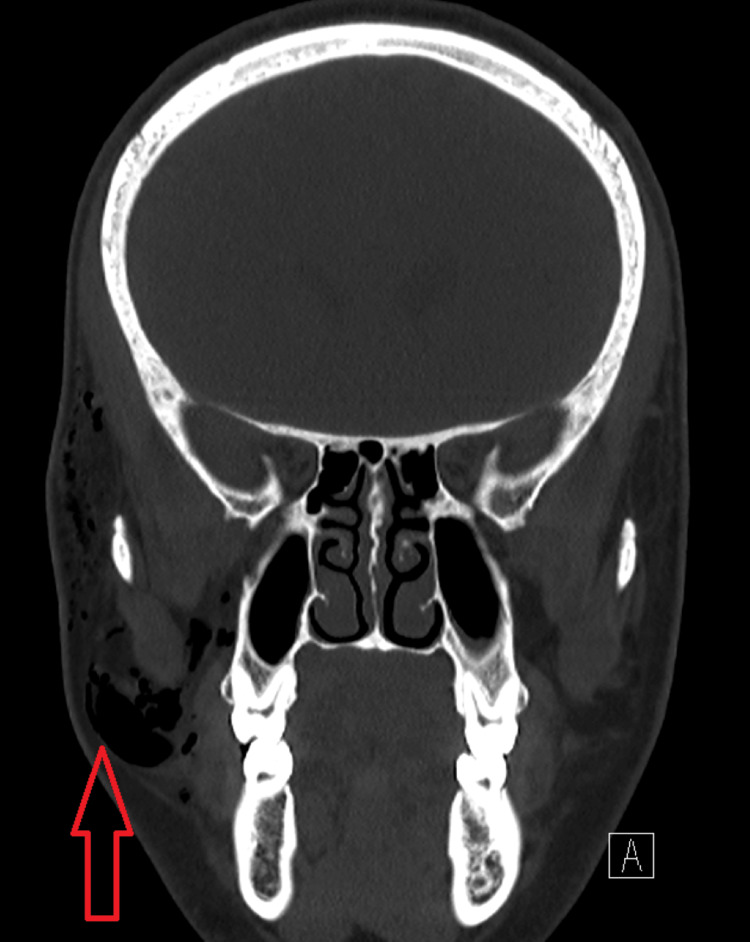 Figure 3
Peer Reviews
No public reviews on file for this paper yet. If you reviewed it on a platform where reviews are public (OpenReview, ICLR, NeurIPS, ICML), you can paste yours below so the community can read it here.
Videos
No videos yet. Explain this paper in a talk, walkthrough, or lecture? Add one.
Taxonomy
TopicsFacial Trauma and Fracture Management · Sinusitis and nasal conditions · Traumatic Ocular and Foreign Body Injuries
Introduction
Emergency department physicians often see patients who present with orbital swellings. Unilateral orbital swellings can have a wide range of differential diagnoses. It can range from physical trauma to the orbit to non-traumatic causes. Trauma and sinus diseases are the most common causes of orbital swelling compared to non-traumatic causes, which are rare [1]. Rare presentations are the cases that present to the emergency department, and if misdiagnosed, can result in significant morbidity and mortality [2]. Blunt facial trauma resulting in fracture of the ethmoidal, frontal, or maxillary sinus usually results in orbital swelling and emphysema [3]. Orbital cellulitis and orbital emphysema can both have similar presentations in a patient having eye swelling since their presentations mimic each other, thus posing a challenge to the treating physicians. Therefore, it is important to take a comprehensive history and perform a thorough physical examination. Usually, orbital emphysema not related to trauma is a self-limiting condition and can be effectively treated conservatively [4].
Herein, we present an unusual presentation of unilateral orbital swelling that was presented to the emergency department.
Case presentation
A 28-year-old male patient arrived at the emergency department with a sudden onset of unilateral orbital swelling, accompanied by pain, following an episode of forceful sneezing. There was no history of trauma. There was no prior medical history.
Physical examination revealed that there was obvious right orbital swelling with the presence of surgical emphysema. There were no lacerations or signs of bruising. Eye movements were within normal limits, and pupils were equal, round, and reactive to light and accommodation. Visual acuity in both eyes was tested and was found to be intact. However, the patient had difficulty opening the right eye. Crepitus was noted on palpation of the right eye.
Computer tomography (CT) showed a fracture of the medial wall of the right orbit with air squeezing into the nearby right orbit and large subcutaneous periorbital subcutaneous emphysema (Figure 1, 2, 3).
Axial CT view demonstrating right orbital subcutaneous emphysema as pointed out by the red arrow
Sagittal CT view showing orbital subcutaneous emphysema
Coronal CT view showing the extent of right orbital subcutaneous emphysema as pointed out by the red arrow
The patient was treated conservatively with intravenous antibiotics, co-amoxiclav, and admitted to the hospital for five days. The patient made a good recovery and was discharged home. The patient was subsequently seen in follow-up in the outpatient maxillofacial clinic in two weeks' time and was noted to have made a full recovery.
Discussion
In most of the studies, patients who had developed orbital emphysema after sneezing had a history of old periorbital trauma or surgery [1]. There has been limited literature available regarding orbital emphysema resulting from forceful sneezing. In the Jawaid study [2], a patient presented with orbital swelling after forceful nose blowing. Kocak's study [5] mentioned a case of a 30-year-old man who developed left orbital crepitus after sneezing.
It has been well-established that physical trauma can result in orbital emphysema. Positive airway ventilation such as continuous positive airway pressure (CPAP) can also result in orbital swelling secondary to mucosal irritation and orbital floor thinning as mentioned in the study by Komro [6].
With the orbit, the medial wall of the orbit is the most common place for orbital fractures [7]. In another study by Ariyoshi [8], a patient presented with orbital swelling and emphysema that had resulted from forceful nose blowing. A case report by Sen [9] mentioned a case of orbital emphysema that developed after sneezing. Treatment of non-traumatic orbital emphysema is conservative and usually involves observation and antibiotics.
Conclusions
Without physical trauma, forceful sneezing can result in orbital fracture causing unilateral orbital swelling. Upon reviewing such patients, instructions should be given that should include advice against sneezing or nose blowing, diving, and flying since pressurized air can enter the nasal cavity.
The reference list from the paper itself. Each links out to its DOI / PubMed record.
- 1Orbital emphysema after sneezing Ophthalmic Plast Reconstr Surg Gonzalez F Cal V Elhendi W 3093112120051605214910.1097/01.iop.0000170415.93858.6f · doi ↗ · pubmed ↗
- 2Orbital emphysema: nose blowing leading to a blown orbit BMJ Case Rep Jawaid MS 02015201510.1136/bcr-2015-212554 PMC 463668726516251 · doi ↗ · pubmed ↗
- 3Orbital emphysema: case reports and review of the literature Mayo Clin Proc Zimmer-Galler IE Bartley GB 115121691994830926110.1016/s 0025-6196(12)61036-2 · doi ↗ · pubmed ↗
- 4Orbital emphysema after a protracted episode of sneezing in a patient with no history of trauma or sinus surgery Ear Nose Throat J Khader QA Abdul-Baqi KJ 0389201010.1177/01455613100890110421086265 · doi ↗ · pubmed ↗
- 5Unilateral orbital emphysema after sneezing Ann Ophthalmol (Skokie Koçak N Oztürk T Zengin MO Kaynak S Men S 195198412009 https://europepmc.org/article/med/2021405620214056 · pubmed ↗
- 6Orbital defect and emphysema after nose blowing: a case report and literature review Cureus Komro JJ Williams PJ Lin DJ 014202210.7759/cureus.32958 PMC 987574936712780 · doi ↗ · pubmed ↗
- 7An analysis of pure blowout fractures and associated ocular symptoms J Craniofac Surg Shin JW Lim JS Yoo G Byeon JH 7037072420132371486310.1097/SCS.0b 013e 31829026 ca · doi ↗ · pubmed ↗
- 8Orbital emphysema as a consequence of forceful nose-blowing: report of a case Case Rep Emerg Med Ariyoshi Y Naito H Yumoto T 4383086201920193131684010.1155/2019/4383086 PMC 6604475 · doi ↗ · pubmed ↗