A198 BIO-EXPERIENCED ULCERATIVE COLITIS PATIENTS REQUIRING ADMISSION HAVE A TWO-FOLD RISK OF COLECTOMY AS COMPARED TO BIO-NAÏVE PATIENTS
A Panteluk, K Chappell, M Gozdzik, K Kroeker

TL;DR
Patients with ulcerative colitis who have used advanced therapies before are more than twice as likely to need surgery after hospital admission compared to those who haven't used these therapies.
Contribution
This study is the first to show that prior use of advanced therapies increases the risk of colectomy in hospitalized ulcerative colitis patients.
Findings
Bio-experienced patients had a 2.37-fold higher risk of colectomy within 90 days compared to bio-naïve patients.
Bio-experienced patients received advanced therapy sooner during hospitalization than bio-naïve patients.
Patients who underwent colectomy had shorter hospital stays compared to those who did not.
Abstract
Admission rates for patients with ulcerative colitis (UC) are decreasing, however patients admitted with a UC flare are at increased risk of colectomy. In recent years, numerous advanced therapies have emerged to treat flares and maintain remission. Many patients are now “bio-experienced”, defined as prior/current exposure to at least one advanced therapy. In flare management, colectomy is reserved for patients with severe or refractory disease, or to manage complications such as toxic megacolon or perforation. It is not known if a patient’s bio-exposure status (i.e. bio-experienced or bio-naive) affects their risk of requiring a colectomy when they are hospitalized for a UC flare. Such information is important to clinicians when choosing to initiate therapy, determining the timing of therapy escalation and allowing patients to understand their risk to make informed treatment decisions.…
Genes, proteins, chemicals, diseases, species, mutations and cell lines named across the full text — each resolved to its canonical identifier and authoritative record.
Click any figure to enlarge with its caption.
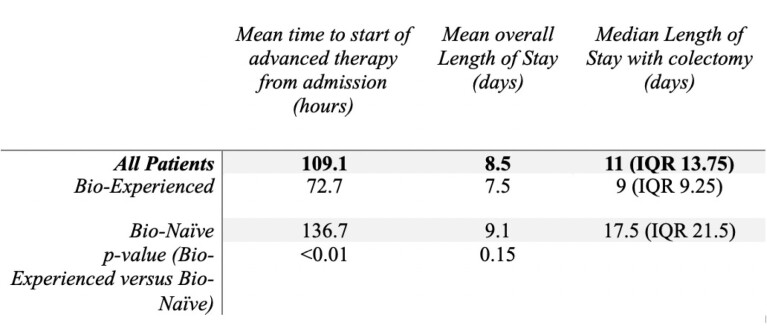 Figure 1
Peer Reviews
No public reviews on file for this paper yet. If you reviewed it on a platform where reviews are public (OpenReview, ICLR, NeurIPS, ICML), you can paste yours below so the community can read it here.
Videos
No videos yet. Explain this paper in a talk, walkthrough, or lecture? Add one.
Taxonomy
TopicsMicroscopic Colitis