Out-of-Pocket Expenditure (OOPE) on Selected Surgeries in the Obstetrics and Gynaecology Department incurred by Ayushman Bharat Pradhan Mantri Jan Arogya Yojana (AB-PMJAY), Private Health Insurance and Uninsured Patients in a Tertiary Care Teaching Hospital in Karnataka state of India
Sagarika Kamath, Siddhartha Sankar Acharya, Helmut Brand, Prajwal Salins, Reena Verma, Dr. Kumar Sumit, Dr. Vidya Prabhu, rajesh kamath, Risky Kusuma Hartono, rajesh kamath, Neha Ahire

TL;DR
This study compares out-of-pocket costs for gynecological surgeries among insured and uninsured patients in India, showing Ayushman Bharat provides full coverage while others face high costs.
Contribution
The study provides new empirical evidence on financial burdens of OBG surgeries under different insurance schemes in India.
Findings
AB-PMJAY patients had zero out-of-pocket expenditure for surgeries.
Uninsured patients incurred 100% OOPE with median costs ranging from Rs. 33,257 to Rs. 57,053.
Private insurance reduced OOPE but still left a significant financial burden on patients.
Abstract
OOPE for healthcare services is a major concern within the Indian healthcare system. 30% of the population remains uninsured despite increasing health insurance coverage. For obstetrics and gynaecology (OBG) patients financial obstacles like OOPE can delay access to health care, evaluating spending patterns can inform policies to enhance accessibility, affordability and equitable health. A retrospective study was conducted at a tertiary care teaching hospital in Karnataka state of India to analyze OOPE for 905 OBG patients who underwent Cesarean Section(C-Section), Laparoscopic Hysterectomy, Laparoscopic Cystectomy, Laparoscopic Myomectomy and Laparoscopic Assisted Vaginal Hysterectomy (LAVH). These were the top five most performed obstetrics and gynecology surgeries in the tertiary care teaching hospital between January 2023 and July 2023. Data was collected across AB-PMJAY, private…
Genes, proteins, chemicals, diseases, species, mutations and cell lines named across the full text — each resolved to its canonical identifier and authoritative record.
Click any figure to enlarge with its caption.
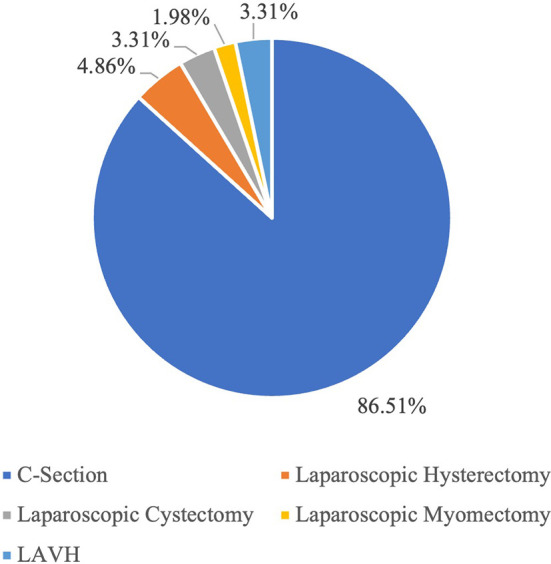 Figure 1
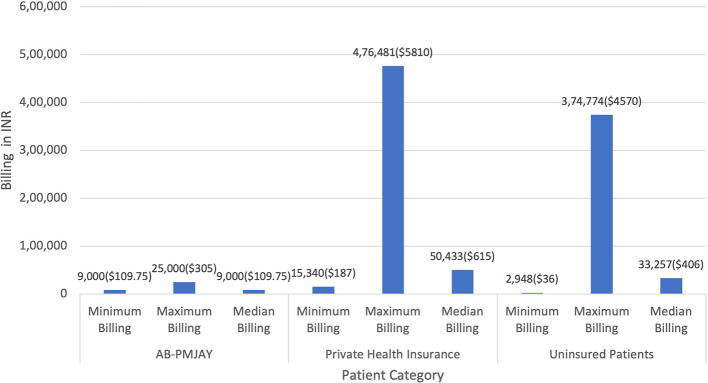 Figure 2
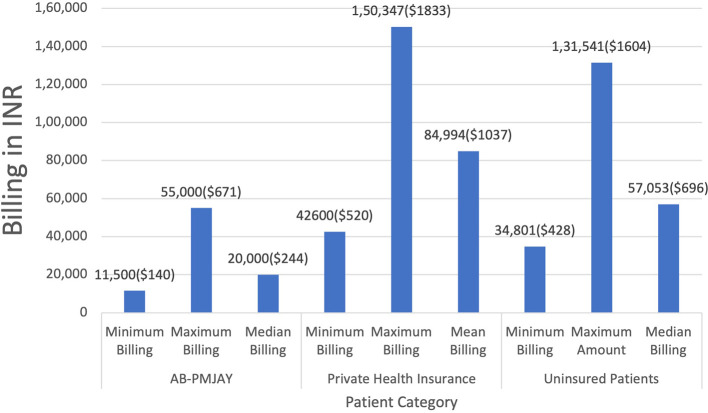 Figure 3
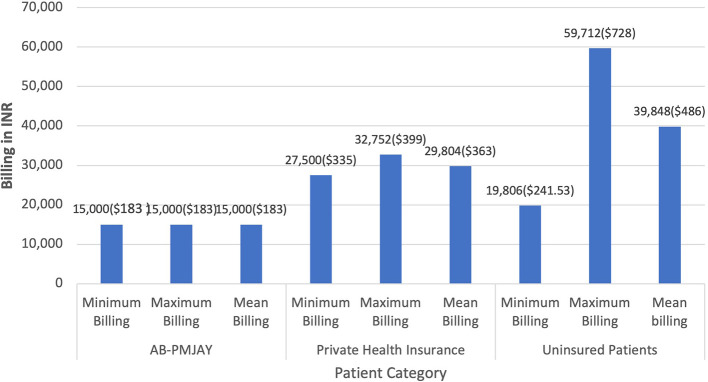 Figure 4
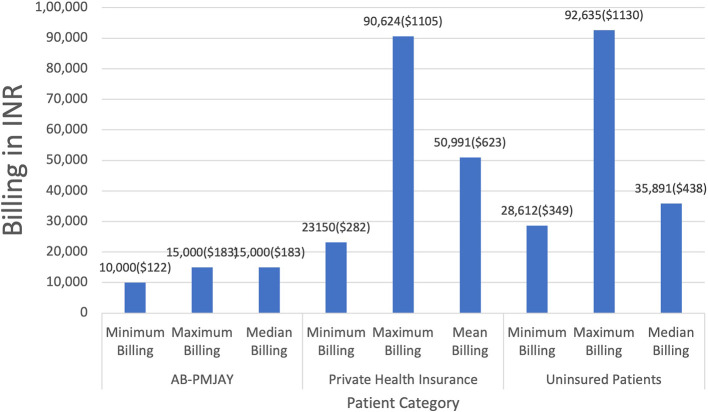 Figure 5
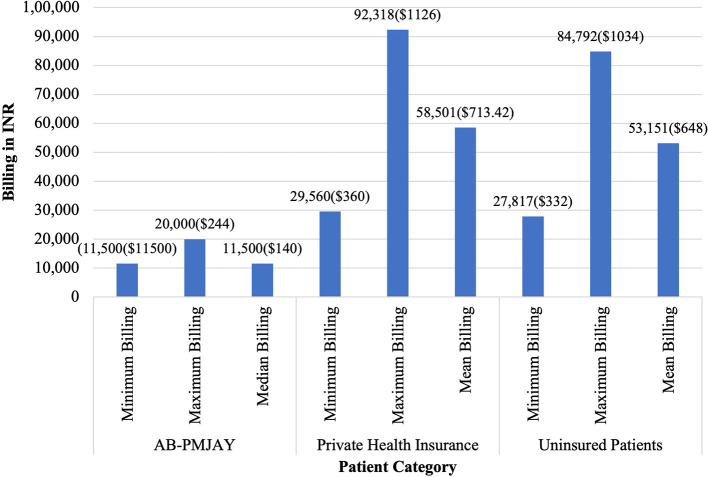 Figure 6
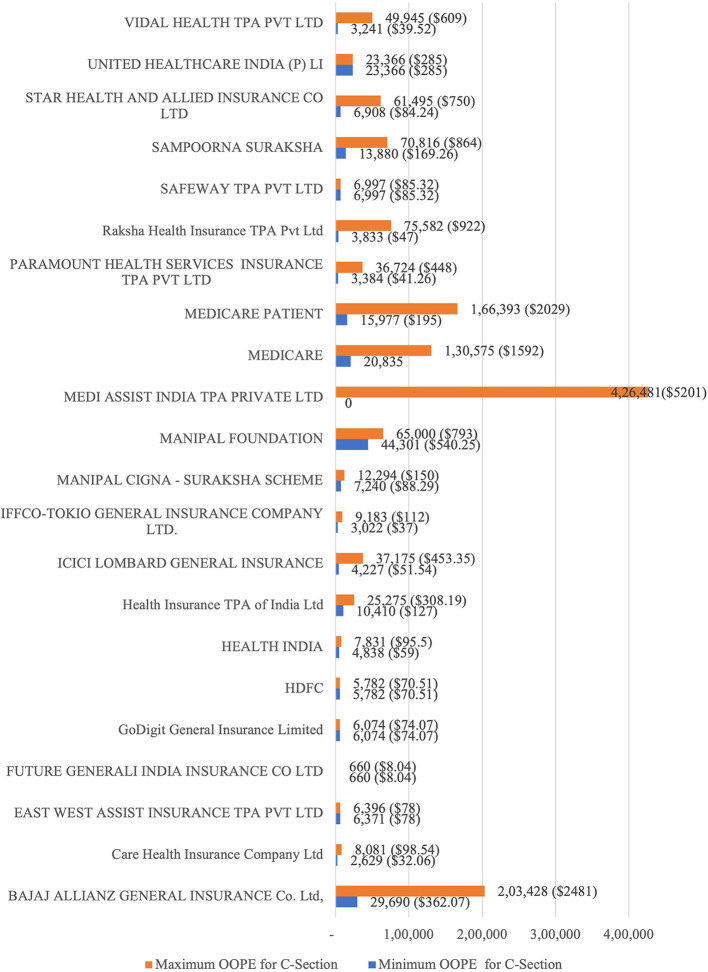 Figure 7
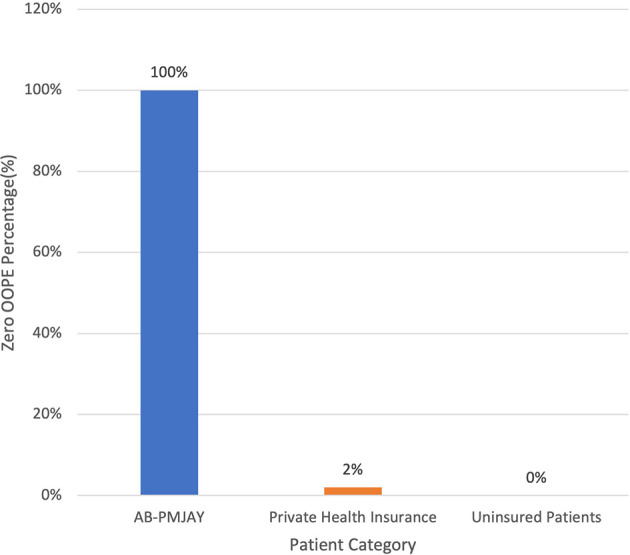 Figure 8
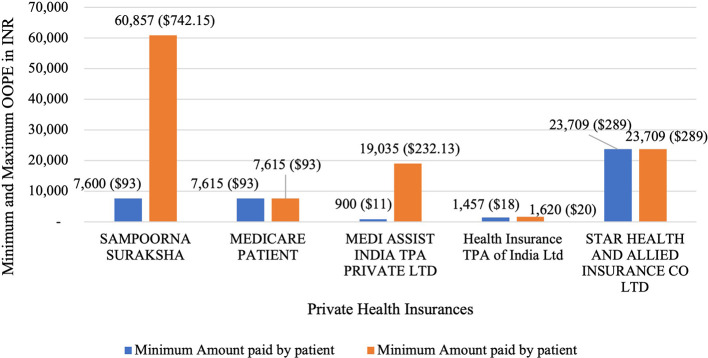 Figure 9
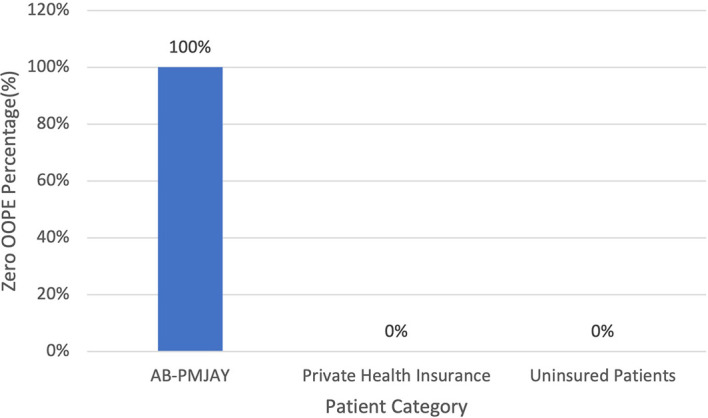 Figure 10
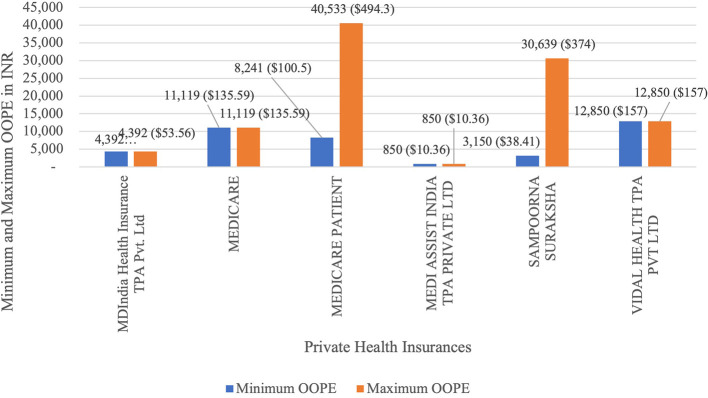 Figure 11
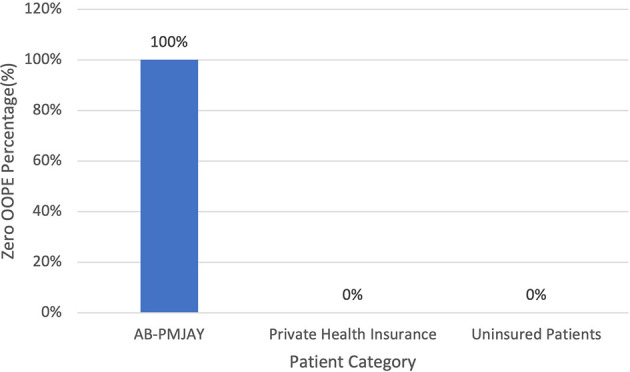 Figure 12
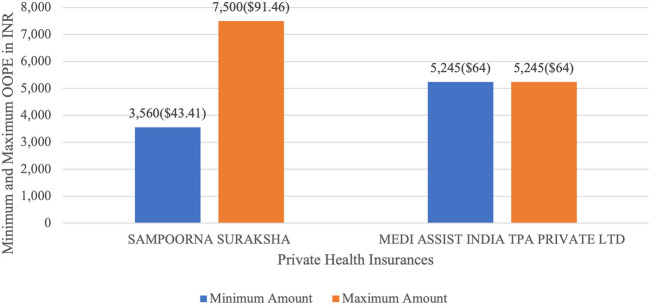 Figure 13
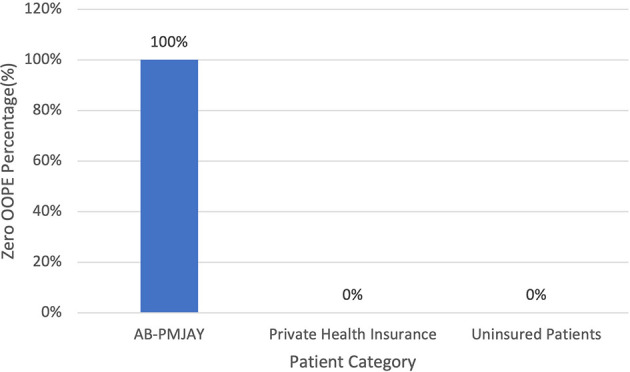 Figure 14
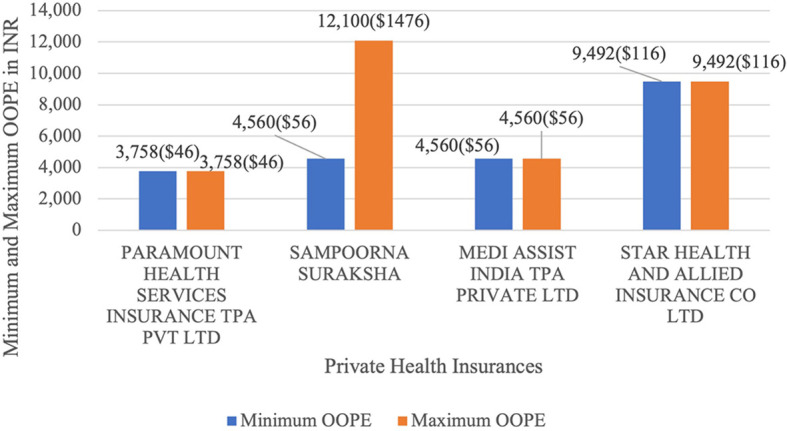 Figure 15
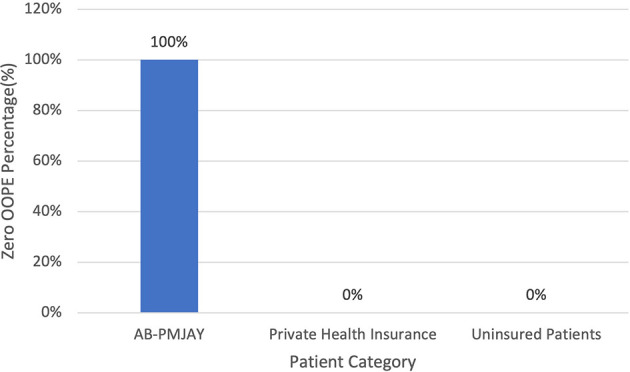 Figure 16
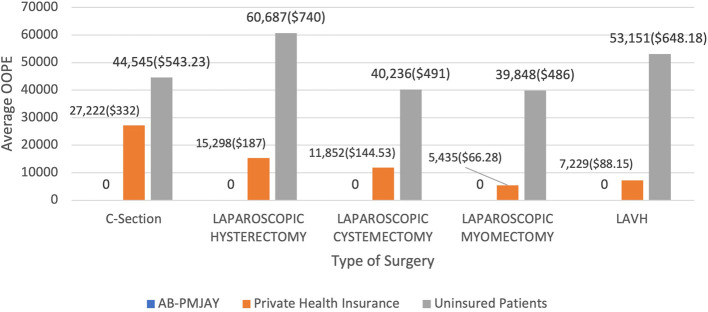 Figure 17
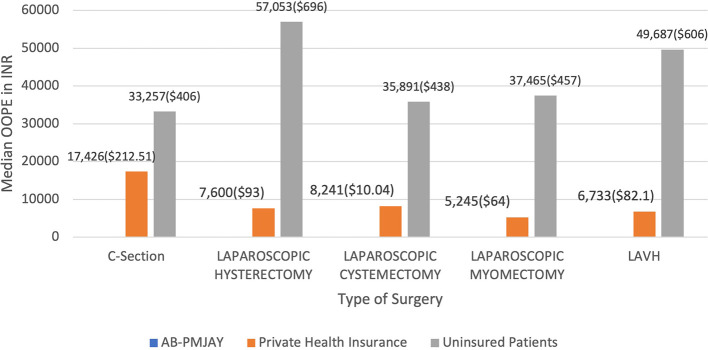 Figure 18
| Insurance Scheme | Individuals Eligible or Covered (cr.) | Percentage of Population Eligible | Families Eligible or Covered (cr.) |
|---|---|---|---|
|
| 69 (690 Million) | 51% | 15.3(153 Million) |
| AB-PMJAY (w/o State Extension Schemes) | 49 (490 Million) | 36% | 10.9 (109 Million) |
| AB-PMJAY State Extension Schemes | 20 (200 Million) | 15% | 4.4 (440 Million) |
|
| 14 (140 Million) | 10% | 3.6 (36 Million) |
| Employees' State Insurance Scheme (ESIS) | 13.6 (136 Million) | 10% | 3.5 (35 Million) |
| Central Government Health Scheme | 0.4 (40 million) | 0.3% | 0.13 (1.3 Million) |
|
| 11.5 (115 Million) | 9% | 2.6 (26 Million) |
|
| 94.5 (945 Million) | 70% | 21.5 (215 Million) |
|
| 135 (1350 Million) | 30 (300 Million) | |
|
| 40.5 (405 Million) | 30% | 8.5 (85 Million) |
| Surgeries | No. of cases |
|---|---|
| C-Section | 783 |
| Laparoscopic Hysterectomy | 44 |
| Laparoscopic Cystectomy | 30 |
| Laparoscopic Myomectomy | 18 |
| LAVH | 30 |
|
|
|
| Patient Category | Type of Surgery | No. of cases | Total Percentage of Cases (%) | Median Billing Amount/Mean Billing Amount (INR) | OOPE as average Percentage (%) of Billing Amount | Median OOPE/Mean OOPE (INR) |
|---|---|---|---|---|---|---|
|
| C-Section | 51 | 5.64 | 9,000
| 0 | 0 |
| Laparoscopic Hysterectomy | 11 | 1.22 | 20,000
| 0 | 0 | |
| Laparoscopic Cystectomy | 7 | 0.77 | 15,000
| 0 | 0 | |
| Laparoscopic Myomectomy | 6 | 0.66 | 15,000
| 0 | 0 | |
| LAVH | 11 | 1.22 | 11,500
| 0 | 0 | |
|
|
|
| ||||
|
| C-Section | 201 | 22.21 | 50,433
| 38.15 | 17,426
|
| Laparoscopic Hysterectomy | 11 | 1.22 | 84,994
| 19.23 | 7,600
| |
| Laparoscopic Cystectomy | 11 | 1.22 | 50,991
| 23.64 | 35,891
| |
| Laparoscopic Myomectomy | 3 | 0.33 | 29,604
| 18.58 | 5,435
| |
| LAVH | 6 | 0.66 | 58,501
| 15.05 | 7,230
| |
|
|
|
| ||||
|
| C-Section | 531 | 58.67 | 33,257
| 100 | 33,275
|
| Laparoscopic Hysterectomy | 22 | 2.43 | 57,053
| 100 | 57,053
| |
| Laparoscopic Cystectomy | 12 | 1.33 | 35,891
| 100 | 35,891
| |
| Laparoscopic Myomectomy | 9 | 0.99 | 39,848
| 100 | 39,848
| |
| LAVH | 13 | 1.44 | 53,151
| 100 | 53,151
| |
|
|
|
| ||||
|
|
| |||||
| Patient Category | Number of Cases | Total Percentage of Cases (%) | OOPE as average Percentage (%) of Billing Amount |
Median OOPE/Mean OOPE
|
|---|---|---|---|---|
|
|
|
|
|
|
|
|
|
|
|
|
|
|
|
|
|
|
| Medi Assist India TPA Private Ltd | 70 | 7.73 | 21.99 | 9,158
|
| Sampoorna Suraksha | 43 | 4.75 | 67.88 | 27,744
|
| Medicare Patient | 15 | 1.66 | 79 | 32,377
|
| ICICI Lombard General Insurance | 13 | 1.44 | 32.91 | 7,033
|
| Medicare | 11 | 1.22 | 41.3 | 50,695
|
| Raksha Health Insurance TPA Pvt Ltd | 8 | 0.88 | 25.32 | 9,510
|
| Vidal Health TPA Pvt Ltd | 8 | 0.88 | 39.57 | 9,578
|
| Paramount Health Services Insurance TPA Pvt Ltd | 6 | 0.66 | 40.23 | 13,272
|
| Care Health Insurance Company Ltd | 4 | 0.44 | 50.98 | 5,360
|
| Health Insurance TPA of India Ltd | 3 | 0.33 | 38.35 | 15,935
|
| Star Health and Allied Insurance Co Ltd | 3 | 0.33 | 68.35 | 31,492
|
| Bajaj Allianz General Insurance Co. Ltd | 2 | 0.22 | 58.47 | 1,16,559
|
| East West Assist Insurance TPA Pvt Ltd | 2 | 0.22 | 50.95 | 6,384
|
| Health India | 2 | 0.22 | 13.72 | 6,335
|
| IFFCO-Tokio General Insurance Company Ltd. | 2 | 0.22 | 17.7 | 7,992
|
| Manipal Cigna - Suraksha Scheme | 2 | 0.22 | 50.49 | 9,767
|
| Manipal Foundation | 2 | 0.22 | 45.91 | 54,651
|
| Future Generali India Insurance Co Ltd | 1 | 0.11 | 1.44 | 660
|
| GoDigit General Insurance Limited | 1 | 0.11 | 7.67 | 6,074
|
| HDFC | 1 | 0.11 | 7.15 | 5,782
|
| Safeway TPA Pvt Ltd | 1 | 0.11 | 8.53 | 6,997
|
| United Healthcare India (P) LI | 1 | 0.11 | 24.65 | 23,366
|
| Patient Category | Number of Cases | Total Percentage (%) of Cases | Average percentage (%) of OOPE |
Median OOPE/Mean OOPE
|
|---|---|---|---|---|
|
|
|
|
|
|
|
|
|
|
|
|
|
|
|
|
|
|
| Medi Assist India TPA Private Ltd | 04 | 0.44 | 4.91 | 2,065
|
| Sampoorna Suraksha | 03 | 0.33 | 53.5 | 36,605
|
| Health Insurance TPA of India Ltd | 02 | 0.22 | 2.09 | 1,539
|
| Medicare Patient | 01 | 0.11 | 7.64 | 7,615
|
| Star Health and Allied Insurance | 01 | 0.11 | 19.98 | 23,709
|
| Patient Category | Number of Cases | Total Percentage (%) of Cases | Average percentage (%) of OOPE |
Median OOPE
|
|---|---|---|---|---|
|
|
|
|
|
|
|
|
|
|
|
|
|
|
|
|
|
|
| Sampoorna Suraksha | 5 | 0.55 | 29.75 | 4,880
|
| Medicare Patient | 02 | 0.22 | 36.79 | 24,387
|
| MDIndia Health Insurance TPA Pvt. Ltd | 01 | 0.11 | 5.79 | 4,392
|
| Medicare | 01 | 0.11 | 12.26 | 11,119
|
| Medi Assist India TPA Private Ltd | 01 | 0.11 | 1.43 | 850
|
| Vidal Health TPA Pvt Ltd | 01 | 0.11 | 18.16 | 12,850
|
| Patient Category | Number of Cases | Total Percentage (%) of Cases | Average percentage of OOPE |
Median OOPE/Mean OOPE
|
|---|---|---|---|---|
|
|
|
|
|
|
|
|
|
|
|
|
|
|
|
|
|
|
| Sampoorna Suraksha | 02 | 0.22 | 19.86 | 5,530
|
| Medi Assist India TPA Private Ltd | 01 | 0.11 | 16.01 | 5,245
|
| Patient Category | Number of Cases | Total Percentage (%) of Cases | Average percentage (%) of OOPE |
Median OOPE/Mean OOPE
|
|---|---|---|---|---|
|
|
|
|
|
|
|
|
|
|
|
|
|
|
|
|
|
|
| Sampoorna Suraksha | 03 | 0.33 | 21.6 | 7,368
|
| Paramount Health Services Insurance TPA Pvt Ltd | 01 | 0.11 | 4.39 | 3,758
|
| Medi Assist India TPA Private Ltd | 01 | 0.11 | 10.28 | 9,492
|
| Star Health and Allied Insurance Co Ltd | 01 | 0.11 | 10.82 | 8,022
|
- —None
Peer Reviews
No public reviews on file for this paper yet. If you reviewed it on a platform where reviews are public (OpenReview, ICLR, NeurIPS, ICML), you can paste yours below so the community can read it here.
Videos
No videos yet. Explain this paper in a talk, walkthrough, or lecture? Add one.
Taxonomy
TopicsHealthcare Policy and Management · Healthcare Systems and Reforms · Global Health Care Issues
Introduction
Out-of-pocket expenditure (OOPE) associated with healthcare services have become a significant global concern, including in India. The healthcare sector in India has experienced a significant rise in private-sector participation in recent years. According to National Sample Survey Organization (NSSO) in the fiscal year 2017-18, it was found that private healthcare facilities constituted 55.3% of total hospitalizations. ^ 1 ^
The private healthcare sector in India exhibits high OOPE, which leads to a diminished level of financial protection for patients. Although there has been a decrease in the proportion of OOPE in relation to total healthcare expenditure (THE), from 62.6% (Rs. 3,02,520 crore or 39.08 Billion USD) in 2014-15 to 47.1% (Rs. 2,80,923 crore or 34.25 Billion USD) in 2019-20, the burden of OOPE still remains significant. ^ 1 ^ In Karnataka, THE for the fiscal year 2019-20 amounted to Rs. 35,761crores (4.36 Billion USD) and OOPE accounted for 31.8%, which is equivalent to Rs. 11,368 crores (1.38 Billion USD). ^ 2 ^
The aggregate size of the health insurance market, as measured by the total premium collected, experienced a significant increase from Rs. 44,873 crores (5.47 Billion USD) in the fiscal year 2018-19 to Rs. 73,052 crores (8.90 Billion USD) in the fiscal year 2021-22. ^ 3 ^ The Private Health Insurance market has experienced significant growth in terms of premium collection, increasing from Rs. 10,655 crore (1.29 Billion USD) in the fiscal year 2018-19 to Rs. 20,107 crore (2.45 Billion USD) in the fiscal year 2021-22. ^ 3 ^ Despite the considerable growth, private health insurance continues to offer limited coverage, reaching only 9% of the total population. ^ 4 ^ 70% of the Indian population is estimated to be covered under public and private health insurance as shown in Table 1. ^ 4, 5, 6, 7 ^ 30% of the population (40 crores or 0.4 Billion) does not have any type of health insurance coverage. ^ 8 ^
AB-PMJAY was launched in 2018 by the government of India as a direct response to the demand for comprehensive healthcare services serving the vulnerable population of the country. AB-PMJAY is a government-funded healthcare program aimed at providing health insurance coverage to more than 50 crore (500 Million) individuals across India. It is recognized as one of the largest healthcare initiatives of its kind. As of March 19, 2023, e.g. the state of Karnataka has generated more than 1.36 crore or 13.6 Million AB-PMJAY cards. A total of 35,88,000 or 3.58 Million beneficiaries have availed free healthcare services at an expenditure of Rs.2,982 crore. ^ 9 ^ One of the vital aspects of AB-PMJAY is the provision of free maternity care, aligning with the objectives of the National Health Policy (NHP) 2017. The primary objective of this policy is to reduce India’s maternal mortality rate (MMR) to below 100 per 100,000 live births by 2020. India has achieved this objective by reducing the MMR to 97 per 100,000 live births in 2020. ^ 10 ^
The United Nations has established Target 3.1 of the Sustainable Development Goals (SDGs) to address the worldwide emphasis on maternal health. The current aim of the SDGs is to achieve a worldwide decrease in MMR to less than 70 per 100,000 live births by the year 2030. To achieve Target 3.1 of the SDGs, it is important to improve interventions in areas where MMR remains high, ensuring adequate access to high-quality maternal healthcare services throughout India. ^ 10 ^ There also exist challenges notably evident in the MMR observed in some specific Indian states. Meghalaya demonstrates a significantly high MMR of 197 Assam following closely at 195, Madhya Pradesh at 173, Uttar Pradesh at 167, Chhattisgarh at 137, Odisha at 119, Bihar at 118. ^ 11, 12 ^
The disparities in MMR across different Indian states emphasize the urgent need for focused interventions aimed at mitigating disparities in MMR. The disparity in MMR can be attributed to several factors, such as economic status, education, restricted availability of healthcare services, lack of awareness regarding obstetrics and gynaecology that impact individuals’ healthcare-seeking tendencies. ^ 13, 14 ^ States and Union Territories that have a significant proportion of institutional deliveries, such as Lakshadweep (100%), Tamil Nadu (99.99%), Puducherry (99.98%), Kerala (99.82%) and Karnataka (99.74%) demonstrate a lower MMR. On the other hand, states such as Meghalaya (57.79%), Bihar (81.27%), Uttar Pradesh (85.63%) and Assam (89.88%), which exhibit lower proportions of institutional deliveries, are associated with elevated levels of MMR. ^ 15 ^ The correlation between institutional delivery and MMR highlights the importance of institutional deliveries in mitigating MMR.
Laparoscopic Hysterectomy, Laparoscopic Myomectomy, Laparoscopic Cystectomy and LAVH are minimally invasive surgical procedures widely performed for the management of various gynaecological conditions. Laparoscopic Myomectomy is indicated for the removal of uterine fibroids, benign tumors that can cause symptoms such as abnormal uterine bleeding, pelvic pain and infertility. Laparoscopic Cystectomy is performed to remove ovarian cysts or masses, which can be associated with pelvic pain and irregular menstrual cycles. LAVH and Laparoscopic hysterectomy are treatment options for conditions such as uterine prolapse, menorrhagia, uterine fibroids and endometriosis where the uterus is removed through a combination of laparoscopic and vaginal approaches.
In the year 2016, the total number of hysterectomy in India was estimated to be approximately 10 million among women aged 30-49 years. ^ 16 ^ A study in low-income households in Gujarat, India, found nearly two-thirds of rural women who underwent hysterectomies sought care in private hospitals, resulting in a high OOPE. ^ 17 ^ A study in Nigeria found that the absence of an effective health insurance scheme led to an increase in OOPE to Laparsocopic Myomectomy, Laparoscopic Cystectomy and LAVH. ^ 18 ^
A positive correlation between possession of health insurance and increased utilization of obstetrics and gynaecology healthcare services has been found. ^ 19, 20, 21 ^ The correlation highlights the importance of health insurance in improving the delivery of obstetrics and gynaecology healthcare services. The increase in women’s enrolment in health insurance is recognized as a critical approach to improving the utilization of obstetrics and gynaecology healthcare services. ^ 20, 12 ^ Obstetrics and gynaecology patients patients from low-income households and marginalized communities encounter financial hardships as a result of OOPE. A study conducted in two villages near Delhi in north India, found that 43% of women who were married to laborers or unemployed individuals gave birth at home. ^ 23 ^ A significant association between the place of childbirth and various economic indicators such as the occupation of the spouse, monthly income and socio-economic status have been confirmed. ^ 23 ^
Obstetrics and gynaecology patients patients from low-income households face financial obstacles that delay their timely access to healthcare facilities, thereby contributing to unfavourable outcomes and influencing MMR. ^ 24, 25 ^ Understanding and addressing OOPE is highly significant, as they have a substantial influence on MMR, particularly for obstetrics and gynaecology patients patients from socioeconomically disadvantaged groups. OOPE has the potential to result in financial burden on individuals, leading to impoverishment and hindering timely access to healthcare services. Financial limitations and OOPE may also lead to a change in maternal health behaviours such as compromising on dietary intake or skipping necessary prenatal examinations in order to save money. These behaviours have the potential to contribute to health complications which can result in negative outcomes for the mother and can also potentially contribute to MMR.
While AB-PMJAY and private health insurance offer potential remedies, their impact on OOPE incurred for obstetrics and gynaecology patient needs further investigation. This study aims to conduct a focused investigation across that directly compare obstetrics and gynaecology patients patients’ OOPE during Cesarian-Section (C-Section), Laparoscopic Hysterectomy, Laparoscopic Assisted Vaginal Hysterectomy (LAVH), Laparoscopic Myomectomy and Laparoscopic Cystectomy conducted within the Obstetrics and Gynaecology department of a tertiary care teaching hospital in coastal Karnataka, India. C-Section, laparoscopic hysterectomy, laparoscopic cystectomy, laparoscopic myomectomy and LAVH were the top five most performed obstetrics and gynecology surgeries in the tertiary care teaching hospital between January 2023 and July 2023 and scrutinizing spending patterns associated with these five surgeries can provide precise insights for refining policies to enhance the accessibility of obstetrics and gynaecology patients and to mitigate the financial burden.
Methods
Study setting
A retrospective study was conducted over a period of three months starting from December 2023 to February 2024 in a tertiary care teaching hospital in Karnataka state of India. The hospital is a 2000 bedded hospital. Every day, the hospital serves about 200 inpatients and 2,500 outpatients. The hospital is a National Accreditation Board for Hospitals and Healthcare Providers (NABH) accredited hospital. Patients who have had a C-section, Laparoscopic Hysterectomy, Laparoscopic Myomectomy, Laparoscopic Cystectomies and Laparoscopic Assisted Vaginal Hysterectomy (LAVH) were considered for the study. These five surgeries were considered for the study as these five surgeries represented the highest number of obstetrics and gynaecology surgeries in the tertiary care teaching hospital with a total of 783 C-Section cases, 44 cases of Laparoscopic Hysterectomy, 30 cases of Laparoscopic Cystectomy, 18 cases of Laparoscopic Myomectomy, and 30 cases of LAVH between January 2023 and July 2023.
Study design
Retrospective single centric study.
Departments involved
- ▪Medical record department
- ▪IT department
- ▪Finance department
Inclusion criteria
- ▪Patients who have undergone C-Section, Laparoscopic Hysterectomy, Laparoscopic Assisted Vaginal Hysterectomy (LAVH), Laparoscopic Myomectomy and Laparoscopic Cystectomy.
- ▪Patients who are covered by AB-PMJAY, private health insurance and uninsured patients.
- ▪Surgeries performed between January 2023 to July 2023.
Exclusion criteria
- ▪Patients covered by health insurance other than AB-PMJAY and private health insurance.
- ▪Multiple pregnancies
- ▪Patients who have undergone other types of surgeries within the same department as well as different departments.
- ▪Maternal death
Sample size
Data of 905 maternal patients were considered for this study.
Tools used
A validated proforma was used. The validated proforma is available in the data repository mentioned in the data availability statement below.
Statistical method
Descriptive statistics such as mean, median and the Shapiro-Wilk test to check the normality of the data were used to analyse and compare the levels of variability in OOPE among different patient category such as AB-PMJAY, private health insurance and uninsured patients.
Ethical consideration
Institutional Ethics Committee (IEC) approval was granted from the Kasturba Medical College and Kasturba Hospital Institutional Ethics Committee – 2: DHR registration no. EC/NEW/INST/2021/1707 (IEC2:562/2023) on 19-1-24. The first application was made to the IEC on 12/09/2023. The IEC asked for Modifications (# IEC form: Risk is minimal. # Permission from HOD OBG required. # Inter institute research form to be filled) on 01/11/2023. The first IEC Approval was secured on 21/11/2023. An application for an amendment (addition of co-guide) was made on: 28/12/2023. The 2nd IEC approval date is 19/01/2024. The patient data was made anonymous and treated with strict confidentiality for the study. As the study is a retrospective study and did not involve any new treatments or interventions, informed consent was not applicable. Consent was waived by the ethics committee.
Results
The study included 905 obstetrics and gynaecology patients, who underwent C-Section, Laparoscopic Hysterectomy, Laparoscopic Cystectomy, Laparoscopic Myomectomy and LAVH and uninsured or were covered by AB-PMJAY or private health insurance from January 2023 to July 2023.
Table 2 presents the comprehensive distribution of 905 cases across the five surgeries. The table outlines the specific breakdown, comprising 783 C-Section cases, 44 cases of Laparoscopic Hysterectomy, 30 cases of Laparoscopic Cystectomy, 18 cases of Laparoscopic Myomectomy and 30 cases of Laparoscopic Assisted Vaginal Hysterectomy (LAVH). Figure 1 visually depicts this distribution, presenting the representation of each surgical category within the total of 905 surgeries. The corresponding percentages for each category are as follows: 86.51% for C-Section, 4.86% for Laparoscopic Hysterectomy, 3.31% for Laparoscopic Cystectomy, 1.98% for Laparoscopic Myomectomy and 3.31% for LAVH.
*The figure shows the proportion of each category of the surgeries within a total of 905 surgeries.
Figure 1: Percentage-wise distribution of surgeries across various categories.
38*
Table 3 presents the number of cases, median and mean billing amount of the selected surgeries. Under AB-PMJAY, total number of cases of C-Section, Laparoscopic Hysterectomy, Laparoscopic Cystectomy, Laparoscopic Myomectomy and LAVH were 51, 11, 7, 6, and 11 respectively. Under private health insurance, total number of cases of C-Section, Laparoscopic Hysterectomy, Laparoscopic Cystectomy, Laparoscopic Myomectomy and LAVH were 201, 11, 11, 3, and 6 respectively. For uninsured patients, total number of cases of C-Section, Laparoscopic Hysterectomy, Laparoscopic Cystectomy, Laparoscopic Myomectomy and LAVH were 531, 22, 12, 9 and 13 respectively. Under AB-PMJAY, the median billing amount for C-Section, Laparoscopic Hysterectomy, Laparoscopic Cystectomy and LAVH was Rs. 9000 (109.75 USD), Rs. 20,000 (244 USD) and Rs. 11,500 (140.24 USD), while the mean billing amount for Laparoscopic Myomectomy was Rs. 15,000 (183 USD). Under private health insurance, the median billing amount for C-Section was Rs. 50,433 (615 USD). The mean billing amount for Laparoscopic Hysterectomy, Laparoscopic Cystectomy, Laparoscopic Myomectomy and LAVH was Rs. 84,994 (1036.5 USD), Rs. 50,991 (623 USD), Rs. 29,604 (361 USD) and Rs. 58,501(713.42 USD) respectively. For uninsured patients, the median billing amount for C-Section, Laparoscopic Hysterectomy and Laparoscopic Cystectomy was Rs. 33,257 (406 USD), Rs. 57,053 (696 USD) and Rs. 35,891 (438 USD) respectively. The mean billing amount for Laparoscopic Myomectomy and LAVH was Rs. 39,848 (485 USD) and Rs. 53,151 (648.25 USD) respectively. OOPE as average percentage of billing amount was zero for AB-PMJAY across the selected surgeries. For private health insurance it ranged from 15.05% to 38.15% across the selected surgeries. For uninsured patients it was 100% across the selected surgeries. For, AB-PMJAY, median and mean OOPE was zero across the selected surgeries. For private health insurance it ranged from Rs. 5,435 (66.28 USD) to Rs. 35,891(438 USD) across the surgeries. For uninsured patients it ranged from Rs. 33,275 (406 USD) to Rs. 57,053 (696 USD).
**Table 3.: Type of Surgery, Number of Cases, Median and Mean Billing Amount, OOPE as average Percentage (%) of Billing Amount, Median and Mean OOPE.
38**
Total billing of the selected surgeries
Figure 2 presents the minimum, maximum and median billing amounts for C-section across AB-PMJAY, private health insurance and uninsured patients. AB-PMJAY billing ranged from a minimum of Rs.9,000 (109.75 USD), to a maximum of Rs.25,000 (305 USD), with a median of Rs.9,000 (109.75 USD),. Private health insurance billing had a larger range, from a minimum of Rs.15,340 (187.07 USD) to a maximum of Rs.4,76,481 (5811 USD), with a median billing of Rs.50433 (615.03 USD). Uninsured patients fell in the middle, with a minimum billing of Rs.2,948 (36 USD), maximum of Rs.3,74,774 (4570.41 USD), and median of Rs.33,257 (406 USD). Here median was used as the main statistic for central tendency since the Shapiro-Wilk test yielded a p-value less than 0.05, indicating significant deviation from a normal distribution.
*The figure compares minimum, maximum, and median billing amounts for C-sections across AB-PMJAY, private insurance, and uninsured patients.
Figure 2: C-Section Billing: Minimum, Maximum and Median.
38*
The findings show that billing amounts can vary among AB-PMJAY, private health insurance, and uninsured patients. AB-PMJAY beneficiaries are typically assigned to general wards, while private health insurance offers a limited selection of beds. The choice of bed type affects the total billing amount, nursing charges, and physician consultation fees. While uninsured patients can choose the bed category as per their requirements.
Figure 3 presents the minimum, maximum, median and mean billing amounts for Laparoscopic Hysterectomy across AB-PMJAY, private health insurance and uninsured patients. AB-PMJAY, ranged from a minimum of Rs. 11,500 (140 USD) to a maximum of Rs.55,000 (671 USD), with a median of Rs.20,000 (244 USD). Private insurance ranged from a minimum of Rs.42,600 (520 USD) to a maximum of Rs.1,50,347 (1833 USD) with a mean of Rs.84,994 (1037 USD). Uninsured patients ranged with a minimum billing of Rs.34,801(424 USD) to a maximum of Rs.1,31,541(1604 USD) and median of Rs.57,053 (696 USD). Here median was used as the main statistic to measure the central tendency of AB-PMJAY and uninsured patients as the Shapiro-Wilk test yielded a p-value less than.005, indicating significantly deviation from a normal distribution. While for private health insurance, mean was used as the data was normally distributed (p>0.05).
*The figure shows the minimum, maximum, median, and mean billing amounts for Laparoscopic Hysterectomy across AB-PMJAY, private insurance, and uninsured patients.
Figure 3: Laparoscopic Hysterectomy billing: Minimum, Maximum, Median and Mean.
38*
Figure 4 presents the minimum, maximum and mean of billing amount for Laparoscopic Myomectomy across AB-PMJAY, private health insurance and uninsured patients. AB-PMJAY had a minimum and maximum billing of Rs. 15,000 (183 USD) with a mean of Rs.15,000 (183 USD). Private insurance ranged from a minimum of Rs.27,500 (335 USD) to a maximum of Rs.32,752 (399 USD) with a mean of Rs.29,804 (363 USD). Uninsured patients ranged with a minimum billing of Rs. 19,806 (241.53 USD) to a maximum of Rs. 59,712 (728 USD) and mean of Rs.39,848 (486 USD). Here mean was used as the main statistic to measure the central tendency as the Shapiro-Wilk test yielded a p-value of more than 0.05, indicating normal distribution.
*The figure shows the minimum, maximum, and mean billing amounts for Laparoscopic Myomectomy across AB-PMJAY, private insurance, and uninsured patients.
Figure 4: Laparoscopic Myomectomy billing: Minimum, Maximum and Mean.
38*
Figure 5 presents the minimum, maximum, median and mean of billing amounts for Laparoscopic Cystectomy across AB-PMJAY, private health insurance and uninsured patients. AB-PMJAY had a minimum of Rs. 10,000 (122 USD) and a maximum billing of Rs. 15,000 (183 USD) with a median of Rs.15,000 (183 USD). Private health insurance ranged from a minimum of Rs.23,150 (282 USD) to a maximum of Rs.90,624 (1105 USD) with a mean of Rs.50,991 (623 USD). Uninsured patients ranged with a minimum billing of Rs. 28,612 (349 USD) to a maximum of Rs. 92,635 (1130 USD) and median of Rs.35,891(438 USD). Here median was used as the main statistic to measure the central tendency of AB-PMJAY and uninsured patients as the Shapiro-Wilk test yielded a p-value less than 0.05, indicating significant deviation from a normal distribution. Mean was used as the main statistic to measure the central tendency of private health insurance, as the Shapiro-Wilk test yielded a p-value of more than.005, indicating, normal distribution.
*The figure shows the minimum, maximum, median, and mean billing amounts for Laparoscopic Cystectomy across AB-PMJAY, private insurance, and uninsured patients.
Figure 5: Laparoscopic Cystectomy billing: Minimum, Maximum, Median and Mean.
38*
Figure 6 presents the minimum, maximum, median and mean of billing amount for LAVH across AB-PMJAY, private health insurance and uninsured patients. AB-PMJAY had a minimum of Rs. 11,500 (140 USD) and a maximum billing of Rs. 20,000 (244 USD) with a median of Rs.11,500 (140 USD). Private health insurance ranged from a minimum of Rs.29,560 (360 USD) to a maximum of Rs.92,318 (1126 USD) with a mean of Rs.58,501 (713.42 USD). Uninsured patients ranged with a minimum billing of Rs. 27,187 (332 USD) to a maximum of Rs. 84,792 (1034 USD) and mean of Rs.53,151 (648 USD). Here mean was used as the main statistic to measure the central tendency of AB-PMJAY and uninsured patients as the Shapiro-Wilk test yielded a p-value of more than .05 for AB-PMJAY and uninsured patients, indicating a normal distribution. While median was used as the main statistic to measure the central tendency of private health insurance, as the Shapiro-Wilk test yielded a p-value less than.05, indicating significant deviation from a normal distribution.
*The figure shows the minimum, maximum, median, and mean billing amounts for LAVH across AB-PMJAY, private insurance, and uninsured patients.
Figure 6: LAVH billing: Minimum, Maximum, Median and Mean.
38*
Variation in OOPE across various patient category
Table 4 presents variation in OOPE for C-section across AB-PMJAY, private health insurance and uninsured patients. All the 51 patients covered under AB-PMJAY had zero OOPE, as the scheme provided full coverage. Uninsured patients were most common with 531 cases, uninsured patients had 100% OOPE. The median OOPE for uninsured patients was Rs. 33,257. For patients under private health insurance, OOPE ranged widely depending on the insurance provider. Private health insurance had total 201 cases with a lower 38.15% average OOPE and median OOPE of ₹17,426 (212.51 USD) compared to uninsured patients. Star Health and Allied Insurance Co Ltd, Sampoorna Suraksha, Bajaj Allianz General Insurance Co. Ltd and Care Health Insurance Company Ltd had a average OOPE 68.35 %, 67.88 %, 58.47 % and 50.98 % respectively. While in Future Generali India Insurance Co Ltd, HDFC, GoDigit General Insurance Limited and Safeway TPA Pvt Ltd the average OOPE were 1.44 %, 7.15 %, 7.67 % and 8.53 % respectively. The mean OOPE in Bajaj Allianz General Insurance Co. Ltd, Manipal Foundation and Medicare were Rs. 1,16,559 (1421.45 USD), Rs. 54,651 (666.47 USD) and Rs. 50,695 (618.23 USD) respectively. The median OOPE in Medicare Patient, V Vidal Health TPA Pvt Ltd and Raksha Health Insurance TPA Pvt Ltd and Medi Assist India TPA Private Ltd were Rs. 32,377 (395 USD), Rs. 9678 (118 USD) and Rs. 9510 (116 USD) respectively.
**Table 4.: Variation in OOPE across patient category in C-Section.
38**
Figure 7 presents the variation in the minimum and maximum OOPE across different private health insurances for C-section. The OOPE range was widest for Bajaj Allianz (Rs. 29,690 [362 USD] - Rs. 2,03,428 [2481 USD]) and Medicare (Rs. 20,835 [254 USD] - Rs. 1,30,575 [1592 USD]). ICICI Lombard (Rs. 4,227[51.54 USD] - Rs. 37,175 [453.35 USD]), Paramount Health (Rs. 3,384 [41.26 USD] - Rs. 36,724 [448 USD]) and STAR Health (Rs. 6,908[84.24 USD] - Rs. 61,495[750 USD]) had more moderate range. Narrower OOPE ranges were seen for insurances Care Health (Rs. 2,629[32 USD] - Rs. 8,081[98.54 USD]) and East West Assist (Rs. 6,371[78 USD] - Rs. 6,396[78 USD]). Medi Assist India TPA Private Ltd was the only private health insurance that provided four patients out of 70 patients with zero OOPE.
*The figure shows the range of out-of-pocket expenses (OOPE) for C-sections across various private health insurances.
Figure 7: C-Section Billing: Minimum and Maximum OOPE.
38 Minimum and maximum OOPE in INR.
Figure 8 presents the variation in percentage of patients with zero OOPE for C-section across patient category. 100% of AB-PMJAY beneficiaries had zero OOPE. However, only 2% of private insurance patients had zero OOPE. While none of the uninsured patients had zero OOPE.
*The figure shows the variation in the percentage of patients with zero out-of-pocket expenses (OOPE) for C-sections across different patient categories.
Figure 8: Percentage of C-Section patients with zero OOPE across patient category.
38*
Table 5 presents the variation in OOPE for laparoscopic hysterectomy across patient category: AB-PMJAY, private health insurance and uninsured patients. All the 11 patients under AB-PMJAY had zero OOPE. While all the 22 uninsured patients had 100% OOPE with median OOPE of Rs.57,053 (696 USD). For private health insurance patients, average percentage of OOPE varied across insurances, with patients paying 2.09-53.5 % on average. Sampoorna Suraksha and Star Health and Allied Insurance had the highest average percentage of OOPE of 53.5 % and 19.98% and also they had the highest mean OOPE of Rs. 36,605 (446.4 USD) and Rs. 23,709 (289.13 USD). Health Insurance TPA of India Ltd and Medi Assist India TPA Private Ltd had the lowest average percentage of OOPE of 2.09% and 4.91% and also they had lowest mean and median OOPE of Rs. 1,539 (19 USD) and Rs. 2,065 (25.18 USD).
**Table 5.: Variation in OOPE across Patient Category in Laparoscopic Hysterectomy.
38**
Figure 9 present the variation in the minimum and maximum OOPE across private health insurances for laparoscopic hysterectomy. Sampoorna Suraksha had the widest range from Rs. 7,600 (93 USD) to Rs. 60,857 (742.15 USD). Medicare Patient and Star Health, with only one patient each, had OOPE of Rs. 7,615 (93 USD) and Rs. 23,709 (289.13 USD) respectively. Medi Assist India had a range from Rs. 900 (11 USD) to Rs. 19,035 (232.13 USD). While Health Insurance TPA of India had the narrowest range from Rs. 1,457 (18 USD) to Rs. 1,620 (20 USD).
*The figure shows OOPE for laparoscopic hysterectomy among different private health insurers.
Figure 9: Minimum and Maximum OOPE for Different Private Health Insurances for Laparoscopic Hysterectomy.
38*
Figure 10 present the variation in percentage of patients with zero OOPE for laparoscopic hysterectomy across patient category. 100% of AB-PMJAY beneficiaries had zero OOPE. While none of the patients under private health insurance and uninsured patients had zero OOPE for laparoscopic hysterectomy.
*The figure shows the variation in the percentage of patients with zero out-of-pocket expenses (OOPE) for laparoscopic hysterectomy across different patient categories.
Figure 10: Percentage of Laparoscopic Hysterectomy patients with zero OOPE across Patient Category.
38*
Table 6 presents the variation in OOPE for laparoscopic cystectomy across AB-PMJAY, private health insurance and uninsured patients. All the 7 patients under AB-PMJAY had zero OOPE. While all the 12 uninsured patients had 100% OOPE with median OOPE of Rs.35,891 (438 USD). For private insurance patients, average percentage of OOPE and median OOPE were 23.64% and Rs. 8,241 (100.5 USD). Medi Assist and MDIndia had the lowest average percentage of OOPE of 1.43% and 5.79%. Medicare Patient and Sampoorna Suraksha had high average percentage of OOPE of 36.79% and 29.7%. While Sampoorna Suraksha had the lowest median OOPE of Rs.4,880 (59.51 USD), Medicare Patient and Vidal Health TPA PVT LTD had highest mean OOPE of Rs.24,387 (297.4 USD) and Rs.12,850 (157 USD).
**Table 6.: Variation in OOPE across Patient Category in Laparoscopic Cystectomy.
38**
Figure 11 present the variation in the minimum and maximum OOPE across private health insurances for laparoscopic cystectomy. Medicare Patient had the widest range of OOPE, from Rs.8,241(100.5 USD) to Rs.40,533(494.3 USD). Sampoorna Suraksha had the from Rs.3,150(38.41 USD) to Rs.30,639(374 USD). MDIndia Health Insurance TPA Pvt. Ltd,Medicare, Medi Assist and Vidal Health had a maximum and minimum OOPE of Rs.4,392(53.56 USD), Rs.11,119(135.59 USD), Rs.850(10.36 USD) and Rs.12,850(157 USD) as each of them had only one case.
*The figure shows the range of out-of-pocket expenses (OOPE) for laparoscopic cystectomy among different private health insurances.
Figure 11: Minimum and Maximum OOPE for Different Private Health Insurances for Laparoscopic Cystectomy.
38*
Figure 12 present the variation in percentage of patients with zero OOPE for laparoscopic cystectomy across patient category. 100% of AB-PMJAY beneficiaries had zero OOPE. While none of the patients under private health insurance and uninsured patients had zero OOPE for laparoscopic cystectomy.
*The figure shows the variation in the percentage of patients with zero out-of-pocket expenses (OOPE) for laparoscopic cystectomy across different patient categories.
Figure 12: Percentage of Laparoscopic cystectomy patients with zero OOPE across patient category.
38*
Table 7 present the variation in OOPE for laparoscopic myomectomy across AB-PMJAY, private health insurance and uninsured patients. All the 6 patients under AB-PMJAY had zero OOPE. While all the 9 uninsured patients had 100% OOPE with mean OOPE of Rs.39,848 (486 USD). For private health insurance, the average percentage of OOPE was 18.58% with mean OOPE of Rs.5,435(66.28 USD). Sampoorna Suraksha and Medi Assist India TPA Private Ltd had average percentage of OOPE of 16.01% and 19.86% and mean OOPE of Rs.5,245(64 USD) and Rs.5,530(67.43 USD).
**Table 7.: Variation in OOPE across different patient category in Laparoscopic Myomectomy.
38**
Figure 13 present the variation in the minimum and maximum OOPE across private health insurances for laparoscopic myomectomy. Private health insurances ranged from Rs.3,560 (43.41 USD)-Rs.7,500 (91.46 USD) for Sampoorna Suraksha and for Medi Assist India TPA Private Ltd the minimum and maximum OOPE was Rs.5,245(64 USD) as there was only one case of laparoscopic myomectomy.
*The figure shows the range of OOPE for laparoscopic myomectomy among different private health insurers.
Figure 13: Variation in average OOPE across different patient category in Laparoscopic Myomectomy.
38*
Figure 14 present the variation in percentage of patients with zero OOPE for laparoscopic myomectomy across patient category. 100% of AB-PMJAY beneficiaries had zero OOPE. While none of the patients under private health insurance and uninsured patients had zero OOPE for laparoscopic myomectomy.
*The figure shows the variation in the percentage of patients with zero out-of-pocket expenses (OOPE) for laparoscopic myomectomy across different patient categories.
Figure 14: Percentage of Laparoscopic Myomectomy patients with zero OOPE across patient category.
38*
Table 8 present the variation in OOPE across AB-PMJAY, private health insurance and uninsured patients. All the 11 patients under AB-PMJAY had zero OOPE. While all the 13 uninsured patients had 100% OOPE with mean OOPE of Rs.53,151(648.18 USD). For private health insurance, the average percentage of OOPE was 15.05% with mean OOPE of Rs.7,230(88.17 USD). Under private health insurances, Sampoorna Suraksha had the highest average percentage of OOPE of 21.6% while Paramount Health Services Insurance TPA Pvt Ltd and Medi Assist India TPA Private Ltd had the lowest average OOPE of 4.39% and 10.28% and mean OOPE of Rs.3,758 (46 USD) and Rs.9,492 (116 USD).
**Table 8.: Variation in OOPE across different patient category for LAVH.
38**
Figure 15 present the variation in the minimum and maximum OOPE across private health insurances for LAVH. Sampoorna Suraksha ranged from Rs.4,560 (56 USD) minimum up to Rs.1,21,000 (1476 USD) maximum. While Paramount Health Services Insurance TPA Pvt Ltd, Medi Assist India TPA Private Ltd and Star Health and Allied Insurance Co Ltd had the minimum and maximum OOPE of Rs.3,758 (46 USD), Rs.4560 (56 USD) and Rs.9,492 (116 USD) as there were only one case of LAVH for each of the insurances.
*The figure shows the range of out-of-pocket expenses (OOPE) for LAVH among different private health insurers.
Figure 15: Minimum and Maximum OOPE for Different Private Health Insurances for LAVH.
38*
Figure 16 present the variation in percentage of patients with zero OOPE for LAVH across patient category. 100% of AB-PMJAY beneficiaries had zero OOPE. While none of the private health insurance patients and uninsured patients had zero OOPE for LAVH.
*The figure shows the variation in the percentage of patients with zero out-of-pocket expenses (OOPE) for LAVH across different patient categories.
Figure 16: Percentage of LAVH patients with zero OOPE by patient category.
38*
Average and median OOPE of the selected surgeries
Figure 17 presents the average OOPE in C-Section, Laparoscopic Hysterectomy, Laparoscopic Cystectomy, Laparoscopic Myomectomy and LAVH across AB-PMJAY, Private Health Insurance and uninsured patients. Patients covered under AB-PMJAY incurred zero OOPE for C-Section, Laparoscopic Hysterectomy, Laparoscopic Cystectomy, Laparoscopic Myomectomy and LAVH. Patients under private health insurance had an average OOPE of Rs.27,222 (332 USD), Rs.15,298 (187 USD), Rs.11,852 (144.53 USD), Rs.5,435 (66.28 USD) and Rs.7,229 (88.15 USD) for C-Section, Laparoscopic Hysterectomy, Laparoscopic Cystectomy, Laparoscopic Myomectomy and LAVH. For C-Section, Laparoscopic Hysterectomy, Laparoscopic Cystectomy, Laparoscopic Myomectomy and LAVH patients uninsured patients had higher financial burden, with average OOPE of Rs.44,545 (543.23 USD), Rs.60,687 (740 USD), Rs.40,236 (491 USD), Rs.39,848 (486 USD) and Rs.53,151 (648.18 USD).
*The figure presents the average out-of-pocket expenses (OOPE) for C-Section, Laparoscopic Hysterectomy, Laparoscopic Cystectomy, Laparoscopic Myomectomy, and LAVH across AB-PMJAY, private health insurance, and uninsured patients.
Figure 17: Average OOPE for selected surgeries across patient category.
38*
Figure 18 present the median OOPE in C-Section, Laparoscopic Hysterectomy, Laparoscopic Cystectomy, Laparoscopic Myomectomy and LAVH across AB-PMJAY, Private Health Insurance and uninsured patients. Patients covered under AB-PMJAY had zero OOPE for C-Section, Laparoscopic Hysterectomy, Laparoscopic Cystectomy, Laparoscopic Myomectomy and LAVH. Patients under private health insurance had median OOPE of Rs.17,426 (212.51 USD), Rs.7,600 (93 USD), Rs.8,241(10.04 USD), Rs.5,245(64 USD) and Rs.6,733(82.1 USD) for C-Section, Laparoscopic Hysterectomy, Laparoscopic Cystectomy, Laparoscopic Myomectomy and LAVH. For C-Section, Laparoscopic Hysterectomy, Laparoscopic Cystectomy, Laparoscopic Myomectomy and LAVH patients who were uninsured had higher financial burden, with median OOPE of Rs.33,257 (406 USD), Rs.57,053 (696 USD), Rs.35,891 (438 USD), Rs.37,456 (457 USD) and Rs.49,687 (606 USD)
*The figure presents the median out-of-pocket expenses (OOPE) for C-Section, Laparoscopic Hysterectomy, Laparoscopic Cystectomy, Laparoscopic Myomectomy, and LAVH across AB-PMJAY, private health insurance, and uninsured patients.
Figure 18: Median OOPE for selected surgeries across patient category.
38*
Discussion
There is little existing peer reviewed literature on OOPE among obstetrics and gynaecology patients. The current study offers valuable insights into the OOPE incurred by obstetrics and gynaecology patients undergoing various surgical procedures (C-section, laparoscopic hysterectomy, laparoscopic cystectomy, laparoscopic myomectomy and LAVH) across AB-PMJAY, private health insurance and uninsured patients. C-Section, laparoscopic hysterectomy, laparoscopic cystectomy, laparoscopic myomectomy and LAVH were the top five most performed obstetrics and gynecology surgeries in the tertiary care teaching hospital between January 2023 and July 2023 with a total of 783 C-Section cases, 44 cases of Laparoscopic Hysterectomy, 30 cases of Laparoscopic Cystectomy, 18 cases of Laparoscopic Myomectomy and 30 cases of LAVH.
The study demonstrates the effectiveness of AB-PMJAY in reducing OOPE and enhancing financial risk protection for obstetrics and gynaecology patients. 100% of AB-PMJAY beneficiaries incurred zero OOPE across all analyzed surgical procedures. While private health insurance lowered OOPE compared to uninsured patients, patients still faced substantial OOPE burdens. This indicates that private insurance may not adequately cover the complete costs of these surgical procedures for obstetrics and gynaecology patients like government-sponsored health insurance schemes. ^ 26, 27 ^
For obstetrics and gynaecology patients OOPE remains a critical barrier to timely and quality healthcare, particularly for disadvantaged socioeconomic groups. ^ 28, 29 ^ By alleviating OOPE burdens, AB-PMJAY facilitates access to affordable and accessible obstetrics and gynaecology surgeries for such populations. This has the potential to mitigate maternal mortality rates associated with financial constraints preventing access to obstetric care. ^ 30, 31 ^
As shown in Table 2, the analysis revealed that the average and median OOPE under AB-PMJAY was zero across all analyzed surgeries. Conversely, uninsured patients had substantial median OOPE, ranging from Rs. 33,257 (406 USD) for C-section to Rs. 57,053 (696 USD) for laparoscopic cystectomy. Such high OOPE can potentially lead to financial strain and adverse health outcomes. ^ 32, 33 ^ The variation in OOPE across different private health insurance plans suggests differences in bed categories, individualized benefit plans and co-payments. Median OOPE under private insurance was also significant, varying from Rs. 5,245 (64 USD) for laparoscopic myomectomy to Rs. 17,426 (212.5 USD) for C-section. These findings align with previous observations concerning private insurance coverage limitations. ^ 34 ^
High OOPE presents a significant barrier to achieving universal health coverage and equitable access to quality healthcare services. ^ 35 ^ Expanding government-funded insurance initiatives like AB-PMJAY is critical to mitigating inequities in obstetrics and gynaecology healthcare utilization and OOPE reduction. ^ 23, 36, 37 ^ Such efforts can alleviate financial barriers and promote greater participation in the healthcare system.
The study’s sample size restricted to a single tertiary care teaching hospital limits the generalizability of findings. Future research with larger, diverse samples could provide deeper insights into variations in OOPE based on geographical location, healthcare infrastructure and population demographics.
Ethical approval and consent
The study was conducted following the approval of the ethics committee of the study setting. As the study is retrospective in nature, patient consent was not required. No identifiable images or data of individuals were used in the study.
Ethical consideration
Institutional Ethics Committee (IEC) approval was granted from the Kasturba Medical College and Kasturba Hospital Institutional Ethics Committee – 2: DHR registration no. EC/NEW/INST/2021/1707 (IEC2:562/2023) on 19-1-24. The patient data was made anonymous and treated with strict confidentiality for the study. As the study is a retrospective study and did not involve any new treatments or interventions, informed consent was not applicable. Consent was waived by the ethics committee.
The reference list from the paper itself. Each links out to its DOI / PubMed record.
- 1Press Information Bureau: The share of Out-of-Pocket expenditure in total health expenditure has reduced from 62.6% to 47.1%. 25 APR 2023. Reference Source
- 2Ministry of Health and Family Welfare: NHA Estimates 2019-2020. 25 APR 2023. Reference Source
- 3Insurance Regulatory and Development Authority of India (IRDAI): Annual Report 2021-22. 8 APR 2022. Reference Source
- 4Insurance Regulatory and Development Authority of India: Annual report 2017-2018 [09 JAN 2019]. Reference Source
- 5National Health Authority: PMJAY states at a glance. Reference Source
- 6Employees’ State Insurance Corporation: Annual report 2018-2019. [31 MAR. 2019]. Reference Source
- 7Ministry of Health and Family Welfare: CGHS dashboard. 2021. Reference Source
- 8Sarwal R Kumar A : Health Insurance for India’s Missing Middle. 2021 Oct 27. 10.31219/osf.io/s 2x 8r · doi ↗