Soil campodeids (Diplura, Campodeidae) of Eastern Europe, in Romanian and Bulgarian reliefs

Abstract
Genes, proteins, chemicals, diseases, species, mutations and cell lines named across the full text — each resolved to its canonical identifier and authoritative record.
Click any figure to enlarge with its caption.
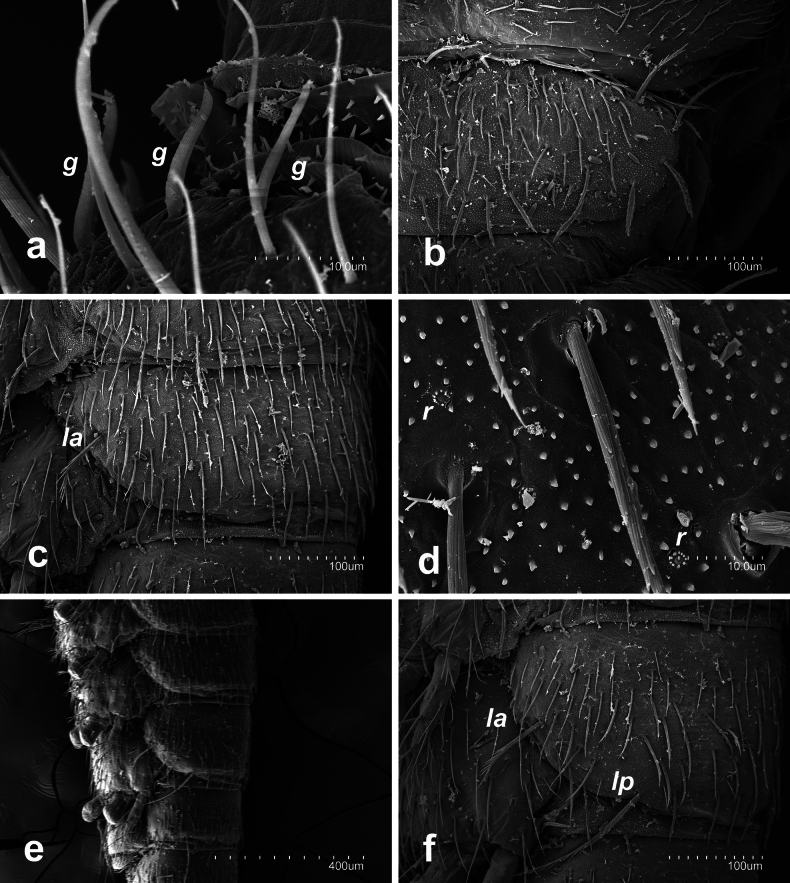 Figure 1
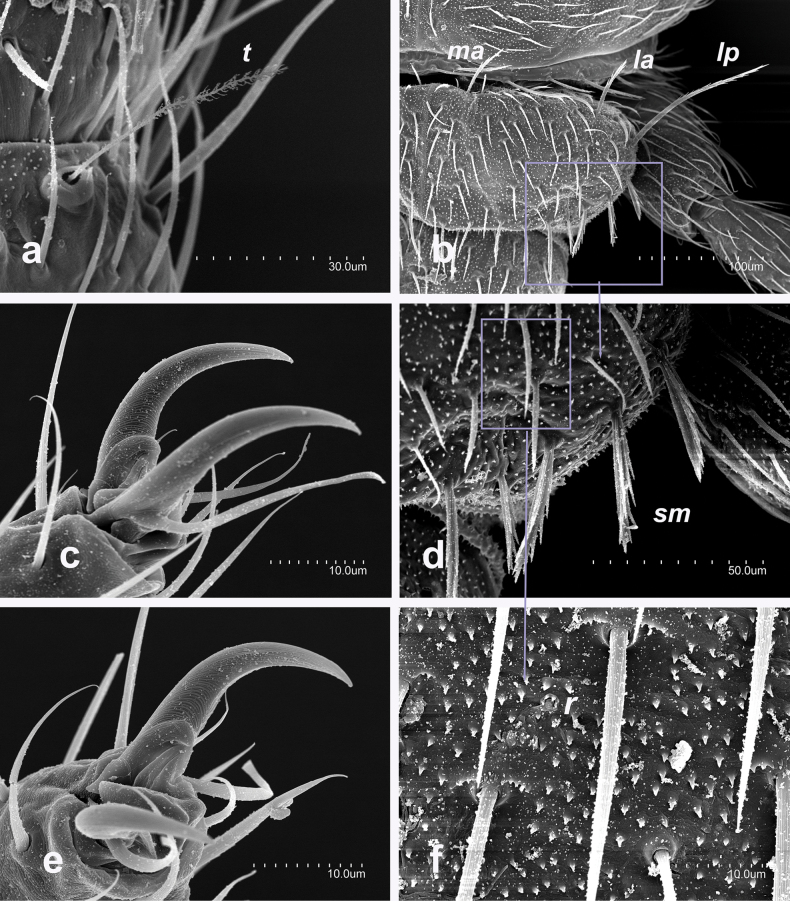 Figure 2
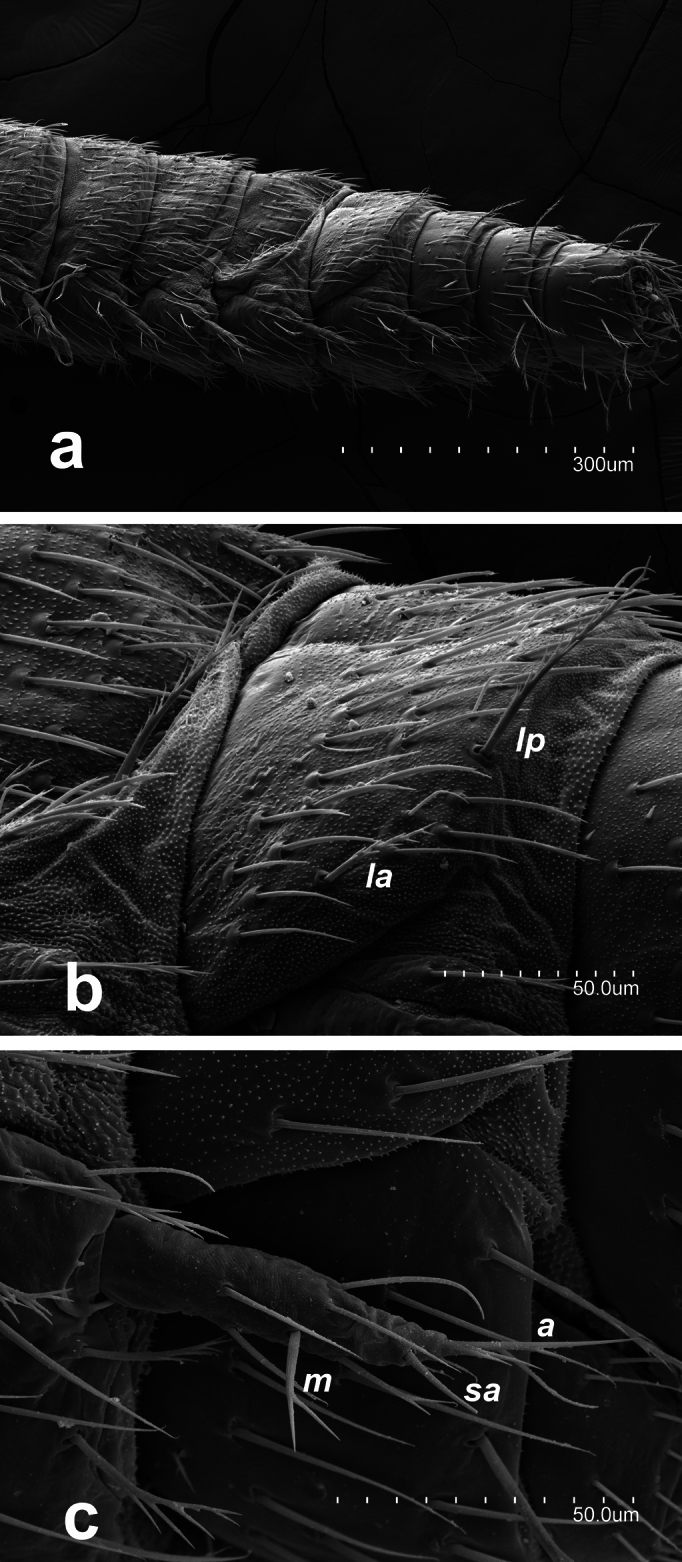 Figure 3
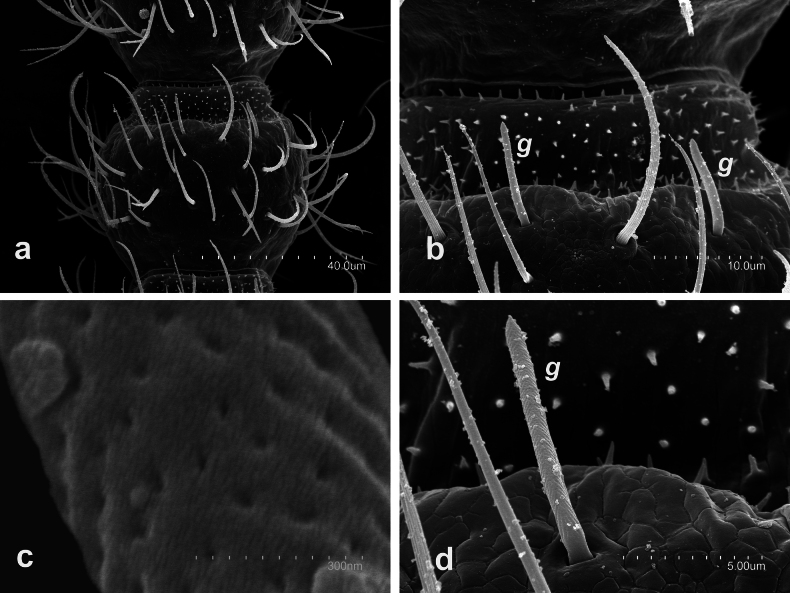 Figure 4
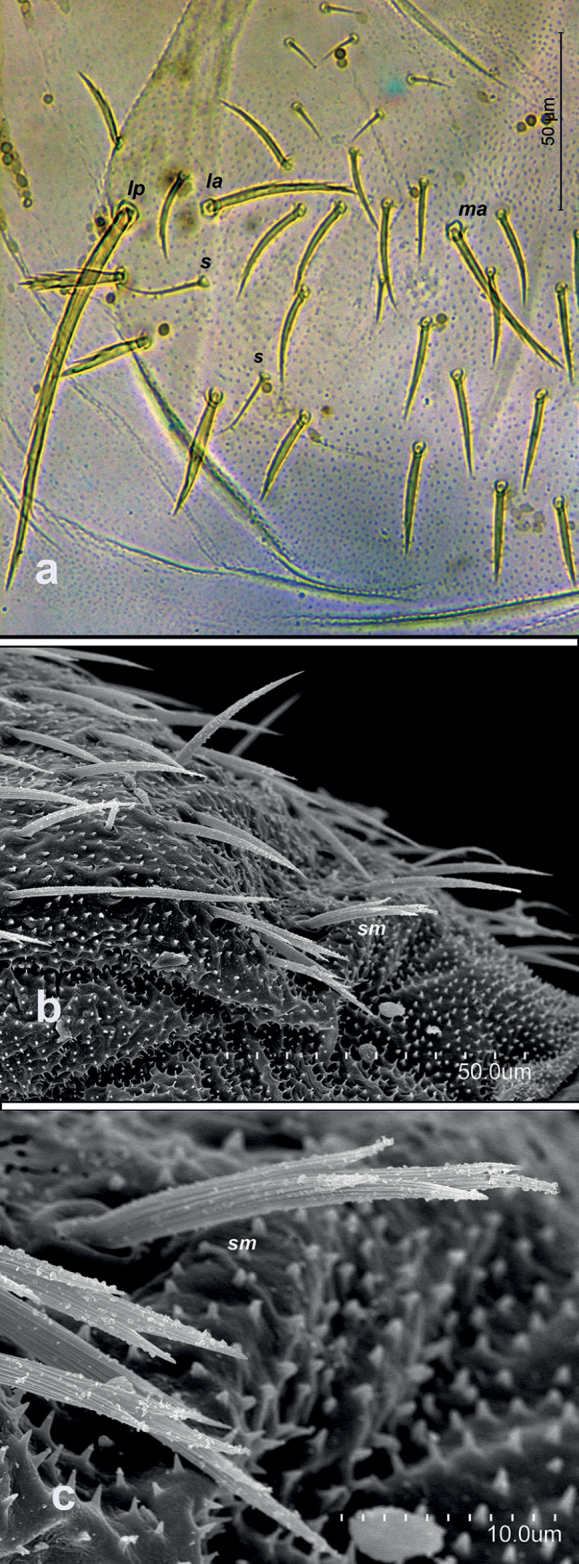 Figure 5
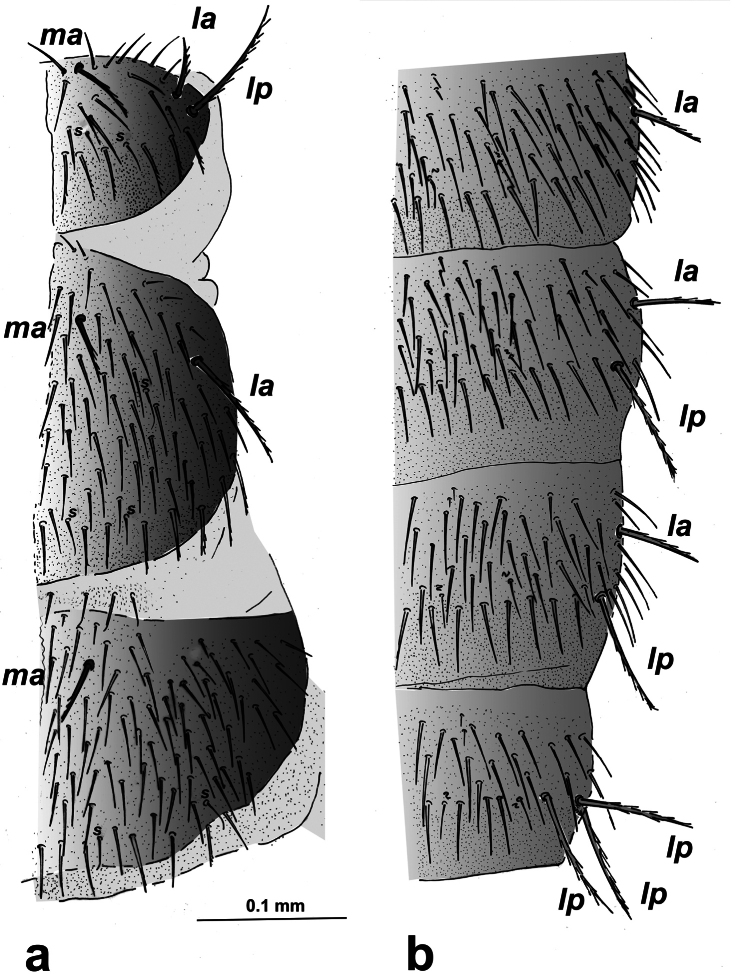 Figure 6
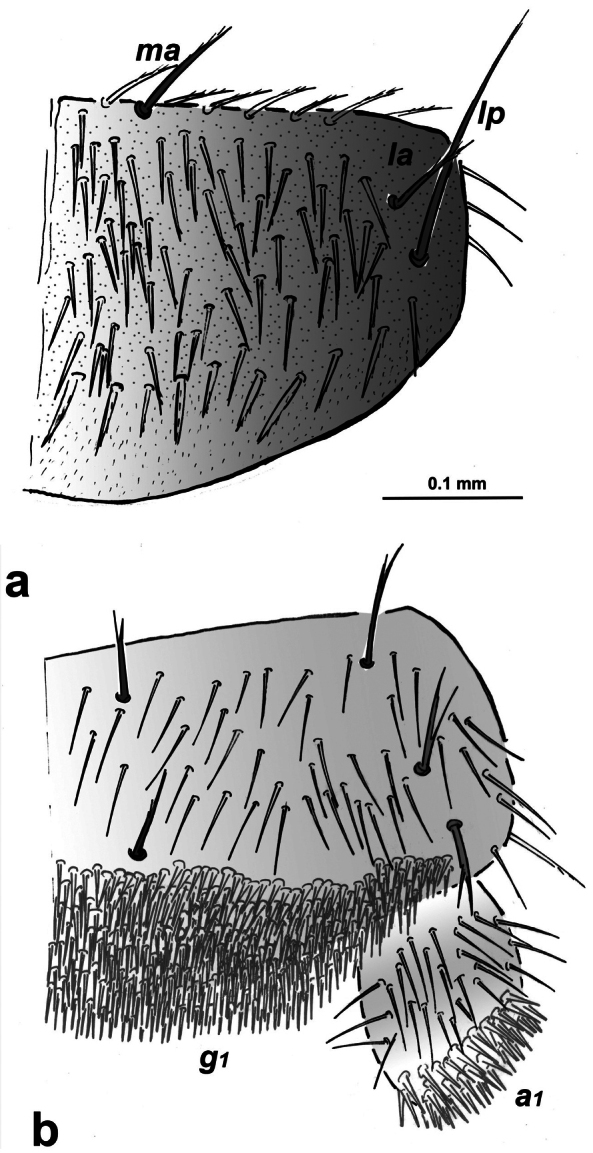 Figure 7
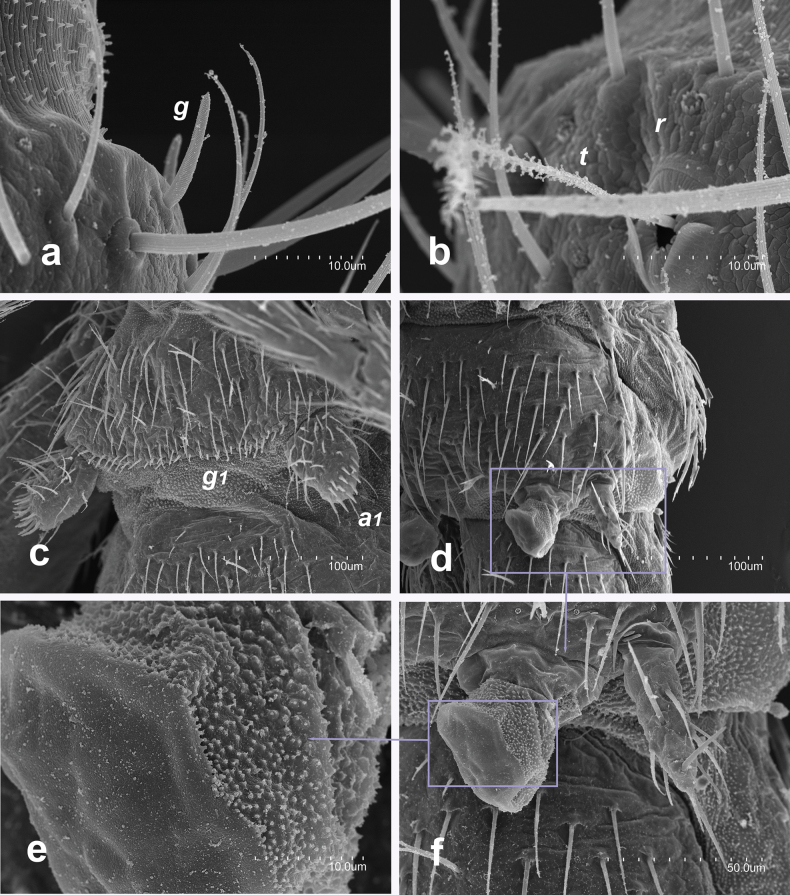 Figure 8
| Soil species | Country | Reference |
|---|---|---|
| Romania |
| |
| Bulgaria, Romania | ||
| Romania | This study - new species for Romania | |
| Romania | ||
| Romania | ||
| Romania |
| |
| Romania |
| |
| Romania | ||
| Romania | ||
| Bulgaria, Romania | ||
| Bulgaria |
| |
| Bulgaria, Romania | ||
| Romania | ||
| Romania | ||
| Romania |
| |
| Bulgaria, Romania | ||
| Romania | This study | |
| Bulgaria | This study - new species for Bulgaria | |
| Bulgaria & Romania | ||
| Romania | ||
| Romania | ||
| Romania |
Peer Reviews
No public reviews on file for this paper yet. If you reviewed it on a platform where reviews are public (OpenReview, ICLR, NeurIPS, ICML), you can paste yours below so the community can read it here.
Videos
No videos yet. Explain this paper in a talk, walkthrough, or lecture? Add one.
Taxonomy
TopicsCollembola Taxonomy and Ecology Studies · Invertebrate Taxonomy and Ecology · Study of Mite Species
Introduction
The first records of Campodeidae species (Campodeastaphylinus Westwood, 1842 and Campodeafragilis Meinert, 1865) from Romania were published by Vellay (1900) and later cited by Stach (1929). However, both species are now considered misidentifications (Sendra et al. 2012). Years later, in Bulgaria, Silvestri (1931) described three species of campodeids from cave habitats: Campodea (Dicampa) frenata Silvestri, 1931, Plusiocampabulgarica Silvestri, 1931, and Plusiocampabureschi Silvestri, 1931. Later, Drěnovski (1937) reported three species from soil habitats in Bulgaria: Campodea (Dicampa) malpighii bulgarica Drěnovski, 1937, Campodeawitoschensis Drěnovski, 1937, and Plusiocampamontana Drěnovski, 1937. However, Paclt (1957, 1969) considered each a nomen nudum, and the first two were respectively assigned to Campodea (Dicampa) frenata Silvesti, 1931 and Campodea (Paurocampa) suensoni Tuxen, 1930 while the third remained without assignation. During 1950s and 1960s, several contributions significantly improved our understanding of the soil and cave Campodeidae of the Carpathians (Romania) and the mountains in Bulgaria (Ionescu 1951, 1955; Rusek 1965a; Paclt 1969). In the 21^st^ century, the diversity of soil species increased to 18 species in Romania (Sendra et al. 2012) and seven species in Bulgaria (Sendra and Georgiev 2021). In addition to the soil-dwelling Campodeidae fauna, nine cave-adapted species have been described or reported: five species from caves in the southern Carpathians (Ionescu 1955; Condé 1991, 1993, 1996; Sendra et al. 2012) and six species from caves in Bulgaria (Silvestri 1931; Bareth and Condé 2001).
The aim of this study is to enhance the understanding of the family Campodeidae within the basal hexapod class Diplura in the Carpathians and Balkan Mountains in Romania and Bulgaria by providing new records and distributional data, describing a new species, and publishing taxonomic and distributional remarks on certain taxa.
In total, 222 specimens from 44 sampling sites in Romania and one site in Bulgaria were examined, based on a collection provided by C. Fiera collected between 2018 and 2021. Additional material from six localities in Bulgaria was collected by Boyan Petrov, Petar Beron, and Pavel Stoev, zoologists at the National Museum of Natural History, Bulgarian Academy of Sciences.
Materials and methods
Most of the Diplura specimens were extracted from samples of leaf litter, soil, and mosses using Berlese funnels. The material has been deposited in the private collection of Alberto Sendra, València, Spain (Coll. AS) and most of specimens were mounted on slides using Marc André II medium. These were observed and identified using a phase-contrast microscope, and measurements were taken with an ocular micrometre.
Photomicrography was performed with a stereo microscope (Leica M165C) with an integrated capture system image (LAS v. 4.13) and software LCS Lite, and a compound microscope with a photographic camera K3 C/M and the software LCS Lite. We used the software Helicon Focus to combine photos of a specimen at different levels of focal planes, which helped achieve a more accurate and complete illustration. Several specimens for SEM photography (Hitachi S-4900) were coated with palladium-gold.
The type and studied material are kept at the following institutions:
Coll. AS private collection of Alberto Sendra, València, Spain
IBBInstitute of Biology Bucharest, Romanian Academy
NMNHSNational Museum of Natural History at the Bulgarian Academy of Sciences.
Results
Campodea (Campodea) magna
Taxon classificationAnimalia
Ionescu, 1955
56331F61-157F-5F91-B978-340C3B267D54
Material examined.
Romania • 1 ex., Bârgău Mountains: Leșu, Bistrița-Năsăud County, 47.289248°N, 24.756708°E, 749 m a.s.l., beach, rarely fir, litter, 02.11.2021, C. Fiera leg.; • 1 ex., RO, Bârgău Mountains: Lunca Ilvei, near Pepiniera Silhoasa, Bistrița-Năsăud County, 47.346245°N, 25.015375°E, 749 m a.s.l., mixed forest (fir and beach), soil, 04.11.2021, C. Fiera leg.; • 2 ex., Doftana Valley: Șotriile, 45.227694°N, 25.729119°E, 609 m a.s.l., beech forest, soil, 18.11.2016, C. Fiera leg.; • 7 ex., Bârgău Mountains: Tureac, site 1, Bistrița-Năsăud County, 47.257408°N, 24.856696°E, 862 m a.s.l., beech forest, soil, 18.08.2018, C. Fiera leg.; • 1 ex., Suceava County: Zamostea-Lunca forest, 47.870137°N, 26.252775°E, 290 m a.s.l., old oak (120 years old, rarely 180 years old), in association with ash, aspen, maple, hornbeam, litter, 08.08.2019, C. Fiera leg.
Habitat and distribution.
Soil-dwelling species found in several localities from the southern Carpathians (Ionescu 1955; Sendra et al. 2012) and recently in Bulgaria (Sendra and Georgiev 2021). The species is also known from the northern Anatolia (Sendra et al. 2010).
Campodea (Campodea) plusiochaeta
Taxon classificationAnimalia
Silvestri, 1912
FAE39FDD-6F73-59CC-BB70-2E11DE25AE53
Material examined.
Romania • 1 ex., Alba County: Cenade, 46.036341°N, 24.007781°E, 436 m a.s.l., vineyards, soil, 10.09.2020, M. Șandor leg.; • 1 ex., Suceava County: Iacobeni, 47.446179°N, 25.311171°E, 895 m a.s.l., mixed forest (fir, larch, hornbeam), soil and litter, C. Fiera leg.
Habitat and distribution.
A soil-dwelling species, living under stones or among the alluvial debris (Condé 1960) which is common under barks or moss. It is also found in dry environments, burrows of mammals or gardens, sometimes reaches high altitude in mountains. It is one of the most widespread species collected at many sites of the Euro-Mediterranean region: British Isles (Condé 1961), southern Jutland and southern Scandinavian peninsulas (Silvestri 1912; Arevad 1957; Olsen 1996), North Africa (Condé 1947a, 1953), throughout the Iberian Peninsula (Sendra and Moreno 2004), throughout continental Europe including west, central, and eastern Europe (Silvestri 1912; Pagés 1951; Rusek 1964; Stach 1964; Wygodzinsky 1941; Paclt 1965), Apennine Peninsula (Silvestri 1912; Ramellini 1995; 2000), Balkan Peninsula (Condé 1984), and Anatolia (Sendra et al. 2010). The easternmost localities are in western Russia (Silvestri 1912; Rusek 1965b) close to the 60° parallel.
Remarks.
New record for the Romanian fauna.
Campodea (Campodea) taunica
Taxon classificationAnimalia
Marten, 1939
3EA3BDA9-1890-57E7-8081-0137BF9A72B5
Material examined.
Romania • 1 ex., Dâmbovița County: Springs Complex of Corbii Ciungi, near Corbii Mari County, 44.524361°N, 25.512138°E, 122 m a.s.l., scrubs, soil, M. Manu leg.
Habitat and distribution.
A soil-dwelling species that is distributed throughout Central Europe, including France (Husson 1946; Pagés 1951), Central Germany (Paclt 1961), Swiss Alps (Orelli 1956), and reaching as far as the Romanian Carpathians (Ionescu 1951, 1955; Sendra et al. 2012) and Serbia (Blesić 2000a). Surprisingly, it has not been found yet in the Czech Republic or Slovakia. Outside Central Europe, it has been quoted in the Pontic Mountains and the northern part of Anatolia (Sendra et al. 2010).
Campodea (Campodea) wallacei
Taxon classificationAnimalia
Bagnall, 1918
95FF9B9E-4B87-5FC7-AE61-3A762A2A9FA5
Material examined.
Romania • 4 ex., Bucegi Massif: Sinaia, Prahova County, 45.333328°N, 25.549175°E, 858 m a.s.l., in the city of Sinaia, park, under Larix sp., 23.09.2019, C. Fiera and M.W. Weiner leg.
Habitat and distribution.
A soil-dwelling species, which is also found in cave habitats (Condé 1956, 1962; Sendra et al. 2013). It is distributed in England (Bagnall 1918), southern Scandinavian Peninsula (Agrell 1944), Maritime Alps (Bareth and Condé 1985; Ramellini 2000), France (Condé 1947b, 1947c, 1950; Pagés 1951), Germany (Christian 2003) and the Dinaric Mountains (Blesić 1998a, 1998b, 2000a, 2001). The species has been recorded from Romania by Ionescu (1951, 1955) and Sendra et al. (2012).
Campodea (Dicampa) apula
Taxon classificationAnimalia
Silvestri, 1912
33E96E55-8688-56E6-95BF-295AE9EC3A08
Material examined.
Romania • 1 ex., Făgăraș Mountains: Nucșoara, Argeș County, 45.417893°N, 24.733326°E, 1196 m a.s.l., mixed forest (Fagussylvatica, Betulapendula, Alnusviridis, Sambucus sp.), litter, 10.11.2021, C. Fiera and I. Vicol leg.
Habitat and distribution.
A soil-dwelling species known from Foggia, Italy (Silvestri 1912), the Carpathian Mountains across Slovakia, Poland, and Romania (Ionescu 1951, 1955; Paclt 1961; Szeptycki 1974), and extending to the western border of the Caucasus.
Campodea (Dicampa) campestris
Taxon classificationAnimalia
Ionescu, 1955
86BA1BD2-DE3E-5C22-A93B-BA09F69B94AD
Material examined.
Romania • 5 ex., Făgăraș Mountains: Sâmbăta de Sus, Brașov County, 45.681608°N, 24.791662°E, 746 m a.s.l., mixed forest (fir and beach), soil, 11.11.2021, C. Fiera and I. Vicol leg.; 1 ex. Doftana Valley: Voila, 45.166241°N, 25.753028°E, 600 m a.s.l., sessile oak and beech, soil, 14.07.2018, C. Fiera leg.
Habitat and distribution.
A soil-dwelling species distributed from the southern Carpathians to the Balkan Mountains (Rusek 1965a; Blesić 1984, 1998a, 2000a; Sendra et al. 2012).
Campodea (Dicampa) frenata
Taxon classificationAnimalia
Silvestri, 1931
4BA18A4D-3F84-5463-BC60-E6E587AAA6CA
Material examined.
Bulgaria • 3 ex., Vrachanski Balkan Nature Park, hut Purshevitza, 1400 m a.s.l., forest, 12.07.1993, B. Petrov leg.; • 5 ex. Central Balkan National Park, hut Rai, 1250 m a.s.l., foliage, 08.12.1992, B. Petrov leg.; • 5 ex., Western Rhodopes Mts., village Mostovo, under stones, 14.03.1992, B. Petrov leg.; • 2 ex., Western Rila Mts., near Popovski ezera Lakes, 2350 m a.s.l., 25.07.1993, B. Petrov leg.
Taxonomic notes.
Specific observations using scanning electron microscopy reveal short and slightly thick gouge sensilla on the antennomeres (Fig. 1a); tergites: dense microdenticles with rosette glands along with well-barbed macrosetae; thick and well-barbed marginal setae, in addition to clothing setae with one or two distal barbs (Fig. 1b−f).
Campodea (Dicampa) frenata Silvestri, 1931, specimen in Coll. AS. a lateral anterior view of a medial antennomere b pronotum c lateral view of abdominal segment 6 d detail of pronotum e lateral view of abdominal segments 6–8 f lateral view abdominal segment 7. Abbreviations: g gouge sensillum, la lateral anterior macrosetae, r rosette gland, lp lateral posterior macrosetae.
Habitat and distribution.
A soil-dwelling species that is only occasionally found in caves (Silvestri 1931; Bareth and Condé 2001). It is distributed throughout the Carpathians Mountains (Ionescu 1955; Rusek 1964), and extends southward into the Balkan Mountains (Paclt 1969; Blesić 1984; 2000a).
Campodea (Dicampa) propinqua
Taxon classificationAnimalia
Silvestri, 1932
8368AC9C-3E4A-5C05-A571-25785899BEBE
Material examined.
Romania • 1 ex., Bârgău Mountains: Valea Mare, Bistrița-Năsăud County, 47.481778°N, 24.999045°E, 762 m a.s.l., spruce forest, soil, 04.11.2021, C. Fiera leg.; • 1 ex., Bârgău Mountains: Șanț, Bistrița-Năsăud County, 47.50723°N, 24.970762°E, 826 m a.s.l., cutted spruce forest, litter, 04.11.2021, C. Fiera leg.; • 15 ex., Brașov County: Pârâul Rece, 45.512108°N, 25.507398°E, 1073 m a.s.l., spruce forest, litter, 12.11.2021, C. Fiera and I. Vicol leg.; • 5 ex., Făgăraș Mountains: Cârtișoara, Sibiu county, 45.670567°N, 24.590975°E, 927 m a.s.l., beech forest, soil, 10.10.2020, C. Fiera and I. Vicol leg.; • 5 ex., Făgăraș Mountains: Turnu Roșu, Sibiu county, 45.616342°N, 24.323312°E, 704 m a.s.l., mixed forest (spruce, fir, beech), predominantly spruce. litter, 11.11.2021, C. Fiera and I. Vicol leg.; • 1 ex., Făgăraș Mountains: Cârtișoara, Sibiu county, 45.671965°N, 24.791662°E, 808 m a.s.l., beach forest, litter, 11.11.2021, C. Fiera and I. Vicol leg.; • 1 ex., Făgăraș Mountains: near Berivoi Monastery, Brașov County, 45.687445°N, 24.970958°E, 709 m a.s.l., beech forest, rarely fir, litter, 12.11.2021, C. Fiera and I. Vicol leg.; • 3 ex., Suceava County: Iacobeni, 47.446179°N, 25.311171°E, 895 m a.s.l., mixed forest (fir, larch, hornbeam), soil and litter, C. Fiera leg.; • 2 ex., Gorj County: Rânca locality, 45.301415°N, 23.680959°E, 1622 m a.s.l., spruce forest, soil and litter, 17.06.2021, C. Fiera leg.; • 1 ex., Zarand Mountains, site 1, Căsoaia, near Arăneag, Arad county, 46.225324°N, 21.764489°E, 226 m a.s.l., mixed forest (Abiesalba, Fagussylvatica, Quercusfrainetto, Carpinusbetulus, Acercampestre), soil, 10.11.2020, C. Fiera and I. Vicol leg.; • 1 ex., Zarand Mountains, site 4, Milova, Arad county, 46.124375°N, 21.801121°E, 191 m a.s.l., mixed forest (Piceaabies, Fagussylvatica, Pinusnigra, Acercampestre, Quercus sp., Acespseudoplatanus), soil, 11.11.2020, C. Fiera leg. and I. Vicol; • 2 ex., Zarand Mountains, site 5, Bârzava, Arad county, 46.127396°N, 21.986602°E, 168 m a.s.l., mixed forest (Fagussylvatica, Quercuspetraea, Aviumcerasus), soil, 11.11.2020, C. Fiera and I. Vicol leg.; • 1 ex., Zarand Mountains, site 6, Conop, Arad county, 46.098845°N, 21.903658°E, 165 m a.s.l., mixed forest (Quercuscerris, Q.frainetto, Acercampestre, Fagussylvatica, Ligustrumvulgare, Robiniapseudocacia, Sorbus sp., Carpinusbetulus, Sorbusterminalis), soil, 11.11.2020, C. Fiera and I. Vicol leg. Bulgaria • 1 ♂, 1 ♀, Pirin Mts., 6 km of Predela, MSS trap, alt. 676 m a.s.l., 16.06.2006, P. Stoev, B. Petrov leg.
Taxonomic notes.
The morphological taxonomic features observed in the studied specimens under an optical microscope show no differences from the Iberian specimens. However, a molecular analysis should be conducted to confirm whether these geographically distant populations belong to the same species.
Specific observations using scanning electron microscopy reveal large embase of antennal trichobothria (Fig. 2a), dense microdenticles (Fig. 2b, d) including rosette-type glands on all tergites (Fig. 2f), well-barbed macrosetae (Fig. 2b), and clothing setae with a single distal barb (Fig. 3a, b). Additionally, the stylus setae are smooth, with the apical one featuring two long basal denticles (Fig. 3c). Claws are simple, with a protuberance between them (Fig. 2c, e).
Campodea (Dicampa) propinqua Silvestri, 1932, specimen in Coll. ASa latero-anterior view of third antennomere b pronotum c pretarsus metathoracic leg d latero-anterior view of pronotum e pretarsus metathoracic leg f detail pronotum. Abbreviations: t trichobothria, ma medial anterior macrosetae, la lateral anterior macrosetae, lp lateral posterior macrosetae, sm marginal setae, r rosette gland.
Campodea (Dicampa) propinqua Silvestri, 1932, specimen in Coll. ASa abdomen segments 4–10 b lateral view abdominal segment 7 c stylus abdominal segment 7. Abbreviations: la lateral anterior macrosetae, lp lateral posterior macrosetae, m medial setae, sa subapical setae, a apical setae.
Habitat and distribution.
A soil-dwelling species known from a single locality in the western Subbaetic Mountains, southern Iberian Peninsula (Silvestri 1932a), and inhabiting colluvial scree slopes in central Iberia (Sendra et al. 2017). Reported from Romania by Ionescu (1951, 1955) and Italy by Ramellini (1990).
Campodea (Dicampa) sprovierisprovieri
Taxon classificationAnimalia
Silvestri, 1932
BB4F5DE2-F494-5721-A159-A3B4F9A9F9DF
Material examined.
Romania• 1 ♀, Bârgău Mountains: Leșu, Bistrița-Năsăud County, 47.289248°N, 24.756708°E, 749 m, beach, rarely fir, litter, 02.11.2021, C. Fiera leg.; • 1 ♀, 1 ♂, Brașov County: Pârâul Rece, 45.515038°N, 25.503134°E, 994 m a.s.l., spruce forest, soil, 14.07.2018, C. Fiera leg.; • 2 ♂, 3 ♀, 1 juv., Vrancea County: Brădăcești (near Nereju), 45.697641°N, 26.671177°E, 623 m a.s.l., coniferous forest (Pinus sp.), soil, 27.05.2021, C. Fiera leg.; • 1 ♂, 2 ♀, Suceava County: Iacobeni, 47.446179°N, 25.311171°E, 895 m a.s.l., mixed forest (fir, larch, hornbeam), soil and litter, C. Fiera leg.; • 1 ♀, Suceava County: Pătrăuți forest near Răuțeni locality, 47.840511°N, 25.056427°E, 344 m a.s.l., mixed forest (beech, oak, and hornbeam), soil, 13.04.2021, C. Fiera leg.; • 1 juv. Brașov County: Prejmer, site 1, 45.730329°N, 25.737091°E, 510 m a.s.l., mixed forest (maple, lime, hornbeam), soil, 15.11.2018, C. Fiera and Weiner M.W. leg.; • 3 ♀, 2 ♂, 3 juvs, Brașov County: Prejmer, site 3, 45.75037°N, 25.723362°E, 510 m a.s.l., oak forest (Quercuscerris), 100 years old, 15.11.2018, C. Fiera and Weiner M.W. leg.; • one juv., Brașov County: Prejmer, site 4, 45.753624°N, 25.707257°E, 501 m a.s.l., oak forest (Quercuscerris), less than 70 years old, 15.11.2018, C. Fiera and Weiner M.W. leg.; • 4 ex., Cheile Zugreni, between Bistriţei and Giumalău mountains, 47.407101°N, 25.545952°E, 770 m a.s.l., pine and spruce forest, 18.08.2018, C. Fiera leg.; • 1 ♂, Suceava County: Dornișoara, 47.213982°N, 25.06118°E, 1109 m a.s.l., spruce forest, 18.08.2018, C. Fiera leg.; • 1 ♀, Brașov County, Hărman, site 2, 45.734179°N, 25.671031°E, 508 m a.s.l., peatbog with oak, soil, 16.11.2018, C. Fiera and Weiner M.W. leg.; • 5 ♂, 6 ♀, 7 juvs and 3 specimens kept for DNA, Bucegi Massif: Sinaia, Prahova county, site 1, 45.351264°N, 25.521893°E, 1288 m a.s.l., spruce forest, soil, 14.07.2018, C. Fiera leg.; • 5 ♀, 5 ♂, 7 juvs and 4 specimens kept for DNA, Bucegi Massif: Sinaia, Prahova county, site 2, 45.357541°N, 25.516975°E, 1386 m a.s.l., spruce forest, soil, 14.07.2018, C. Fiera leg.; • 3 juvs, Buzău County: Siriu, 45.559882°N, 26.178259°E, 658 m a.s.l., beech forest, soil, 27.06.2020, C. Fiera leg.; • 2 ♀, 2 juvs, Doftana Valley: Șotriile, 45.227694°N, 25.729119°E, 609 m a.s.l., beech forest, soil, 18.11.2016, C. Fiera leg.; • 2 ♂, 1 ♀, one juv. and one specimen kept for DNA, Bârgău Mountains: Tureac, site 1, Bistrița-Năsăud County, 47.257408°N, 24.856696°E, 862 m a.s.l., beech forest, soil, 18.08.2018, C. Fiera leg. Bulgaria • 1 ♀, 4 juvs, Pirin Mountains, Bansko, 41.77552°N, 23.439216°E, 1784 m a.s.l., spruce forest, soil, 13.08.2018, C. Fiera leg.
Habitat and distribution.
A soil-dwelling species which is widely spread around the Balkan Peninsula (Ionescu 1955; Rusek 1965b; Condé 1984; Sendra et al. 2012) and Anatolia (Sendra et al. 2006, 2010), including several Aegean islands (Silvestri 1933; Condé 1984).
Campodea (Dicampa) transylvanica
Taxon classificationAnimalia
Sendra sp. nov.
24B80BD5-31B0-5C62-BB65-31A0EE73A113
https://zoobank.org/7655C15C-D6CB-4D70-AD16-DA30DA48A7FC
Type material.
Holotype. Romania • ♂; Turnu Roșu (Sibiu County), Făgăras Mountains (RO Carpathians), soil, 704 m. elevation; mixed forest (spruce, fir, beech) (predominant spruce); 11 November 2021, Fiera C. and I. Vicol leg.; labelled holotype IBB-CTR1. Paratypes. Romania • 1 ♀, 2 ♂♂, 2 juvs, Turnu Roșu, Făgăraş Mountains (RO Carpathians), Făgăraş, soil, 704 m elevation, mixed forest (spruce, fir, beech) (predominant spruce), 11 November 2021, Fiera C. and I. Vicol leg., labelled IBB-CTR2-5; • 1 ♀, Turnu Roșu, Făgăraş Mountains (RO Carpathians), litter, 704 m. elevation, mixed forest (spruce, fir, beech) (predominant spruce), 11 November 2021, Fiera C. and I. Vicol leg., labelled IBB-CTR6; • 1 ♂, Cârtișoara, Făgăras Mountains (RO Carpathians), litter, beach, 11 November 2021, Fiera C and Vicol I. leg., labelled IBB-CTR7; • 3 ♀♀, Cârtișoara, Făgăras Mountains (RO Carpathians), soil, beach, 11 November 2021, Fiera C. and I. Vicol leg., labelled NMNHS-10832-10834; • 1 juv., Radna (Arad County), Zarand Mountains (RO Carpathians), Quercuscerris, Q.frainetto, Betulapendula, 12 November 2020, Fiera C. and I. Vicol leg., labelled IBB-CTR8; • 1 ♀, 1 ♂, Conop (Arad County), Zarand Mountains (RO Carpathians), Quercuscerris, Q.frainetto, Acercampestre, Fagussylvatica, Ligustrumvulgare, Robiniapseudoacacia, Sorbus sp., Carpinusbetulus, Sorbusterminalis, 11 November 2021, Fiera C. and I. Vicol leg., labelled IBB-CTR9-10.
Other material.
Romania • 1 ♀, Turnu Roșu, Făgăraş Mountains (RO Carpathians), Făgăraş, soil, 704 m elevation, mixed forest (spruce, fir, beech) (predominant spruce), 11 November 2021, Fiera C. and I. Vicol leg, Coll AS.
Description.
Body. Length 1.9–2.7 mm in male; 2.3–3 mm in females; 1.4–1.7 mm in juveniles. Epicuticle with microdenticles under optical microscope (Fig. 5a) and dense microdenticles under scanning electron microscope (Fig. 5b, c); body with smooth short clothing setae (Fig. 5a−c).
Head. Antennae with 15–19 antennomeres in juveniles and adults, 0.53–0.47 shorter than length of the body in juveniles and 0.45–0.31 in adults; central antennomeres as long as wide with one proximal whorl of bifurcated macrosetae and one distal whorl of smooth macrosetae and uneven short smooth setae; in addition to a single distal whorl of ≤ 4–6 gouge sensilla of 5–6 µm long (Fig. 4a−d). Proximal antennomeres with typical trichobothria disposition and with small bacilliform sensillum on third antennomere in dorsal position, between b–c macrosetae. Plain frontal process with one anterior macrosetae, longer than clothing setae. Three macrosetae each with two or three barbs along each side of insertion line of antennomere with length ratios of a/i/p, 11/13/14, respectively, in holotype. Large suboval labial palps, each with small latero-external sensillum near two gard setae and five normal setae on anterior portion, ≤ 60 neuroglandular setae in medial and posterior positions.
Campodea (Dicampa) transylvanica Sendra, sp. nov., specimen in Coll. ASa medial antennomere b latero-anterior view of a medial antennomere c detail of gouge sensillum d gouge sensillum on antennomere. Abbreviation: g gouge sensillum.
Thorax. Thoracic macrosetae distribution: pronotum has 1+1 ma, 1+1 la, 1+1 lp macrosetae; mesonotum has 1+1 ma, 1+1 la macrosetae (Figs 5a, 6a). All macrosetae longer than other setae with barbs in distal ½–3/4 marginal setae barbed and longer than clothing setae. Short legs, metathoracic legs reach border of fourth abdominal segment. Calcars with two or three long barbs in middle. Each tarsus with two separated ventral rows of slightly and thicker smooth setae among clothing setae. Three long smooth dorsal tarsal and one ventral setae. Subequal simple claws and with smooth lateral processes.
Campodea (Dicampa) transylvanica Sendra, sp. nov., specimens in Coll. AS.) a pronotum b latero-posterior view of pronotum c detail of latero-posterior pronotum. Abbreviations: ma medial anterior macrosetae, la latero-anterior macrosetae, lp latero-posterior macrosetae, s sensillum, sm marginal setae.
Campodea (Dicampa) transylvanica Sendra, sp. nov. Holotype IBB-CTR1 a pronotum, mesonotum, and metanotum b urotergites V–VII. Abbreviations: ma medial anterior macrosetae, la latero anterior macrosetae, lp latero posterior macrosetae, s sensillum.
Abdomen. Distribution of abdominal macrosetae on tergites (Fig. 6b) shows 1+1 la on V, 1+1 la, 1+1 lp on VI–VII; 3+3 lp on VIII and 5+5 lp on IX abdominal; la macrosetae with barbs in distal ½–1/3 and lp macrosetae bear barbs along distal 4/5. Urosternite I with 7+7 macrosetae; urosternites II to VII with 4+4 macrosetae; urosternite VIII with 1+1 macrosetae; urosternal macrosetae of bifurcated, tri or quadrifurcated. Stylus setae with smooth subapical setae, bifurcated ventromedial seta and with two long basal barbs on apical seta.
Secondary sex features. Female urosternite I with subcylindrical appendages, each bearing ≤ 12 glandular a1 setae in apical field. Male urosternite I with subtrapezoidal appendages, each with apical field of ≤ 17 glandular a1 setae; a continuous posterior field of ≤ about 100 g1 glandular setae arranged in 1–3 rows. Two incomplete cerci with basal article plus five primary articles. Internal smooth macrosetae or with one distal barb in proximal articles and other macrosetae with four or five distal barbs; primary articles with up to three whorls of barbed macrosetae, and uneven short smooth setae.
Taxonomic affinities.
The distribution of urotergal macrosetae in Campodea (Dicampa) transylvanica Sendra, sp. nov. from the Romanian Carpathians matches that of Campodea (Dicampa) plagiaria Silvestri, 1932 from the Baetic and Riff mountains (Silvestri 1932b). However, Campodea (D.) transylvanica Sendra, sp. nov. differs from C. (D.) plagiaria in several taxonomic features: 15–19 antennomeres in Campodea (D.) transylvanica Sendra, sp. nov. instead of 26–28 antennomeres in soil populations of Campodea (D.) plagiaria; sensillum on the third antennomere in tergal position in C. (D.) transylvanica Sendra, sp. nov. instead of ventral in C. (D.) plagiaria; apical barbs on marginal notal setae in C. (D.) transylvanica Sendra, sp. nov. instead of thin pine marginal setae in C. (D.) plagiaria.
Etymology.
Named after Transylvania, a historical and cultural region in Central Europe that encompasses central Romania.
Habitat and distribution.
A soil-dwelling species that is found in mixed forests in Zarand and Făgăraș mountains. In two localities it co-occurs with Campodea (Dicampa) propinqua Silvestri, 1932.
Campodea (Paurocampa) ruseki
Taxon classificationAnimalia
Condé, 1966
EDA89E37-D797-55B1-BCC8-58B01118AA8E
Material examined.
Bulgaria • 2 ♂♂, 1 ♀, Pirin Mountains, Hut Kamenitsa, 1800 m a.s.l., 15.06.1988, P. Beron leg.
Taxonomic notes.
Observations under the microscope of the studied material have shown several previously unknown features not mentioned in its original description (Condé 1956, 1966). The antennae have 27 antennomeres in a 3.8 mm female, and 25 in 3.95 mm and 4.2 mm males. The apical antennomere has four simple spheroidal olfactory chemoreceptors on the cupuliform organ. A large bacilliform sensillum is present on the third antennomere in tergal position (between b-c macrosetae). Notal tergites bear microdenticles, and the clothing setae are either smooth or have a distal tiny barb (Fig. 7a). The marginal setae are slightly longer and thicker than clothing setae, with a few bars on distal half to two-thirds. The pronotal macrosetae have a few thin tiny barbs on the distal half, with the longest lp macrosetae with one or two thin tiny barbs at the distal position. No trochanteral setae were observed in any of the specimens studied.
Campodea (Paurocampa) ruseki Condé, 1966 a pronotum b first urosternite of a male. Abbreviations: ma medial anterior macrosetae, la latero-anterior macrosetae, lp latero-posterior macrosetae, g1 glandular setae type g1, a1 glandular setae type a1.
The male urosternite I (Fig. 7b) features slightly spherical appendages, each with an apical field containing ≤ 40 glandular a1 setae; a continuous posterior field of ~≤ 240 g1 glandular setae arranged in 7–9 rows.
Remarks.
New record for Bulgaria.
Habitat and distribution.
A soil-dwelling species that inhabits high altitudes. It is known from two localities in the Austrian Alps (Condé 1954, 1966) and a single locality in the Pirin Mountains of Bulgaria.
Campodea (Paurocampa) suensoni
Taxon classificationAnimalia
Tuxen, 1930
93382CDC-CD7B-512A-95D6-3701D91B3319
Material examined.
Romania • 3 ♂, 1 ♀, 4 juvs, Bârgău Mountains: Leșu, Bistrița-Năsăud County, 47.289248°N, 24.756708°E, 749 m, beach, rarely fir, litter, 02.11.2021, C. Fiera leg.; • 2 juvs, Bârgău Mountains: near Ilva Mică, Bistrița-Năsăud County, 47.328709°N, 24.702183°E, 494 m a.s.l., beach forest, litter, 02.11.2021, C. Fiera leg.; • 1 ♀, Bârgău Mountains: Tureac, site 8, Bistrița-Năsăud County, 47.257365°N, 24.857551°E, 872 m a.s.l., beach forest, soil, 03.11.2021, C. Fiera leg.; • 2 ♂, 2 ♀, Făgăraș Mountains: Nucșoara, Argeș County, 45.417893°N, 24.733326°E, 1196 m a.s.l., mixed forest (Fagussylvatica, Betulapendula, Alnusviridis, Sambucus sp.), litter, 10.11.2021, C. Fiera and I. Vicol leg.; • 1 ♂, 1 ♀, 2 juvs, Suceava County: Iacobeni, 47.446179°N, 25.311171°E, 895 m a.s.l., mixed forest (fir, larch, hornbeam), soil and litter, C. Fiera leg.; • 1 ♀, Argeș County: near Râușor Lake, 45.397983°N, 25.056427°E, 431 m a.s.l., rocks, soil, 26.07.2020, C. Fiera leg.; • 3 ♀, 6 ♂, 20 juvs and one specimen kept for DNA, Bârgău Mountains: Tureac, site 1, Bistrița-Năsăud County, 47.257408°N, 24.856696°E, 862 m a.s.l., beech forest, soil, 18.08.2018, C. Fiera leg.; • one juv., Bistriţa-Năsăud County: Valea Străjii near Tiha Bârgăului, 47.211925°N, 24.879244°E, 701 m a.s.l., beech forest, soil, 18.08.2018, C. Fiera leg.; • 2 ♀, Zarand Mountains, site 1, Căsoaia, near Arăneag, Arad county, 46.225324°N, 21.764489°E, 226 m a.s.l., mixed forest (Abiesalba, Fagussylvatica, Quercusfrainetto, Carpinusbetulus, Acercampestre), soil, 10.11.2020, C. Fiera and I. Vicol leg. Bulgaria • 2 ♂♂, 2 ♀♀, 3 juvs, Pirin Mountains, above Bansko, 41.77552°N, 23.439216°E, elevation 1784 m, spruce forest, soil, 13.08.2018, leg. C. Fiera; • 2 ex., Pirin Mt., Popina laka Lake, 18 km from Sandanski 1200–1400 m a.s.l., 15.06.1988. P. Beron leg.
Taxonomic notes.
Observations under electronic scanning microscope shown several taxonomic morphological characters in details: short gouge sensilla on antennomeres (Fig. 8a); trichobothria with large embase (Fig. 8b); male urosternite I (Fig. 8c) with subspherical appendages, each with an apical field containing glandular a_1_ setae in addition to a continuous posterior field of g_1_ glandular setae arranged in several rows; and, urosternites I–VII with short stylus and large exerted vesicles with two differentiated cuticle areas (Fig. 8d−f).
Campodea (Paurocampa) suensoni Tuxen, 1930 a antero-lateral view of a medial antennomere b distal portion of third antennomere c first urosternite of a male d sixth urosternite e detail exerted vesicle f latero-posterior view of sixth urosternite. Abbreviations: g gouge sensillum, t trichobothria, r rosette gland, g1 glandular setae type g1, a1 glandular setae type a1.
Habitat and distribution.
A soil-dwelling species that is found also at the entrances of caves and in their deeper zones when abundant organic matter is available (Condé 1974; Sendra et al. 2012). It is common and well-distributed in Central and Eastern Europe (Tuxen 1930; Condé, 1954, 1966; Paclt and Rusek 1961; Condé 1956; Rusek 1965b; Paclt 1961, 1969; Blesić 1984, 1997, 2000b, 2001; Christian 1992; Sendra et al. 2012), extending its distribution southward into central Italy (Condé 1966; Ramellini 2000).
Discussion
Campodeids and other Diplura families have been poorly sampled worldwide, despite their omnipresence in soils and subterranean spaces, including caves accessible or not by humans, as noted by Racovitza (1907) and Sendra (2023). Fortunately, thanks to the Emil Racovita Institute of Speleology in Romania and the National Museum of Natural History in Sofia, the soil and caves campodeid fauna of these two countries has been relatively well documented, primarily in five major contributions (Silvestri 1931; Ionescu 1955; Bareth and Condé 2001; Condé 1996; Sendra et al. 2012). Our study has increased the total number of soil and cave campodeids for Bulgaria and Romania from 19 to 22 species, which include three novelties: Campodea (Paurocampa) ruseki (new record for Bulgaria), Campodeaplusiochaeta (new record for Romania), and one new species, Campodea (Dicampa) transylvanica Sendra, sp. nov. (Table 1). The soil campodeids in the studied region belong to four genera: Campodea Westwood, 1842 with three subgenera Campodea s. str. Westwood, 1842 (eight species), Dicampa Silvestri, 1932 (nine species) and Paurocampa Silvestri, 1932 (two species), Eutrichocampa Silvestri, 1902 (one species), Litocampa Silvestri, 1933 (one species), and Plusiocampa Silvestri, 1912 (one species). This biodiversity is higher in terms of both species and genera, including subgenera, than that of other European regions at the same latitude such as Germany, which has a land area similar to that of Bulgaria and Romania combined, and a total of 13 Campodea s. str. species. However, France, with nearly twice the land area of Romania and Bulgaria together, has 47 soil and cave species, primarily from the subgenus Campodea (32 species) as well as the subgenera Dicampa (four species), Monocampa Silvestri, 1932 (four species), and Paurocampa (two species) plus the genera Eutrichocampa (one species), Litocampa (two species), Plusiocampa (one species), and Podocampa Silvestri, 1932 (one species) (Sendra and Reboleira 2020; Sendra et al. 2020). Furthermore, nearby countries such as continental Greece, one third of the combined area of Bulgaria and Romania has eleven species: Campodea (five species), one species in subgenus Dicampa, one in the subgenus Paurocampa, one in Helladocampa Condé, 1984, plus three in Plusiocampa. In Serbia and Macedonia, with a similar combined area size as continental Greece, there are 19 species distributed within four genera: Campodea (8 Campodea s. str. species, 5 Dicampa species, and 2 Paurocampa species), Eutrichocampa with two species, Podocampa with two species, and finally Cestocampa with one species (Sendra and Reboleira 2020; Sendra et al. 2020).
The diversity of soil campodeids in Bulgaria and Romania is consistently higher than in regions at higher latitudes, which is expected due to the decrease in species numbers in northern areas (Sendra et al. 2021a, b). A clear example is the eleven Campodea s. str. species inhabiting the United Kingdom and Ireland, a region similar in area to Bulgaria and Romania together. Similarly, only four Campodea s. str. species are found in Norway and Sweden (Sendra and Reboleira 2020).
Another notable characteristic of the soil campodeid fauna in Romania and Bulgaria is its diversity in genera and subgenera, comprising four genera and three subgenera with a prevalence of species in the subgenus Dicampa. Almost 41% of all species belong to Dicampa (nine species). This richness is also high in the southern Mediterranean region, where Dicampa likely originated. For example, on the Iberian Peninsula, 30% of species belong to Dicampa, and in Morrocco, the figure is 36% (Sendra and Reboleira 2020).
The campodeid diversity in Romania (20 species) compared with Bulgaria (7 species) shows 25% overlap, with five species in common: C. (C.) magna, C. (D.) campestris, C. (D.) frenata, C. (D.) sprovieri, and C. (P.) suensoni. However, there is no overlap among the cave-adapted species, which typically have smaller ranges restricted to karstic areas in each region (Bareth and Condé 2001; Sendra et al. 2012).
Currently, three soil species can be considered as endemic: two are exclusive to Transylvania (Romania), Plusiocampahumicola and C. (D.) transylvanica Sendra, sp. nov., and one is found in Lotrului Mountains (Romania), Litocampamontana. All nine cave-adapted species are also endemic, with four limited to Romanian caves and five to Bulgarian caves.
Despite the extensive sampling efforts conducted in both countries, new taxonomic discoveries likely await entomologists and bioespeleologists who explore this primitive and fascinating group of Diplura.
Supplementary Material
XML Treatment for Campodea (Campodea) magna
XML Treatment for Campodea (Campodea) plusiochaeta
XML Treatment for Campodea (Campodea) taunica
XML Treatment for Campodea (Campodea) wallacei
XML Treatment for Campodea (Dicampa) apula
XML Treatment for Campodea (Dicampa) campestris
XML Treatment for Campodea (Dicampa) frenata
XML Treatment for Campodea (Dicampa) propinqua
XML Treatment for Campodea (Dicampa) sprovierisprovieri
XML Treatment for Campodea (Dicampa) transylvanica
XML Treatment for Campodea (Paurocampa) ruseki
XML Treatment for Campodea (Paurocampa) suensoni
The reference list from the paper itself. Each links out to its DOI / PubMed record.
- 1Agrell I (1944) Die schwedischen Thysanuren.Opuscula entomologica 9: 23–36.
- 2Arevad K (1957) Danske Diplura (Insecta, Apterygota).Entomologiske Meddelelser 28: 127–144.
- 3Bagnall RS (1918) On two new species of Campodea.The Entomologist’s Monthly Magazine 54: 157–159.
- 4Bareth C CondéB (1985) Campodéidés endogés de Ligurie (Diplura).Annali del Museo Civico di Storia Naturale “Giacomo Doria”85: 251–258.
- 5Bareth C CondéB (2001) Campodéidés des grottes de Bulgarie (Insecta: Diplura).Mémoires de Biospéologie 28: 9–27.
- 6BlesićB (1984) Fauna Diplura (Insecta) Sr Srbije.Collection of Scientific Papers of the Faculty of Science Kragujevac 5: 91–96.
- 7BlesićB (1997) Knowledge of Protura and Diplura of Montenegro.The Montenegrin Academy of Sciences and Arts Glasnik of the Section of Natural Sciences 12: 63–70.
- 8BlesićB (1998 a) Investigations of Protura and Diplura of South Serbia.Proceedings for Natural Sciences Matica Srpska 94: 87–90.