When unusual corpus alienum invade the urethra in schizophrenia patients: A case report
Nadya Rahmatika, Soetojo Wirjopranoto, Bagus Wibowo Soetojo, Yufi Aulia Azmi, Antonius Galih Pranesdha Putra, Kevin Muliawan Soetanto

TL;DR
A 54-year-old man with schizophrenia inserted tweezers into his urethra, requiring immediate medical and psychiatric care.
Contribution
This case report highlights the rare occurrence of a foreign object in the urethra among schizophrenia patients and emphasizes the need for combined urological and psychiatric management.
Findings
A patient with untreated schizophrenia inserted tweezers into his urethra.
Immediate extraction and psychiatric treatment with haloperidol were necessary to prevent complications.
Comprehensive and routine follow-up is crucial for managing dual conditions like schizophrenia and foreign body insertion.
Abstract
The presence of foreign or unexpected external objects in the urinary tract, including the urethra, is a rare case. This case is a challenge for patients with schizophrenia. This case report presents when the unusual corpus alienum invades the urethra in schizophrenia patients. A 54-year-old man was referred to the emergency room with corpus alienum tweezers inside the urethra. The patient had a history of schizophrenia 30 years ago and had not been routinely treated for the past year. From the physical examination, it was found that the tip of the tweezers penetrated out of the penile gland, and the patient could still urinate without bloody fluid. A pelvic X-ray shows tweezers in the urethra. The results of the urethrography showed a corpus alienum with both ends penetrating the penile gland. There is no clear contrast image visible filling the anterior urethra and a contrasting…
Genes, proteins, chemicals, diseases, species, mutations and cell lines named across the full text — each resolved to its canonical identifier and authoritative record.
Click any figure to enlarge with its caption.
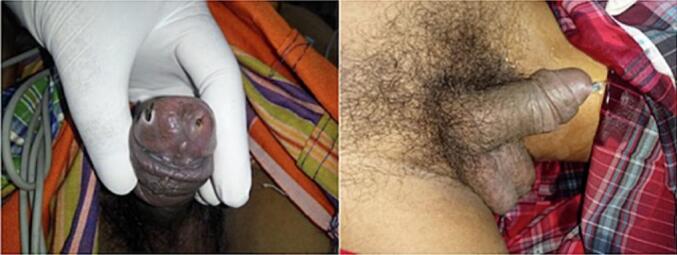 Figure 1
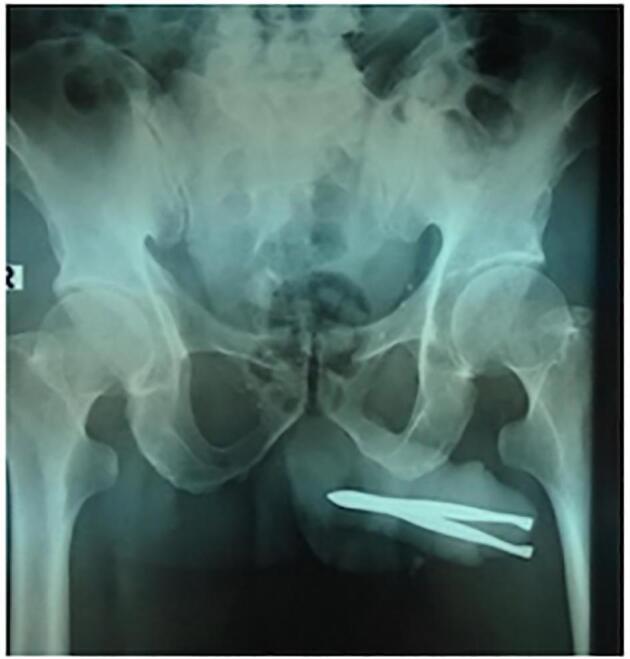 Figure 2
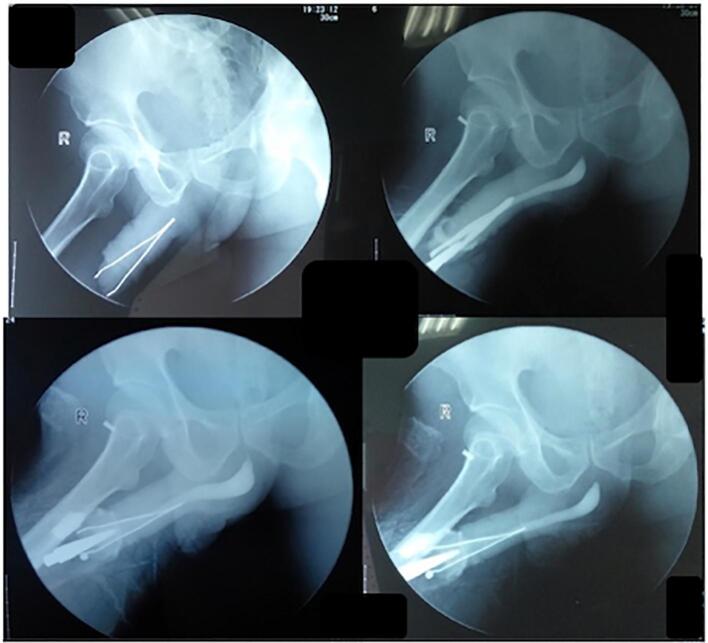 Figure 3
Peer Reviews
No public reviews on file for this paper yet. If you reviewed it on a platform where reviews are public (OpenReview, ICLR, NeurIPS, ICML), you can paste yours below so the community can read it here.
Videos
No videos yet. Explain this paper in a talk, walkthrough, or lecture? Add one.
Taxonomy
TopicsUrological Disorders and Treatments · Restraint-Related Deaths · Urinary and Genital Oncology Studies
Introduction
1
The presence of external objects entering the human body can cause immunity problems. This case is called a ‘foreign body’ or Corpus Alienum in Latin [1]. The problem was also found to be a foreign object entering the urinary tract. Foreign bodies in the urinary tract are becoming a topic of interest among urologists and surgeons [2]. Previous research has identified examples of foreign objects that enter and are reported in the bladder, including the presence of cables, canes, medical devices, contraceptives, pencils, and other objects [3].
An uncommon urologic emergency is foreign bodies in the lower genitourinary tract [4]. Several processes, including self-insertion, iatrogenic causes, and damage from nearby organs, can allow foreign bodies to enter the bladder. Self-insertion is one of the main causes of the rise in intravesical foreign bodies [3]. Symptoms including dysuria, hematuria, increased frequency and urgency of urine, and lower abdominal and pelvic pain might be caused by foreign bodies in the lower urinary tract. Furthermore, the nature, size, form, movement, location, and duration of occupancy of the FBs all influence these symptoms [5].
The presence of a foreign body in the urethral duct can cause injury. Urethral injuries are a relatively rare medical condition. Urethral injuries are never life-threatening, but if left untreated can lead to significant morbidity [6]. Cases of injury can be experienced by patients with comorbidities such as psychological conditions. Psychological conditions can cause patients to do unexpected things, such as in patients with schizophrenia. Inserting a foreign object is a common practice for self-harm or other purposes in patients with chronic psychosis [7]. Schizophrenia affects people of all age groups [8]. Non-adherence to medication can exacerbate mental illness and create new problems therefore mental health services should improve treatment strategies to prevent harmful behaviors [9]. Treatment of patients with mental disorders accompanied by other illnesses is a challenge for health facilities [10]. Reports of this case have been reported in line with the SCARE Guidelines [11]. This case report presents when the unusual corpus alienum invades the urethra in schizophrenia patients.
Case presentation
2
A 54-year-old man was referred to the emergency room (ER) with corpus alienum tweezers inside the urethra. His family already knew about the tweezers in the urethra in the morning before entering the hospital; when the patient urinates, he screams in pain with a visual analog score (VAS 5). The patient is unemployed, lives alone at home, is unmarried, and has a history of schizophrenia since 30 years ago. A psychiatrist has not routinely treated patients for schizophrenia during the past year. From the physical examination, there are typical vital signs; It was found that the tip of the tweezers penetrated out of the penile gland, and the patient could still urinate without bloody fluid (Fig. 1). Laboratory results are expected. Laboratory results were performed to assess the presence of white blood cells or red blood cells seen in the hematuria analysis. The results showed that there were these signs. Urethral foreign bodies can cause urinary tract infections. A pelvic X-ray shows tweezers in the urethra (Fig. 2). The results of the urethrography showed an alien corpus with both ends penetrating the penile gland, causing partial obstruction of the anterior urethra; There is no clear contrast image visible filling the anterior urethra, a contrasting backflow from the urethra to the opening where the end of the alienum corpus exits (Fig. 3). Therefore, we do tweezer extraction; the base of the penis is pressed to prevent the tweezers from sliding deeper into the urethra. The external urethral meatus is slightly sliced on the dorsal side to facilitate tweezer extraction. The tip of the tweezers is pushed slightly and comes out of the wound in the urethra; then the tweezers are removed. Tweezer extraction was performed under anesthesia. The X-ray image after the tweezer extraction is related to the financing of national universal health coverage in Indonesia. In addition, there was no other foreign body image in the urethra. A pelvic X-ray was sufficient at the beginning. No bleeding was found. A 0.3 cm puncture wound in the urethra is sutured with a plain catgut 3.0. The 16-fr silicone catheter is inserted and removed after 30 days. There are no complaints related to urination. Management of schizophrenia patients, given haloperidol tablets 2.5 mg/12 h and regular check-ups at psychiatric clinics; After 2 months of routine treatment and psychiatric clinic examinations, patients can be invited to communicate.Fig. 1. Clinical picture of the patient.Fig. 1. Fig. 2Pelvic X-ray, tweezers in the urethra.Fig. 2. Fig. 3Urethrography results.Fig. 3
Discussion
3
This case report shows the need for the extraction of the corpus alienum urethra to prevent complications on the urethra. Urethral injuries are a relatively rare medical condition Doctors classically use several anatomical landmarks in the evaluation, classification, and management of urethral injuries, which are especially important among male patients. Urethral injuries put patients at risk of future morbidity. Early complications that may occur are centered around secondary infections, including the formation of abscesses. Early complications can be found around secondary infections, including the formation of abscesses. Final complications can include urethral stricture and stenosis, fibrosis, removal of the urethral lumen, formation of urethrocutaneous fistulas, urinary incontinence, and erectile dysfunction [12]. In these cases, no initial complications were found that could likely lead to a poor prognosis.
In this case, the patient had tweezer extraction. Urological trauma can cause a well-known urethral injury with a variety of management recommendations. Retrograde urethrogram remains the preferred initial diagnostic modality for evaluating suspected urethral injury [6]. In this case, an examination was carried out Urethrography. Diagnosis can sometimes be difficult if it is reported late or if the patient is not cooperating. Treatment is based on two steps: the extraction of the foreign body by endoscopy or open surgery and the psychiatric treatment for the mental illness [7]. In other studies, several diagnostic procedures such as X-rays, CT scans and open cystotomy were explained, as well as digital rectal examination (DRE). The management also varies based on the case experienced. This is by Table 1 which shows the related cases Corpus Alienum in the urethra.Table 1. Cases related to corpus alienum in the urethra.Table 1. Author, yearPatient characteristicsComorbiditiesTypes of foreign objects and their locationDiagnostic procedureSuggestionFotovat et al. (2023) [13]A 27-year-old manPsychotic disordersInserting the pen ink chamber into the urethraX-rays, CT scans, and open cystotomyTimely surgery to prevent urine retention and psychological support.Anass et al. (2024) [14]A 26-year-old manschizophreniaSelf-inserting a 65 cm metal cable into his urethraPenile palpation combined with digital rectal examination (DRE)Surgical removal, prophylactic antibiotics, and urethra are closed with a silicone catheter.The patient's psychiatric condition requires early catheter removal. Patients are referred to psychiatric services for ongoing care.Trigui et al. (2023) [15]A 23-year-old manschizophreniaSelf-inserting two nails into his scrotumPalpation, A plain X-rayPsychiatric evaluation is mandatory to detect an underlying mental disorder and to avoid repeat auto-insertion.Ouskri et al. (2025) [16]A 37-year-old manschizophreniaCalcified bladder foreign bodiesClinical examination, pelvic ultrasound, plain abdominal X-ray (AUSP), CT scanThe management requires accurate diagnosis based on modern imaging techniques and tailored surgical intervention. Postoperative psychiatriccare is essential to prevent high-risk behaviors and improve long-term outcomes.
Comprehensive management is needed when there are other diseases, such as schizophrenia in these patients to prevent recurrence. This patient had a history of schizophrenia dating back 30 years. The management of schizophrenia patients is given haloperidol tablets 2.5 mg/12 h and routine check-ups at the psychiatric clinic, after 2 months of undergoing routine treatment and psychiatric clinic examinations, patients can be communicated. Medication adherence in schizophrenia patients is essential. Non-adherence to treatment can worsen mental illness and make treatment more challenging. Mental health services should strive to improve treatment adherence strategies and offer social support to prevent harmful behaviors [9]. Haloperidol, a typical first-generation antipsychotic, is commonly used worldwide to block dopamine D2 receptors in the brain and exert its antipsychotic action [17]. Haloperidol, one of the first-generation antipsychotic drugs, is effective in the treatment of schizophrenia but can have adverse side effects [18].
Conclusion
4
The management of the extraction of corpus alienum urethra must be carried out immediately to prevent complications. Comprehensive management is needed if there are other diseases, such as schizophrenia in these patients to prevent recurrence.
Informed consent
The data used and reported have been authorized by the patient.
Ethical approval
Ethical approval for this study was provided by Health Research Ethics Committee of Dr. Soetomo General-Academic Hospital, Surabaya,
Guarantor
Soetojo Wirjopranoto
Research registration number
Not required.
Funding
No financial contributions were made by the authors to this study.
Additional information
The information contained in this paper is personal.
Author contribution
Nadya Rahmatika: Conceptualization, Data Curation, Writing-Original draft preparation
Bagus Wibowo Soetojo: Conceptualization, Data Curation, Writing-Original draft preparation
Soetojo Wirjopranoto: Conceptualization, Methodology, Data Curation, Investigation, Writing-Original draft preparation, Supervision, Validation
Yufi Aulia Azmi: Conceptualization, Methodology, Data Curation, Investigation, Writing-Original draft preparation, Supervision, Validation
Antonius Galih Pranesdha Putra: Writing-Original draft preparation, Writing-Reviewing, and Editing
Kevin Muliawan Soetanto: Writing-Original draft preparation, Writing-Reviewing, and Editing
Conflict of interest statement
The author stated that there was no conflict of interest.
The reference list from the paper itself. Each links out to its DOI / PubMed record.
- 1Tewari N, Singh N, Singh S, Agarwal N, Gupta NK. Corpus alienum on hard palate – an unusual “misdiagnosis” of foreign body: a case report. Int J Pediatr Otorhinolaryngol [Internet]. 2015;79(12):2463–5. Available from: https://www.sciencedirect.com/science/article/pii/S 0165587615005273.10.1016/j.ijporl.2015.10.02026545792 · doi ↗ · pubmed ↗
- 2Jain A.Gupta M.Sadasukhi T.Dangayach K.Foreign body (kidney beans) in urinary bladder: an unusual case report Ann. Med. Surg.Jun 1, 20183210.1016/j.amsu.2018.06.009PMC 603458229988946 · doi ↗ · pubmed ↗
- 3Bansal A.Yadav P.Kumar M.Sankhwar S.Purkait B.Jhanwar A.Foreign bodies in the urinary bladder and their management: a single-Centre experience from North India Int. Neurourol. J.20320162602692770601010.5213/inj.1632524.262PMC 5083828 · doi ↗ · pubmed ↗
- 4Venkataramani S.Ghazi N.M.Kazmi F.H.Khan I.Foreign body in the male urinary bladder: a case report Cureus 16220241610.7759/cureus.54592 PMC 1095824038523921 · doi ↗ · pubmed ↗
- 5Kuang T.Cai W.Qian W.Lin X.Foreign bodies in children’s lower urinary tract: a case series and literature review Front. Pediatr.10January 20231810.3389/fped.2022.1095993 PMC 987335636704132 · doi ↗ · pubmed ↗
- 6Patel A.B.Osterberg E.C.Satarasinghe P.N.Wenzel J.L.Akbani S.T.Sahi S.L.Urethral injuries: diagnostic and management strategies for critical care and trauma clinicians J. Clin. Med.124202310.3390/jcm 12041495 PMC 995913736836030 · doi ↗ · pubmed ↗
- 7Ahsaini M.Bounoual M.Mellas S.El Ammari J.Tazi M.F.El Fassi M.J.Unusual intraurethral foreign body in a schizophrenic adolescent: about a case Pan Afr. Med. J.312018163144797610.11604/pamj.2018.31.217.15773 PMC 6691322 · doi ↗ · pubmed ↗
- 8Jeste D.V.Maglione J.E.Treating older adults with schizophrenia: challenges and opportunities Schizophr. Bull.39520139669682355218010.1093/schbul/sbt 043PMC 3756792 · doi ↗ · pubmed ↗