Diagnostic Accuracy of a Nocturia Single Question Scale as a Predictor of Severity of Lower Urinary Tract Symptoms in Men
Caroline S Silva, Carlos S Bellucci, Matheus A Alvaia, Eduardo Miranda, Jose Murillo B Netto, Cristiano Gomes, Ricardo B Tiraboschi, Jose Bessa

TL;DR
This study shows that a simple single-question scale about nighttime urination can effectively assess the severity of urinary symptoms in men.
Contribution
The NSQS is introduced as a simplified, valid alternative to the IPSS for evaluating LUTS severity.
Findings
The NSQS achieved a 0.75 area under the ROC curve for distinguishing moderate/severe from mild LUTS.
Thresholds of ≥2 and ≥3 nocturia episodes per night showed significant diagnostic value for moderate/severe LUTS.
Abstract
Objective: This study evaluates the efficacy of the Nocturia Severity Quality Score (NSQS) as a simplified tool for assessing the severity of lower urinary tract symptoms (LUTS) in men, comparing it to the International Prostate Symptom Score (IPSS), the established standard. Methods: We conducted a cross-sectional analysis on 697 men aged ≥40 from two urban urology clinics in Brazil. Participants completed both the IPSS and the NSQS, the latter consisting of a single question assessing nocturia frequency on a scale from 0 to 4. Diagnostic accuracy was evaluated using receiver operating characteristic (ROC) curve analysis to compare the NSQS against the IPSS. Results: The NSQS effectively distinguished between moderate/severe and mild/asymptomatic LUTS, achieving an area under the ROC curve of 0.75 (95% CI: 0.72-0.79). NSQS thresholds of ≥2 and ≥3 episodes per night corresponded to…
Genes, proteins, chemicals, diseases, species, mutations and cell lines named across the full text — each resolved to its canonical identifier and authoritative record.
Click any figure to enlarge with its caption.
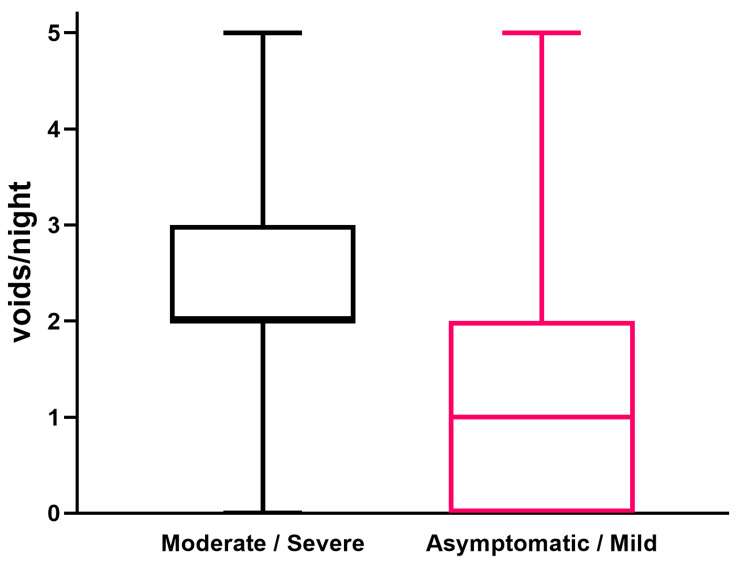 Figure 1
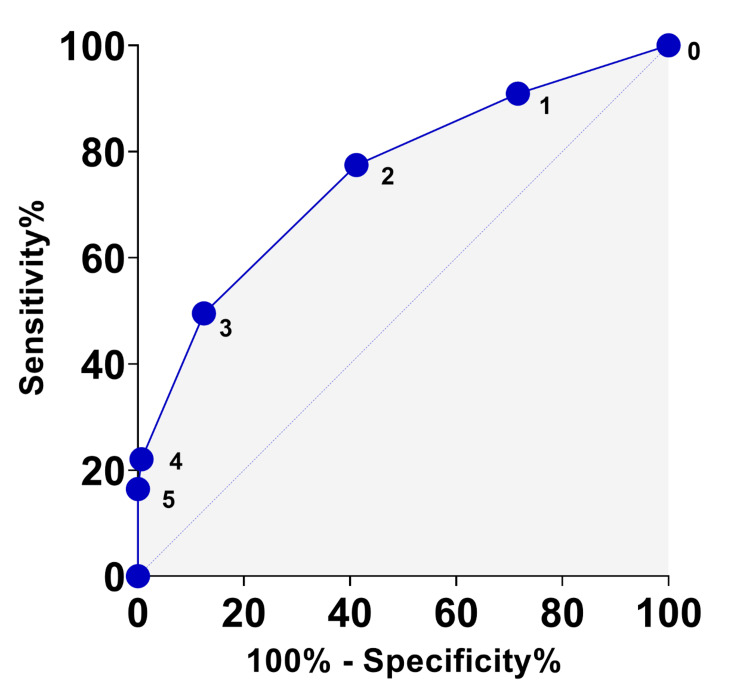 Figure 2
| Number of nocturia episodes | ||||
| NSQS | 1 | 2 | 3 | 4 |
| Sensitivity (95% CI) | 90.9% (87.7-93.3) | 77.4% (73.1-81.2) | 49.5% (44.6-54.5) | 22.0% (18.1-26.4) |
| Specificity (95% CI) | 28.4% (23.5-33.8) | 58.4% (52.7-64.0) | 87.2% (82.8-90.8) | 98.2% (96.0-99.4) |
| LR+ | 1.27 | 1.86 | 3.87 | 12.75 |
| LR- | 0.32 | 0.39 | 0.58 | 0.49 |
| Youden index | 119.3 | 135.8 | 136.7 | 120.2 |
Peer Reviews
No public reviews on file for this paper yet. If you reviewed it on a platform where reviews are public (OpenReview, ICLR, NeurIPS, ICML), you can paste yours below so the community can read it here.
Videos
No videos yet. Explain this paper in a talk, walkthrough, or lecture? Add one.
Taxonomy
TopicsUrinary Bladder and Prostate Research · Pelvic floor disorders treatments · Urinary Tract Infections Management
Introduction
Lower urinary tract symptoms (LUTS) encompass a range of problems with storage, voiding, and post-micturition symptoms, significantly affecting men worldwide [1]. Benign prostatic hyperplasia (BPH) is one of the most common urological diseases associated with progressive LUTS [2]. The impact of these symptoms extends beyond mere discomfort, often disturbing sleep, reducing quality of life, and indicating potential underlying pathologies [3].
In clinical practice, accurate assessment of LUTS is crucial for effective management and treatment, particularly in aging populations where prevalence increases [4]. The International Prostate Symptom Score (IPSS) is an eight-item questionnaire comprising seven symptom questions and one quality of life question, the recognized standard for evaluating LUTS severity [5-6]. It has been validated in many countries and enables the stratification of patients according to the severity of symptoms [7-9]. Despite its widespread validation, its length and complexity pose challenges, particularly in settings with limited time and resources [10,11]. Literacy and cultural differences can skew patients' comprehension of the questions, potentially misrepresenting symptom severity [10].
In Brazil, the diversity in educational backgrounds and constrained healthcare resources highlight the necessity for a more accessible diagnostic tool [12,13]. This need is particularly critical in primary care, where urologists may be scarce, and patient volume is high [14].
Simplified diagnostic tools such as single-question surveys have shown efficiency in various medical fields [15-18]. Single-question questionnaires provide a brief and easily administered tool for detecting diseases and have been recommended as a screening tool for different specific medical conditions. For LUTS, a simple yet reliable question focusing on nocturia, a symptom with a significant negative impact, could streamline the initial evaluation process and guide further diagnostic and therapeutic decisions.
Previously, the single-question nocturia score proved to be an accurate and convenient tool for managing BPH patients [19]. Our objective was to evaluate how accurately the single-question scale assessing the frequency of nocturia episodes (NSQS) can determine LUTS severity in a Brazilian male population. The rationale for using the NSQS is its simplicity, as it saves time for both patients and clinicians, reduces the burden on respondents, and is especially useful in busy clinical settings or populations with low literacy. By proposing a streamlined approach, we aimed to provide a practical alternative to IPSS that accommodates the constraints of diverse clinical environments and improves patient care efficacy. An initial version of this article was previously published on a preprint server [20].
Materials and methods
Study population
We conducted a cross-sectional study between July and December 2019. The study participants were men aged ≥40. They were recruited from regular follow-up appointments at two urological clinics in different cities in Brazil. Subjects with active urinary tract infections or those who had experienced such an infection within the previous month were excluded.
All methods, definitions, and units follow the International Continence Society's standards to ensure rigor and reproducibility [1].
This observational study was approved by the Research Ethics Committee of the State University of Feira de Santana on May 9, 2017, under protocol no. 64704017.7.0000.0053, position statement 2.052.761. All participants provided written informed consent.
LUTS assessment
Nocturia was defined as any need to void during the main sleeping period, with each micturition event preceded and followed by sleep [1].
LUTS was assessed using the self-administered IPSS validated version. A research assistant clarified any uncertainties regarding the questionnaire content for patients with low literacy levels who experienced comprehension difficulties. The IPSS consists of seven questions addressing urinary symptoms: sensation of incomplete emptying, frequency, intermittency, urgency, weak stream, straining, and nocturia. Responses to the first six questions were scored on a scale of 0 (none), 1 (less than one in five), 2 (less than half the time), 3 (about half the time), 4 (more than half the time), and 5 (almost always). The last question, which evaluates nocturia frequency, was scored in six categories, from none to five or more times. These questions form a scale by summing the responses (0-5 for each response), and patients may be categorized as asymptomatic (0 points), mild symptoms (1-7 points), moderate symptoms (8-19 points), and severe symptoms (20-35 points).
The Nocturia Severity Quality Score (NSQS) was obtained from the last question of the IPSS that evaluates nocturia. It was scored in five ordered categories, from none to five or more times, and was administered independently to all patients (Appendix A).
Sample size calculation and diagnostic accuracy evaluation
Considering a minimal disease prevalence of 15% according to previous studies evaluating LUTS in the male population [21], a sample of at least 615 subjects would be necessary for 80% sensitivity and specificity, with an absolute precision of 5%.
We investigated the diagnostic properties of the NSQS (index test) for categorization of LUTS severity based on the IPSS score (reference standard). We recorded the time to complete each questionnaire to gauge respondents’ burden.
This article complies with the recommendations of the Standards for Reporting of Diagnostic Accuracy initiative as a study of accuracy [22].
Statistical analysis
Data are presented as absolute values, frequencies, medians, and interquartile ranges (IQR). The sensitivity, specificity, predictive values, and likelihood ratio of each NSQS, including 95% confidence intervals (CI), describe the diagnostic accuracy. Receiver operating characteristic (ROC) curves were generated to visualize and calculate the area under the curve (AUC) used to describe the diagnostic characteristics of the NSQS in diagnosing the severity of LUTS. Statistical analyses were performed using GraphPad Prism, version 8.4.0 (GraphPad Software, San Diego, United States).
Results
Of the initial 763 patients enrolled, 697 were included in the final analysis. About 37 were excluded due to current or recent urinary tract infections, and 29 refused to participate. The median age of the participants was 60.0 (54.0-68.0) IQR years. The median IPSS was 9.0 (5.0-17.0) IQR, and the median NSQS was 2.0 (1.0-3.0) IQR.
Prevalence of LUTS
According to the IPSS, the severity of symptoms among the participants was classified as mild in 262 (37.6%), moderate in 279 (40.0%), and severe in 129 (18.6%) patients. Twenty-seven (3.8%) patients were asymptomatic.
The NSQS was zero in 118 patients (17%), one in 141 (20%), two in 197 (28%), three in 144 (21%), and four or more in 95 (13%). The NSQS was significantly higher in subjects with moderate/severe LUTS than in asymptomatic and mild symptoms, respectively, with 2.0 (2.0-3.0) IQR and 1.0 (0.0-2.0) IQR (p < 0.001). These data are detailed in Figure 1.
Box plot of nocturia episodes in subjects with moderate/severe versus asymptomatic/mild LUTSLUTS: lower urinary tract symptoms
NSQS diagnostic properties
The NSQS demonstrated good overall accuracy in distinguishing more severe LUTS, as indicated by an area under the ROC curve of 0.75 (95% CI 0.72-0.79). Numbers 0-5 refer to episodes of nocturia (Figure 2).
ROC curves for NSQS in distinguishing between patients with absent/mild (IPSS < 8) and moderate/severe (IPSS ≥ 8) LUTSROC curves: receiver operating characteristic curves; NSQS: nocturia single question scale; IPSS: international prostate symptom score; LUTS: lower urinary tract symptoms
Table 1 presents detailed analyses of sensitivity, specificity, and likelihood ratios for each NSQS threshold.
Table 1: Diagnostic parameters of NSQS thresholds for discriminating between patients with mild (IPSS < 8) and moderate/severe (IPSS ≥ 8) LUTSNSQS: nocturia single question scale; IPSS: international prostate symptom score; CI: confidence intervals; LR+: positive likelihood ratio; LR-: negative likelihood ratio; LUTS: lower urinary tract symptoms
The median time required to complete the NSQS was significantly shorter compared to the IPSS, with median times of 0.28 (0.12-0.45) IQR minutes and 2.7 (2.3-3.5) IQR minutes, respectively (p < 0.001).
Discussion
This study demonstrates that the NSQS is an effective tool for assessing the severity of LUTS in adult men. Its overall accuracy (AUC of 0.75) supports its use in primary care. The NSQS, particularly at cut-offs of 2 and 3 nocturia episodes, demonstrated robust diagnostic value, offering a viable alternative to the more cumbersome IPSS.
NSQS ≥ 2 is particularly relevant as it is the standard number of voids considered in the definition of nocturia, with most authors recognizing two voids per night as the clinical threshold that notably affects quality of life [23-25]. Conversely, NSQS ≥ 3 demonstrates slightly higher overall accuracy and superior specificity, making it highly effective in predicting moderate to severe LUTS despite lower sensitivity, a feature precious in primary care settings where resources and specialist availability are limited. A previous study [20] has also investigated the role of a single nocturia question in the evaluation of 162 African men aged over 50 and revealed NSQS ≥ 3 as the most effective threshold, showing higher sensitivity (87.0%) and specificity (91.0%) for distinguishing severity of LUTS, in contrast to our findings, which may reflect regional educational and cultural differences affecting patient responses.
Other efforts have been applied to create simplified methods capable of evaluating LUTS in adult men, such as the Urgency, Weak stream, Incomplete emptying, and Nocturia (UWIN) questionnaire, recently validated in Brazilian Portuguese by our group [26-27]. UWIN provides comparable results to the IPSS, using a more straightforward format and taking less time to complete. However, it comprises a four-question questionnaire with scores ranging from 0 to 3, adding to a composite score of 0 to 12. The UWIN, although simpler than IPSS, might still add considerable effort from respondents and physicians. Other abbreviated Patient-Reported Outcome Assessments (PROs) have been proposed to decrease the burden of IPSS on respondents and clinicians, such as the Quick Prostate Test (QPT) and Frequency, Leakage, Overnight voiding, and Weak stream (FLOW) [28,29]. These instruments demonstrated valid equivalence to the IPSS and some advantages, including efficiency and ease of application.
The methodology employed in this study leveraged a cross-sectional design and utilized a single-question NSQS. It contrasts with the more complex IPSS, traditionally recognized for its thoroughness but criticized for its length and difficulty, especially in diverse educational backgrounds [10,11]. Our approach aimed to simplify the diagnostic process without compromising the quality of assessment, particularly in settings constrained by time and resources [12,13].
The predominantly urban, well-educated male demographic in this study might limit the generalizability of our findings to broader populations. This aspect is particularly relevant as lower educational levels have been shown to impact the comprehension and effectiveness of self-administered questionnaires like the IPSS [10,11,30].
Simplified tools such as the NSQS can significantly enhance diagnostic efficiency, improve patient throughput, and increase satisfaction in healthcare settings with limited resources. These tools reduce the burden on patients and healthcare providers, facilitating quicker clinical decision-making [27-29].
While our findings are promising, they must be interpreted with caution due to some limitations. This study was a non-randomized cohort of Portuguese-speaking Brazilian men in two tertiary urological centers in an urban region. The demographic profile of our respondents, primarily urban males with a high education level, potentially influences our findings' generalizability. Additionally, the study relied on self-reported data for assessing symptoms, which may introduce recall bias and subjectivity, potentially affecting the accuracy of the findings. Future research should aim to validate the NSQS across more diverse populations to enhance its applicability and reliability in different clinical and cultural contexts.
Conclusions
This study establishes the NSQS as a practical, efficient, and reliable tool for predicting the severity of LUTS in men. The NSQS balances simplicity with good diagnostic accuracy. Our findings demonstrate that patients with one or no voids per night have a low probability of severe LUTS, while those reporting three or more voids are likely to experience moderate to severe symptoms. This clinical tool can optimize clinical care and potentially reduce clinician burden. It is suitably used in resource-limited settings and among populations with varying literacy levels.
The reference list from the paper itself. Each links out to its DOI / PubMed record.
- 1The International Continence Society (ICS) report on the terminology for adult male lower urinary tract and pelvic floor symptoms and dysfunction Neurourol Urodyn Ancona CD Hamid R Schizas A 4334773820193068118310.1002/nau.23897 · doi ↗ · pubmed ↗
- 2Burden of male lower urinary tract symptoms (LUTS) suggestive of benign prostatic hyperplasia (BPH) - focus on the UKBJU Int Speakman M Kirby R Doyle S Ioannou C 50851911520152465622210.1111/bju.12745 · doi ↗ · pubmed ↗
- 3Impact of LUTS on treatment-related behaviors and quality of life: a population-based study in Brazil Neurourol Urodyn Soler R Averbeck MA Koyama MA Gomes CM 157915873820193103775910.1002/nau.24004 PMC 6850518 · doi ↗ · pubmed ↗
- 4How important are mens lower urinary tract symptoms (LUTS) and their impact on the quality of life (QOL)?Qual Life Res Haltbakk J Hanestad BR Hunskaar S 173317411420051611918410.1007/s 11136-005-3232-x · doi ↗ · pubmed ↗
- 5Impact on quality of life in multiple sclerosis patients: which urinary symptoms are to blame?Prog Urol Ziadeh T Mjaess G El Helou J 7117163220223571525210.1016/j.purol.2022.05.003 · doi ↗ · pubmed ↗
- 6Management of lower urinary tract symptoms attributed to benign prostatic hyperplasia (BPH): AUA guideline amendment J Urol Sandhu JS Bixler BR Dahm P Goueli R Kirkby E Stoffel JT Wilt TJ 111921120243770675010.1097/JU.0000000000003698 · doi ↗ · pubmed ↗
- 7Misinterpretation of the international prostate symptom score questionnaire by Indian patients Indian J Urol Jindal T Sinha RK Mukherjee S Mandal SN Karmakar D 2522553020142509730710.4103/0970-1591.134246 PMC 4120208 · doi ↗ · pubmed ↗
- 8Validation of a harmonized Spanish version of the IPSS: evidence of equivalence with the original American scale Urology Badía X García-Losa M Dal-RéR Carballido J Serra M 614620521998976308010.1016/s 0090-4295(98)00204-0 · doi ↗ · pubmed ↗