Environmental selection underlies distinct distribution patterns of closely related European evening primroses
Monika Woźniak-Chodacka, Maciej Kocurek, Maria Pilarska, Ewa Niewiadomska

TL;DR
The study explores how closely related evening primrose species in Europe have adapted to different environmental conditions, leading to distinct distribution patterns.
Contribution
The study reveals how environmental selection after hybridization has shaped the distribution and adaptation of closely related Oenothera species.
Findings
Oenothera rubricaulis at higher latitudes has small flowers and high chlorophyll to maximize light absorption.
Oenothera suaveolens at lower latitudes has large flowers and a green phenotype with light avoidance strategies.
Oenothera biennis shows intermediate traits and high adaptability across a wide distribution.
Abstract
Understanding of species distribution is becoming a key concern in biogeography, ecology and evolution when to consider the ongoing climate change. This study investigates the distribution patterns of closely related Oenothera species focusing on their adaptations to environmental conditions through morphological traits and photosynthetic adjustments. We documented the three distinct distribution patterns in Europe among the studied species. Oenothera rubricaulis, found at higher latitudes, has the smallest flowers and the highest chlorophyll content, accompanied by anthocyanin accumulation, which maximizes light acquisition under low light conditions. Oenothera suaveolens, observed at lower latitudes, displays the largest flowers, a pure green phenotype, the highest stomatal conductance, and a light avoidance strategy, reflected by rapid photoinhibition and hyponasty. Oenothera…
Genes, proteins, chemicals, diseases, species, mutations and cell lines named across the full text — each resolved to its canonical identifier and authoritative record.
Click any figure to enlarge with its caption.
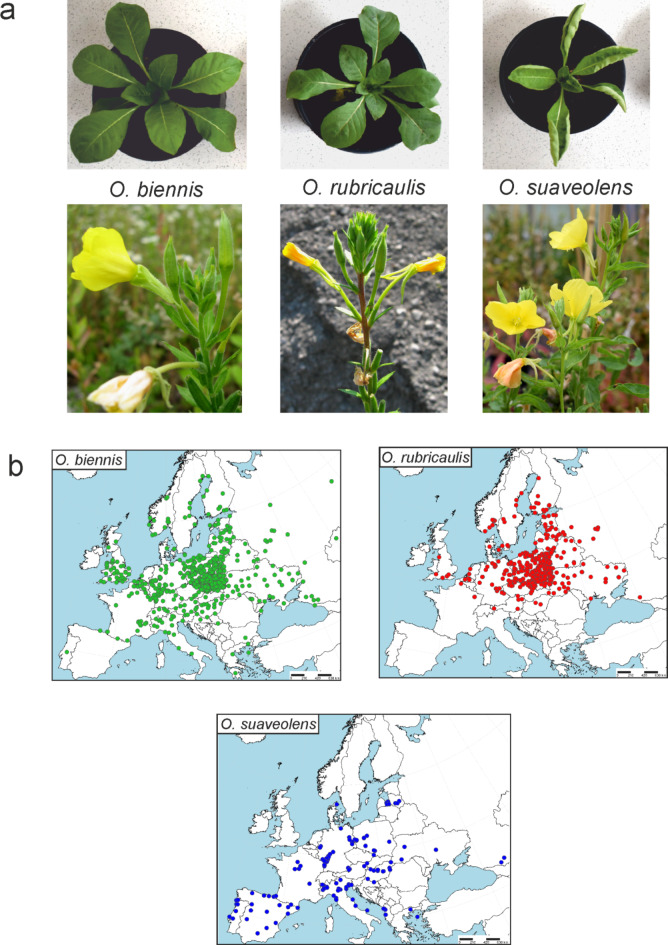 Figure 1
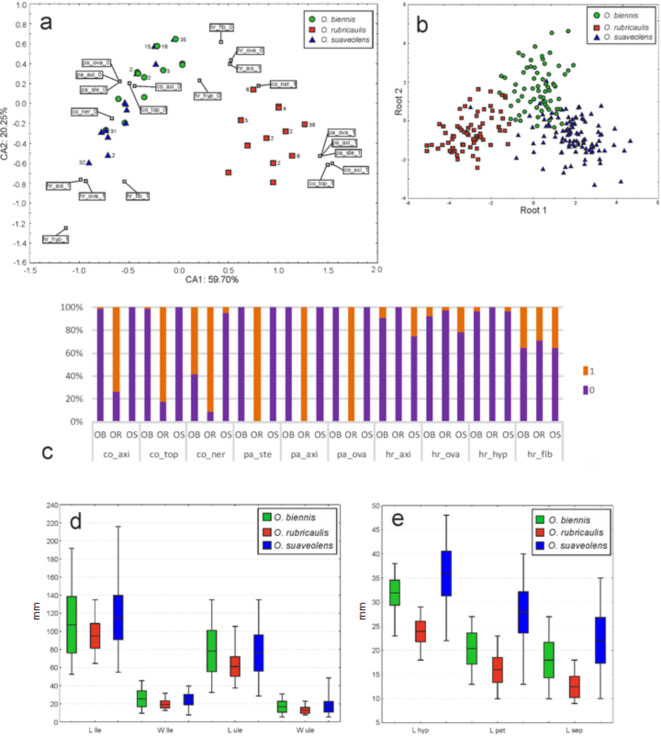 Figure 2
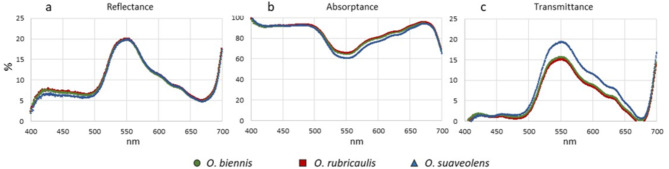 Figure 3
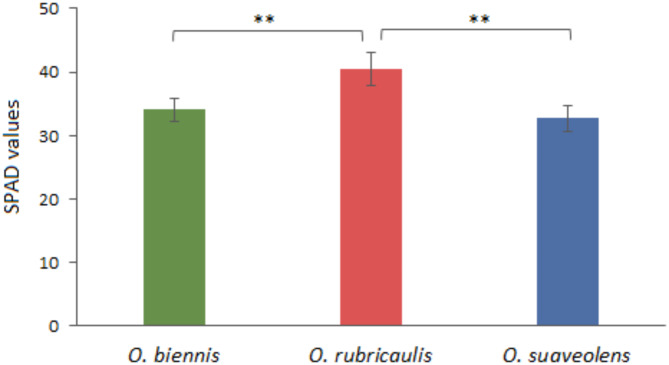 Figure 4
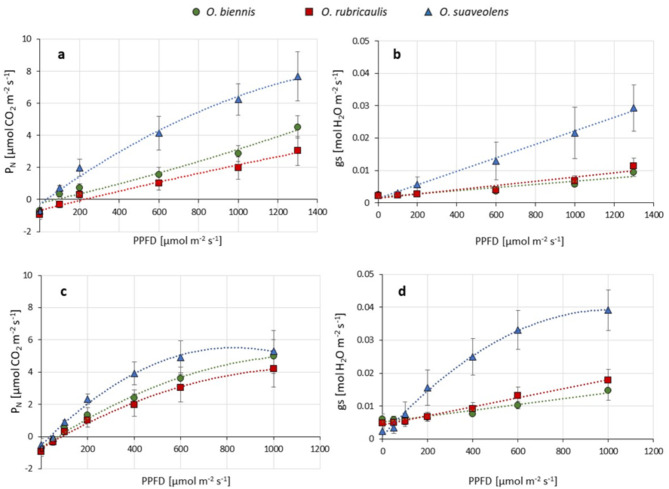 Figure 5
Peer Reviews
No public reviews on file for this paper yet. If you reviewed it on a platform where reviews are public (OpenReview, ICLR, NeurIPS, ICML), you can paste yours below so the community can read it here.
Videos
No videos yet. Explain this paper in a talk, walkthrough, or lecture? Add one.
Taxonomy
TopicsPlant and animal studies · Horticultural and Viticultural Research · Ecology and Vegetation Dynamics Studies