Whole-genome sequences of marine bacteria presenting the ability to promote the growth of the diatom Phaeodactylum tricornutum
Rodrigo Martins, Constança D.F. Bertrand, Francisco Quintas-Nunes, Pedro Reynolds-Brandão, Maria T. Barreto Crespo, Francisco X. Nascimento

TL;DR
This paper presents the whole-genome sequences of seven marine bacteria that help a type of diatom grow.
Contribution
The novelty lies in providing genome sequences of bacteria that promote diatom growth from Portuguese environments.
Findings
Seven diverse marine bacteria were isolated and sequenced.
These bacteria can promote the growth of Phaeodactylum tricornutum.
Abstract
We describe the whole-genome sequences of seven diverse marine bacteria isolated from Portuguese environments that presented the ability to promote the growth of the model diatom, Phaeodactylum tricornutum. The bacterial genome sequences will contribute to the study of genetic and molecular mechanisms involved in diatom–bacteria interactions.
Genes, proteins, chemicals, diseases, species, mutations and cell lines named across the full text — each resolved to its canonical identifier and authoritative record.
Click any figure to enlarge with its caption.
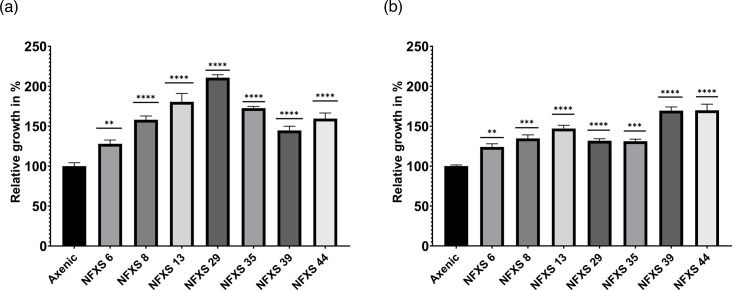 Fig. 1
| Strain | Source | PE reads | Genome size (bp) | Coverage X | GC% | Contig no. | N50 | CDS |
| Marine saltern, Setúbal, Portugal38° 29′ 38.2″ N, 8° 46′ 15.1″ W | 1 342 468 | 4 097 351 | 156.2 | 41.5 | 21 | 300 994 | 3617 | |
| Estuary seawater, Setúbal, Portugal38° 29′ 05.5″ N, 8° 47′ 32.0″ W | 2 315 737 | 5 513 872 | 202.9 | 52.9 | 13 | 1 589 360 | 4751 | |
| Marine saltern, Setúbal, Portugal38° 29′ 38.2″ N, 8° 46′ 15.1″ W | 1 713 608 | 5 067 538 | 163 | 61.3 | 53 | 236 620 | 4792 | |
| Coastal seawater, Setúbal, Portugal38° 28′ 29.1″ N, 8° 53′ 57.1″ W | 651 749 | 3 947 424 | 77.7 | 61.0 | 30 | 246 916 | 3826 | |
| Marine saltern, Setúbal, Portugal38° 29′ 38.2″ N, 8° 46′ 15.1″ W | 1 364 711 | 3 380 773 | 195.6 | 63.7 | 11 | 830 199 | 3170 | |
| Coastal seawater, Setúbal, Portugal38° 28′ 29.1″ N, 8° 53′ 57.1″ W | 2 761 720 | 4 395 030 | 306 | 40.8 | 24 | 376 643 | 3841 | |
| Coastal seawater, Setúbal, Portugal38° 28′ 29.1″ N, 8° 53′ 57.1″ W | 2 310 412 | 5 053 695 | 222 | 48.7 | 16 | 793 974 | 4325 |
Peer Reviews
No public reviews on file for this paper yet. If you reviewed it on a platform where reviews are public (OpenReview, ICLR, NeurIPS, ICML), you can paste yours below so the community can read it here.
Videos
No videos yet. Explain this paper in a talk, walkthrough, or lecture? Add one.
Taxonomy
TopicsMicrobial Community Ecology and Physiology · Genomics and Phylogenetic Studies · Diatoms and Algae Research
Data Summary
The Whole-Genome Sequences (WGS) reads and assemblies used can be accessed in the National Center for Biotechnology Information (NCBI) under the following accession numbers: Muricauda sp. NFXS6, GenBank: JAGEMG000000000.1, PRJNA714387 (https://www.ncbi.nlm.nih.gov/sra/PRJNA714387); Thalassospira sp. NFXS8, GenBank: JAGEMF000000000.1, PRJNA714381 (https://www.ncbi.nlm.nih.gov/sra/PRJNA714381); Sagittula marina NFXS13, GenBank: JAGEMH000000000.1, PRJNA714391 (https://www.ncbi.nlm.nih.gov/sra/PRJNA714391); Sulfitobacter sp. NFXS29, GenBank: JAGDED000000000.1, PRJNA714103 (https://www.ncbi.nlm.nih.gov/sra/PRJNA714103); Erythrobacter sp. NFXS35, GenBank: JAGDEB000000000.1, PRJNA714097 (https://www.ncbi.nlm.nih.gov/sra/PRJNA714097); Pseudoalteromonas sp. NFXS39, GenBank: JAGDEC000000000.1, PRJNA714099 (https://www.ncbi.nlm.nih.gov/sra/PRJNA714099); and Alteromonas sp. NFXS44, GenBank: JAGDEA000000000.1, PRJNA714087 (https://www.ncbi.nlm.nih.gov/sra/PRJNA714087).
The authors confirm that all supporting data, code and protocols have been provided within the article or through supplementary data files.
Introduction
The diatom Phaeodactylum tricornutum is able to synthesize high levels of industrially relevant molecules such as polyunsaturated fatty acids and fucoxanthin that can be used in a wide range of food and health applications [1]. Importantly, the growth and productivity of P. tricornutum can be modulated by beneficial marine heterotrophic bacteria, and these positive interactions may contribute to the development of robust strategies for the P. tricornutum commercial-scale cultivation [2].
In this study, we describe the whole-genome sequences of seven distinct marine bacteria previously isolated from Portuguese marine environments (Setúbal region) (Table 1) that presented the ability to promote the growth of P. tricornutum (Fig. 1). These strains belonged to the classes Flavobacteriia, Alphaproteobacteria and Gammaproteobacteria, which are consistent with the previous reports describing the bacterial communities associated with diatoms [3]. Understanding the genomic properties of marine diatom growth-promoting bacteria is of extreme importance for the development of novel strategies to boost diatom growth and unveil the genetic mechanisms involved in beneficial diatom–bacteria interactions.
P. tricornutum growth-promoting activities (quantified by algal cell counts, cells per millilitre and the relative comparison to the axenic control growth) of the seven studied bacterial strains (Muricauda sp. NFXS6, Thalassospira sp. NFXS8, Sagittula sp. NFXS13, Sulfitobacter sp. NFXS29, Erythrobacter sp. NFXS35, Pseudoalteromonas sp. NFXS39 and Alteromonas sp. NFXS44). (a) Assay 1. (b) Assay 2. ‘’ represents statistical differences (P < 0.05) when compared to the axenic P. tricornutum cultivation.*
Methods
Co-cultivation assays
To evaluate the P. tricornutum growth promotion activities of the bacterial strains, co-cultivation assays were performed following the protocol described by Bertrand et al. [2]. Briefly, the axenic P. tricornutum CCAP 1055/1 was routinely cultivated in axenic Guillard’s F/2 media without silica (Sigma-Aldrich, USA). The individual bacterial strains were cultivated in SWPY medium (filtered natural seawater, 5 g l^−1^ peptone, 3 g l^−1^ yeast extract and pH 7.5) for 24 h at 23 °C and 180 r.p.m. and then centrifuged for 7 min at 7500 r.p.m. and 4 °C, and the pellet was resuspended in F/2 medium. The co-cultivation assays were carried out in six-well cell culture plates (VWR, Belgium), receiving a total of 7 ml of F/2 media, P. tricornutum cells (final concentration of 1×10^6^ cells ml^−1^) and selected bacteria (final OD_600_=0.02). A total of eight treatments were performed (one plate per treatment and six well replicates), including the axenic control (no bacteria added). Two independent assays were performed for each strain. The plates were incubated in an INNOVA 42R (Eppendorf, Germany) rotary shaker (130 r.p.m.) under light-emitting diode (LED) light at 70 µmol s^−1^ m^−2^ in a 16 : 8-h day/night cycle, at a temperature of 22 °C. The samples were taken 6 days after inoculation, and P. tricornutum concentrations (cells ml^−1^) were analysed by flow cytometry using a Muse Cell Analyzer (Luminex, USA). Statistical analysis (ANOVA, Dunnet’s post hoc) was conducted using GraphPad Prism v. 8.2.0.
Genome-sequencing and analysis
The bacterial strains were routinely maintained in marine agar (Condalab, Spain), and their total DNA was extracted from fresh cultures using the PureLink Genomic DNA Kit (Invitrogen, USA) following the instructions provided by the manufacturer. The extracted bacterial DNA was then sent to Microbes NG (https://microbesng.com/) (UK), where it was processed according to the company’s established pipeline (https://microbesng.com/documents/methods/), and the libraries were constructed using the Nextera XT Library Prep Kit (Illumina, USA), following the manufacturer’s guidelines. However, two modifications were made: the input DNA was doubled, and the PCR elongation time was extended to 45 s. A Hamilton Microlab STAR automated liquid handling system (Hamilton Bonaduz AG, Switzerland) was used for DNA quantification and library preparation. The libraries were then sequenced using Illumina’s NovaSeq 6000 (Illumina) following a 250 bp paired-end protocol. The obtained reads were trimmed using Trimmomatic version 0.30 [4], with a sliding window quality cutoff of Q15, assembled into scaffolds using SPADES v. 3.15.5 [5], which were posteriorly annotated using the NCBI prokaryotic annotation pipeline [6].
Bacterial strains P. tricornutum growth-promoting activities, bacterial genome description and future outlooks
Co-cultivation assays revealed that the seven bacterial strains studied in this work (Table 1) presented the ability to promote * P. tricornutum* growth when compared to the axenic cultivation of the diatom (Fig. 1).
The main characteristics of the final genome assemblies of the seven studied strains can be found in Table 1.
The obtained whole-genome sequences of these marine bacteria will facilitate novel studies regarding (i) the bacterial functional genetic mechanisms involved in P. tricornutum growth-promoting activities, (ii) bacterial ecology in the marine environment and (iii) marine bacterial biotechnological properties and their industrial use.
The reference list from the paper itself. Each links out to its DOI / PubMed record.
- 1Butler T Kapoore RV Vaidyanathan S Phaeodactylum tricornutum: a diatom cell factory Trends Biotechnol 20203860662210.1016/j.tibtech.2019.12.02331980300 · doi ↗ · pubmed ↗
- 2Bertrand CDF Martins R Quintas-Nunes F Reynolds-Brandão P Crespo MTB et al Saccharopolyspora sp. NFXS 83 in marine biotechnological applications: from microalgae growth promotion to the production of secondary metabolites Microorganisms 20231190210.3390/microorganisms 1104090237110324 PMC 10145562 · doi ↗ · pubmed ↗
- 3Amin SA Parker MS Armbrust EV Interactions between diatoms and bacteria Microbiol Mol Biol Rev 20127666768410.1128/MMBR.00007-1222933565 PMC 3429620 · doi ↗ · pubmed ↗
- 4Bolger AM Lohse M Usadel B Trimmomatic: a flexible trimmer for Illumina sequence data Bioinformatics 2014302114212010.1093/bioinformatics/btu 17024695404 PMC 4103590 · doi ↗ · pubmed ↗
- 5Bankevich A Nurk S Antipov D Gurevich AA Dvorkin M et al SP Ades: a new genome assembly algorithm and its applications to single-cell sequencing J Comput Biol 20121945547710.1089/cmb.2012.002122506599 PMC 3342519 · doi ↗ · pubmed ↗
- 6Angiuoli SV Gussman A Klimke W Cochrane G Field D et al Toward an online repository of Standard Operating Procedures (SO Ps) for (meta)genomic annotation Omi A J Integr Biol 20081213714110.1089/omi.2008.0017 PMC 319621518416670 · doi ↗ · pubmed ↗