Pasteurellaceae [pas′′-tər-ə-lā′-sē-ī]
Clyde Partin

Abstract
Click any figure to enlarge with its caption.
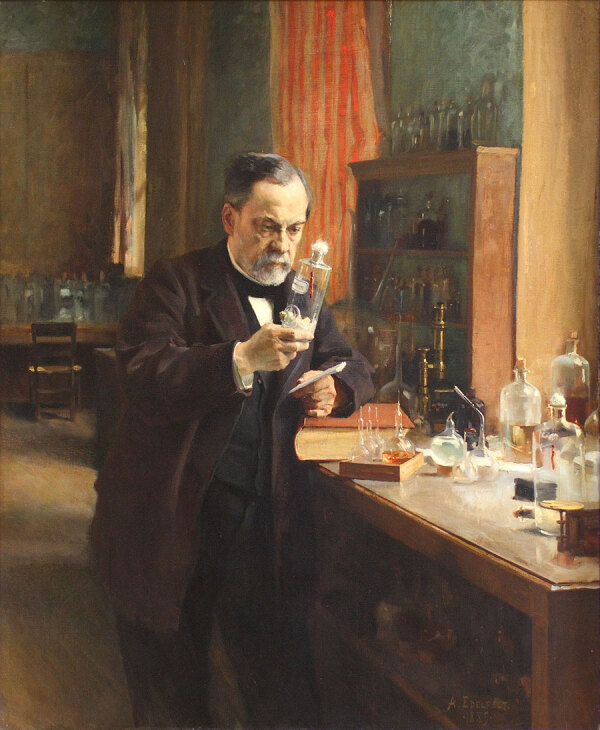 Figure 1
Peer Reviews
No public reviews on file for this paper yet. If you reviewed it on a platform where reviews are public (OpenReview, ICLR, NeurIPS, ICML), you can paste yours below so the community can read it here.
Videos
No videos yet. Explain this paper in a talk, walkthrough, or lecture? Add one.
Taxonomy
TopicsMicrobial infections and disease research · Plant and Fungal Interactions Research · Genomics and Phylogenetic Studies
A novel member of the family Pasteurellaceae, Emayella augustorita, was introduced in the August 2024 issue of Emerging Infectious Diseases, by Meyer and colleagues of Limoges, France. Isolated from a patient in France, the bacterium is a new member of the family Pasteurellaceae, named in honor of Louis Pasteur (Figure). Pasteur was deemed by medical historian Robert P. Gaynes to be the “most notable nonphysician in the history of medicine.” His name is most recognized for the eponymous pasteurization process, but he is also lauded in Linnaean taxonomy with the family name Pasteurellaceae, formally accepted in 1981. The designation was conceived to accommodate a collection of gram-negative organisms currently representing 34 genera and 105 species, described as “specialized commensals, primarily and potential pathogens of vertebrates–mainly mammals and birds.”
The constituent bacteria of this family have a propensity to inhabit the mucosal membrane of the mouth, respiratory, and genital tracts. The species Haemophilus influenzae and Aggregatibacter actinomycetemcomitamitans are well-known Pasteurellaceae that contribute to human illness. Of note, the Pasteurellaceae family is polyphyletic, and the taxonomy of some of the species is in need of further study.
The reference list from the paper itself. Each links out to its DOI / PubMed record.
- 1Meyer S, Tilloy V, Durand-Fontanier S, Lafon T, Garnier F, Martin C, et al. Emayella augustorita, new member of Pasteurellaceae, isolated from blood cultures of septic patient. Emerg Infect Dis. 2024;30:1719–21. 10.3201/eid 3008.23165138907366 PMC 11286039 · doi ↗ · pubmed ↗
- 2Gaynes RP. Louis Pasteur and the germ theory of disease. In: Germ theory: medical pioneers in infectious diseases. Washington: ASM Press; 2011. p. 143–71.
- 3Leibniz Institute DSMZ—German Collection of Microorganisms and Cell Cultures Gmb H. List of Prokaryotic names with Standing in Nomenclature. Family Pasteurellaceae [cited 2024 May 18]. https://lpsn.dsmz.de/family/pasteurellaceae
- 4Bisgaard M. Taxonomy of the family Pasteurellaceae Pohl 1981. In: Donachie W, Lainson FA, Hodgson JC, editors. Haemophilus, Actinobacillus, and Pasteurella. Boston: Springer; 1995 [cited 2024 May 18].
- 5Christensen H, Bossé J, Angen Ø, Nørskov-Lauritsen N, Bisgaard M. Immunological and molecular techniques used for determination of serotypes in Pasteurellaceae. In: Pavia CS, Gurtler V, editors. Methods in microbiology, vol. 47. Immunological methods in microbiology. Cambridge: Academic Press; 2020 [cited 2024 May 18]. https://www.sciencedirect.com/science/article/pii/S 0580951720300027