N-Terminal Fragments of TDP-43—In Vitro Analysis and Implication in the Pathophysiology of Amyotrophic Lateral Sclerosis and Frontotemporal Lobar Degeneration
Anna A. Chami, Léa Bedja-Iacona, Elodie Richard, Debora Lanznaster, Sylviane Marouillat, Charlotte Veyrat-Durebex, Christian R. Andres, Philippe Corcia, Hélène Blasco, Patrick Vourc’h

TL;DR
This study investigates how different fragments of the TDP-43 protein contribute to the formation of harmful aggregates in diseases like ALS and FTLD.
Contribution
The study identifies specific N-terminal fragments of TDP-43 that cause cytoplasmic aggregates and reduce cell viability, highlighting their role in disease pathophysiology.
Findings
N-terminal fragments containing the RRM2 domain cause cytoplasmic aggregates.
Only fragments with a portion of the glycine-rich domain reduce cell viability.
N-terminal domain alone does not cause aggregation.
Abstract
Abnormal cytoplasmic aggregates containing the TDP-43 protein and its fragments are present in the central nervous system of the majority of patients with amyotrophic lateral sclerosis (ALS) and in patients with frontotemporal lobar degeneration (FTLD). Many studies have focused on the C-terminal cleavage products of TDP-43 (CTFs), but few have focused on the N-terminal products (NTFs), yet several works and their protein domain composition support the involvement of NTFs in pathophysiology. In the present study, we expressed six NTFs of TDP-43, normally generated in vivo by proteases or following the presence of pathogenic genetic truncating variants, in HEK-293T cells. The N-terminal domain (NTD) alone was not sufficient to produce aggregates. Fragments containing the NTD and all or part of the RRM1 domain produced nuclear aggregates without affecting cell viability. Only large…
Genes, proteins, chemicals, diseases, species, mutations and cell lines named across the full text — each resolved to its canonical identifier and authoritative record.
Click any figure to enlarge with its caption.
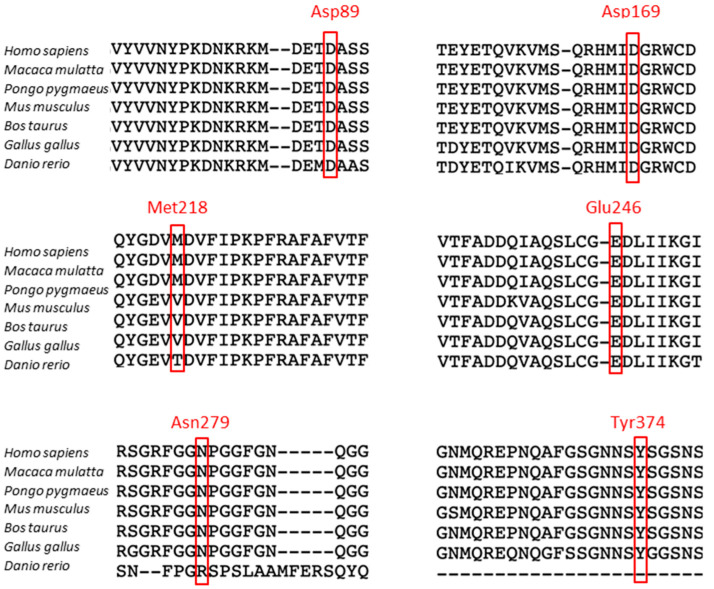 Figure 1
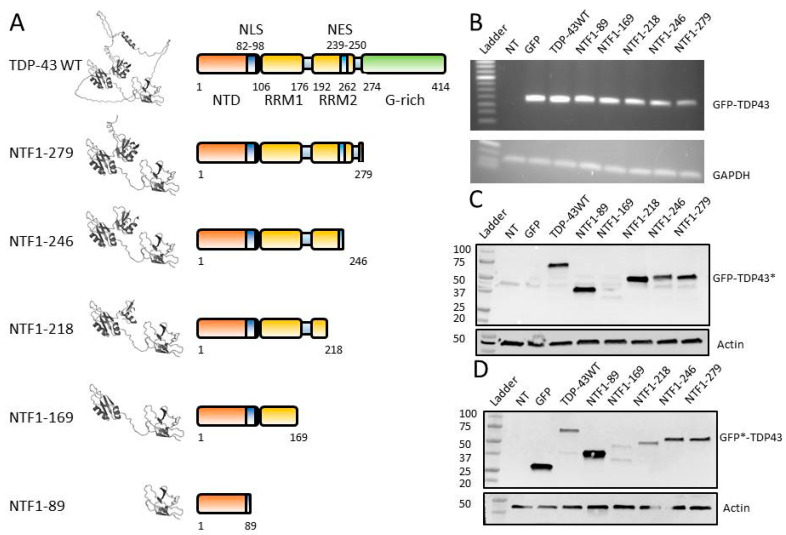 Figure 2
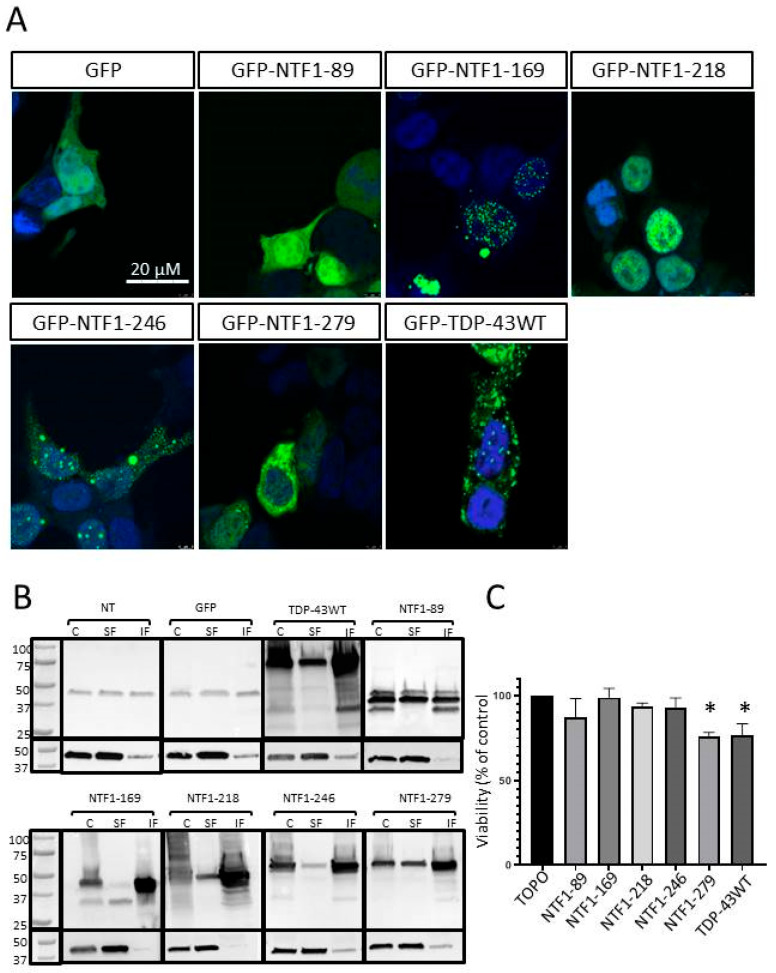 Figure 3
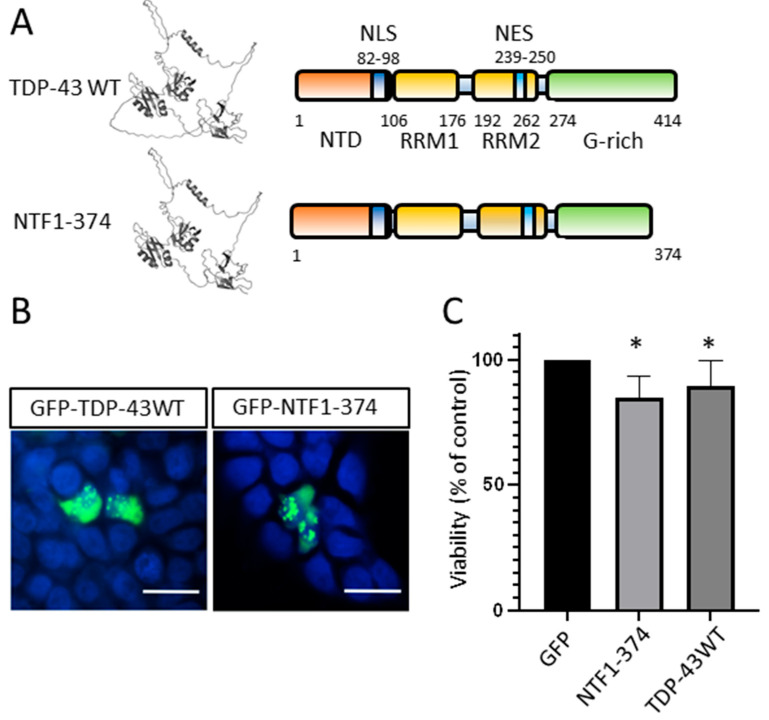 Figure 4
Peer Reviews
No public reviews on file for this paper yet. If you reviewed it on a platform where reviews are public (OpenReview, ICLR, NeurIPS, ICML), you can paste yours below so the community can read it here.
Videos
No videos yet. Explain this paper in a talk, walkthrough, or lecture? Add one.
Taxonomy
TopicsRespiratory Support and Mechanisms · Cardiac Arrest and Resuscitation · Chronic Obstructive Pulmonary Disease (COPD) Research