Bacterial Purine Nucleoside Phosphorylases from Mesophilic and Thermophilic Sources: Characterization of Their Interaction with Natural Nucleosides and Modified Arabinofuranoside Analogues
Irina A. Bychek, Anastasia A. Zenchenko, Maria A. Kostromina, Marat M. Khisamov, Pavel N. Solyev, Roman S. Esipov, Sergey N. Mikhailov, Irina V. Varizhuk

TL;DR
This paper studies bacterial enzymes that can synthesize modified nucleosides, focusing on their efficiency and limitations under different conditions.
Contribution
The study characterizes PNP enzymes from mesophilic and thermophilic bacteria for their ability to synthesize modified nucleoside analogues.
Findings
PNP enzymes from different bacterial sources show varied substrate specificity.
Higher temperatures and organic solvents can influence the conversion rates of nucleoside analogues.
The study identifies limitations in enzymatic synthesis such as substrate solubility and enzyme specificity.
Abstract
The enzymatic synthesis of nucleoside derivatives is an important alternative to multi-step chemical methods traditionally used for this purpose. Despite several undeniable advantages of the enzymatic approach, there are a number of factors limiting its application, such as the limited substrate specificity of enzymes, the need to work at fairly low concentrations, and the physicochemical properties of substrates—for example, low solubility. This research conducted by our group is dedicated to the advantages and limitations of using purine nucleoside phosphorylases (PNPs), the main enzymes for the metabolic reutilization of purines, in the synthesis of modified nucleoside analogues. In our work, the substrate specificity of PNP from various bacterial sources (mesophilic and thermophilic) was studied, and the effect of substrate, increased temperature, and the presence of organic…
Genes, proteins, chemicals, diseases, species, mutations and cell lines named across the full text — each resolved to its canonical identifier and authoritative record.
Click any figure to enlarge with its caption.
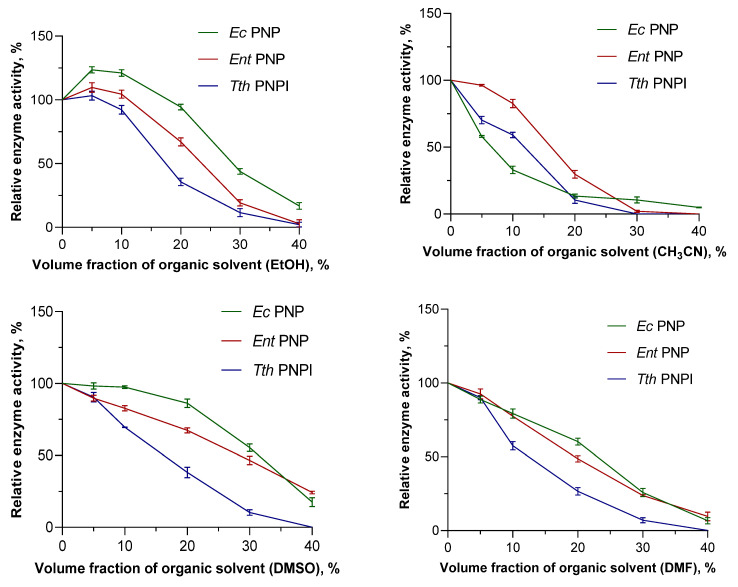 Figure 1
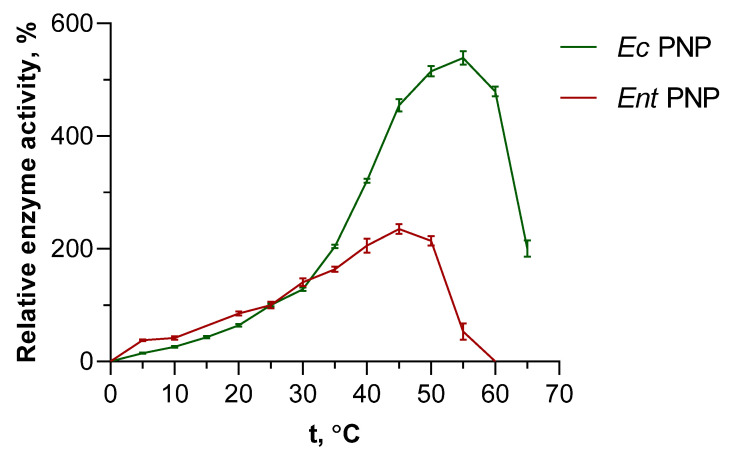 Figure 2
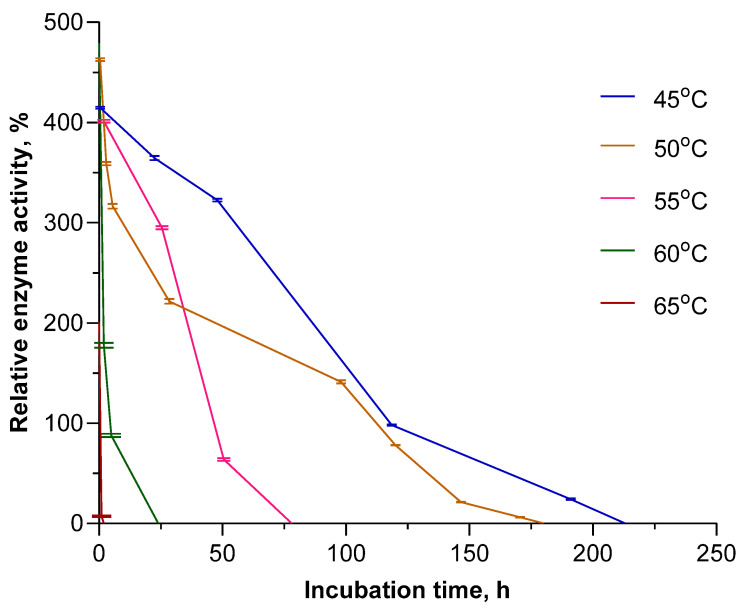 Figure 3
Peer Reviews
No public reviews on file for this paper yet. If you reviewed it on a platform where reviews are public (OpenReview, ICLR, NeurIPS, ICML), you can paste yours below so the community can read it here.
Videos
No videos yet. Explain this paper in a talk, walkthrough, or lecture? Add one.
Taxonomy
TopicsBiochemical and Molecular Research · Adenosine and Purinergic Signaling · Peptidase Inhibition and Analysis