Establishment of an Agrobacterium tumefaciens-Mediated Transformation System for Hirsutella sinensis
Lijuan Wu, Xinkun Hu, Shen Yan, Zenglin Wu, Xuzhong Tang, Lei Xie, Yujie Qiu, Rui Li, Ji Chen, Mengliang Tian

TL;DR
This paper establishes a genetic transformation system for Hirsutella sinensis using Agrobacterium tumefaciens, enabling future studies on the formation of Ophiocordyceps sinensis.
Contribution
The study introduces an optimized Agrobacterium-mediated transformation protocol for H. sinensis, enabling functional analysis of genes in O. sinensis formation.
Findings
AGL1 was identified as the most suitable Agrobacterium strain for H. sinensis transformation.
Endogenous promoters of H. sinensis genes outperformed exogenous promoters in driving gene expression.
Optimal transformation conditions included specific concentrations of AS, hygromycin B, and cocultivation parameters.
Abstract
Ophiocordyceps sinensis (Berk.) is a complex is formed by Hepialidae larvae and Hirsutella sinensis. Infestation by H. sinensis, interaction with host larvae, and fruiting body development are three crucial processes affecting the formation of O. sinensis. However, research on the molecular mechanism of O. sinensis formation has been hindered by the lack of effective genetic transformation protocols. Therefore, Agrobacterium tumefaciens-mediated transformation (ATMT) was adopted to genetically transform two H. sinensis strains and optimize the transformation conditions. The results revealed that the most suitable Agrobacterium strain for H. sinensis transformation was AGL1, and that the surfactant Triton X-100 could also induce ATMT, although less effectively than acetosyringone (AS). In addition, the endogenous promoters of H. sinensis genes had a stronger ability to drive the…
Genes, proteins, chemicals, diseases, species, mutations and cell lines named across the full text — each resolved to its canonical identifier and authoritative record.
Click any figure to enlarge with its caption.
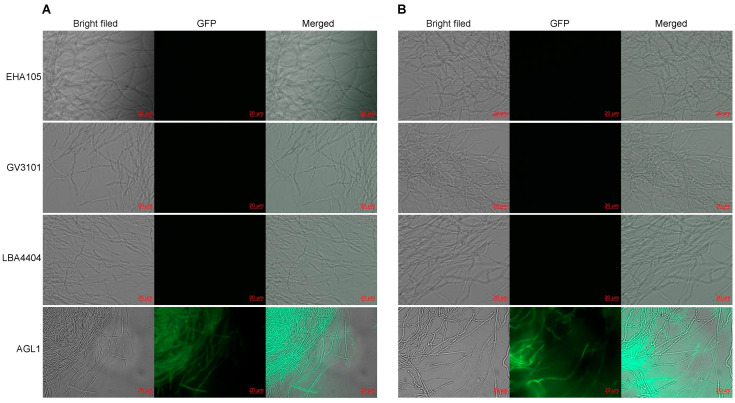 Figure 1
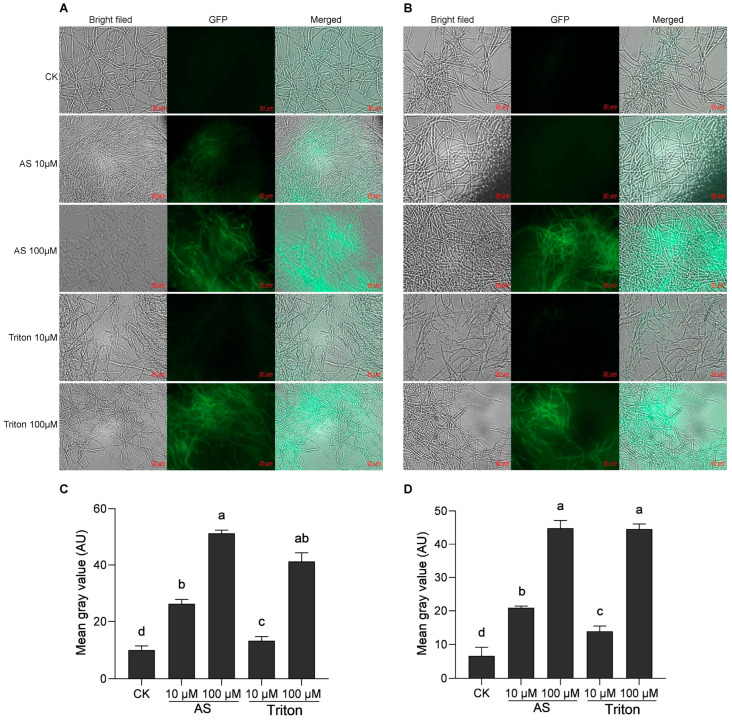 Figure 2
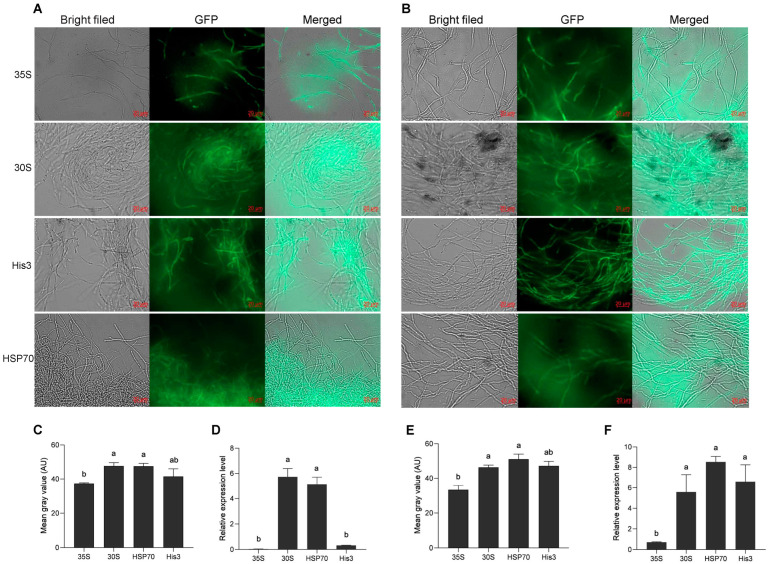 Figure 3
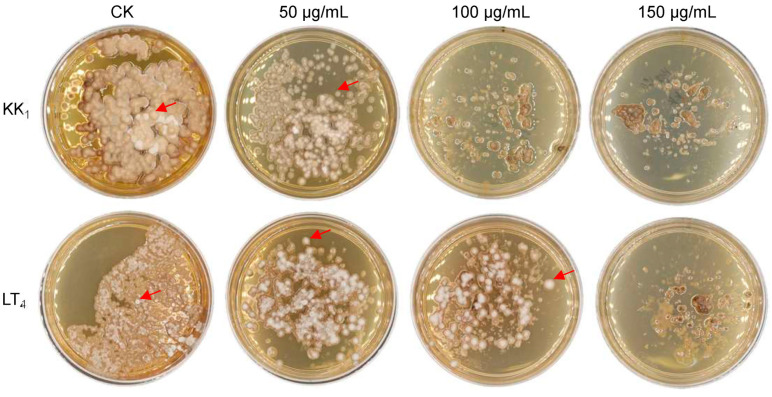 Figure 4
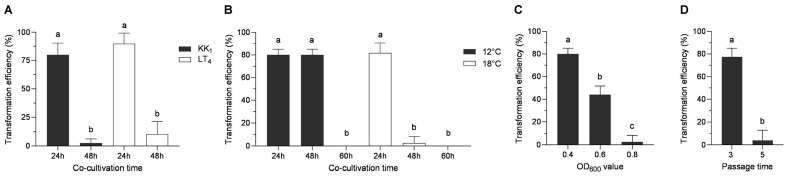 Figure 5
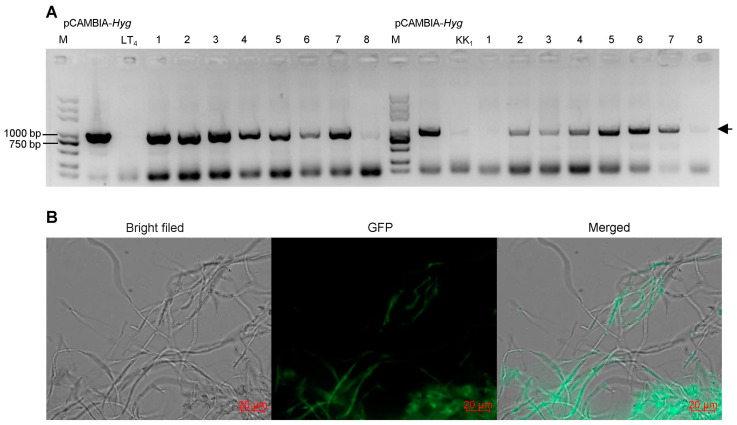 Figure 6
Peer Reviews
No public reviews on file for this paper yet. If you reviewed it on a platform where reviews are public (OpenReview, ICLR, NeurIPS, ICML), you can paste yours below so the community can read it here.
Videos
No videos yet. Explain this paper in a talk, walkthrough, or lecture? Add one.
Taxonomy
TopicsFungal Biology and Applications · Plant tissue culture and regeneration · Algal biology and biofuel production