Real-World Impact of Deep Targeted Sequencing on Erythrocytosis and Thrombocytosis Diagnosis: A Reference Centre Experience
Alberto Blanco-Sánchez, Rodrigo Gil-Manso, Rodrigo de Nicolás, Nieves López-Muñoz, Rafael Colmenares, Reyes Mas, Ricardo Sánchez, Inmaculada Rapado, Joaquín Martínez-López, Rosa Ayala Díaz, Gonzalo Carreño-Tarragona

TL;DR
This study evaluates how deep targeted sequencing impacts the diagnosis of erythrocytosis and thrombocytosis in a real-world setting, finding limited benefit and suggesting better patient selection could improve outcomes.
Contribution
The paper provides real-world evidence on the diagnostic yield of NGS in unexplained erythrocytosis and thrombocytosis, emphasizing the need for improved patient selection.
Findings
Only 11.9% of erythrocytosis patients and 25.9% of thrombocytosis patients had actionable variants detected via NGS.
NGS identified familial or clonal disorders in a subset of patients previously classified as idiopathic.
The study highlights the importance of pre-NGS screening to improve diagnostic yield.
Abstract
Around 70% of cases of erythrocytosis are categorised as “idiopathic” after excluding secondary causes and polycythaemia vera. A similar situation arises in the setting of thrombocytosis, with even a 15% of essential thrombocythemia lacking canonical mutations. Previous studies have shown that a deeper investigation of these patients can unmask underlying primary conditions (such as familial disorders or a clonal disease without canonical mutations). The role of next-generation sequencing (NGS) in their diagnosis has been explored in a retrospective manner, showing promising results. In this study, we reviewed the impact of NGS performed in our centre on the diagnosis of erythrocytosis and thrombocytosis (117 and 58 patients, respectively). Our findings showed that few patients benefited from this test, since only 11.9% and 25.9% showed a variant leading to diagnosis of a primary…
Genes, proteins, chemicals, diseases, species, mutations and cell lines named across the full text — each resolved to its canonical identifier and authoritative record.
Click any figure to enlarge with its caption.
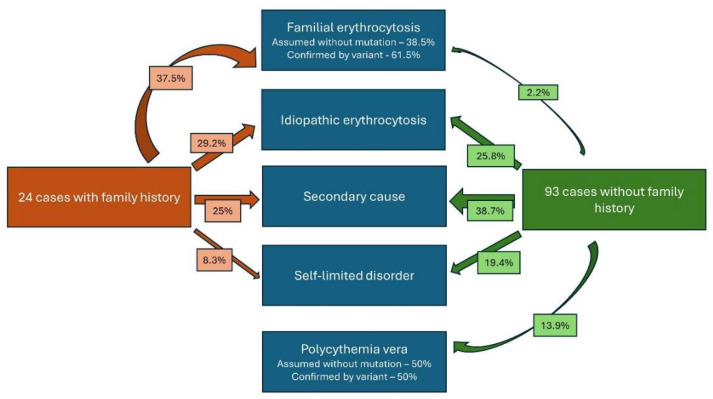 Figure 1
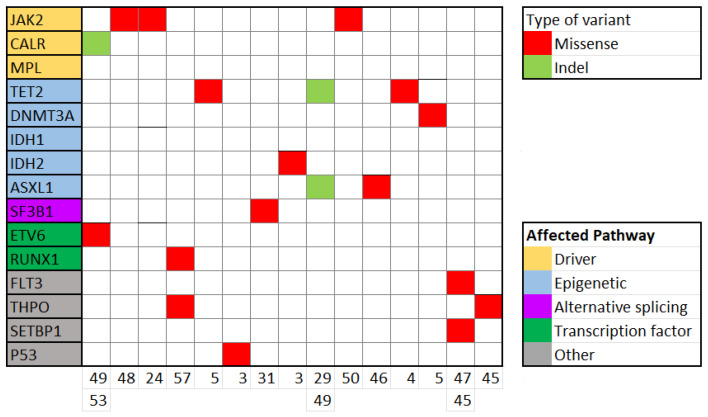 Figure 2
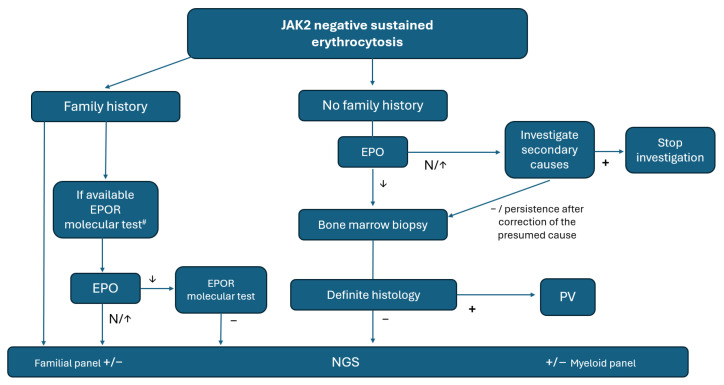 Figure 3
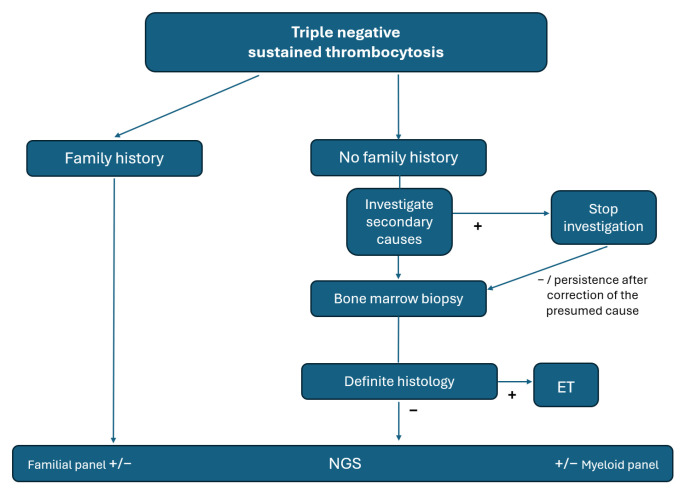 Figure 4
Peer Reviews
No public reviews on file for this paper yet. If you reviewed it on a platform where reviews are public (OpenReview, ICLR, NeurIPS, ICML), you can paste yours below so the community can read it here.
Videos
No videos yet. Explain this paper in a talk, walkthrough, or lecture? Add one.
Taxonomy
TopicsMyeloproliferative Neoplasms: Diagnosis and Treatment · Hemoglobinopathies and Related Disorders · Acute Myeloid Leukemia Research