Effectiveness of Transcranial Direct Current Stimulation (tDCS) during a Virtual Reality Task in Women with Fibromyalgia—A Randomized Clinical Study
Thaís Nogueira da Silva, Vivian Finotti Ribeiro, Margot Carol Condori Apaza, Lívia Gallerani Romana, Íbis Ariana Peña de Moraes, Eduardo Dati Dias, Suely Steinschreiber Roizenblatt, Juliana Perez Martinez, Fernando Henrique Magalhães, Marcelo Massa

TL;DR
This study found that transcranial direct current stimulation during virtual reality tasks improves motor performance in women with fibromyalgia.
Contribution
The study demonstrates that tDCS during VR tasks leads to sustained motor improvements in fibromyalgia patients.
Findings
Active tDCS significantly improved motor performance metrics like hits and errors in VR tasks.
The benefits of tDCS persisted into the sham phase, indicating lasting neuroplastic effects.
tDCS during VR tasks is a promising tool for fibromyalgia rehabilitation.
Abstract
Background/Objectives: Fibromyalgia (FM) is a chronic condition characterized by widespread musculoskeletal pain, fatigue, and impaired motor performance. This study aimed to investigate the effects of transcranial direct current stimulation (tDCS) during virtual reality (VR) tasks on the motor performance of women with FM. Methods: Participants were divided into two groups: Group A received active tDCS for 10 days followed by sham tDCS for 10 days, while Group B received the opposite sequence. Both groups performed VR tasks using MoveHero software (v. 2.4) during the tDCS sessions. Motor performance was assessed by the number of hits (movement with correct timing to reach the targets) and absolute (accuracy measure) and variable (precision measure) errors during VR tasks. Participants were 21 women, aged 30–50 years, and diagnosed with FM. Results: Group A, which received active tDCS…
Genes, proteins, chemicals, diseases, species, mutations and cell lines named across the full text — each resolved to its canonical identifier and authoritative record.
Click any figure to enlarge with its caption.
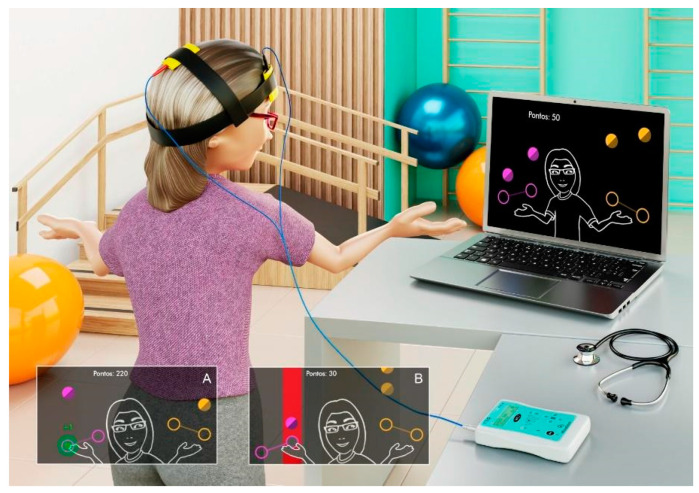 Figure 1
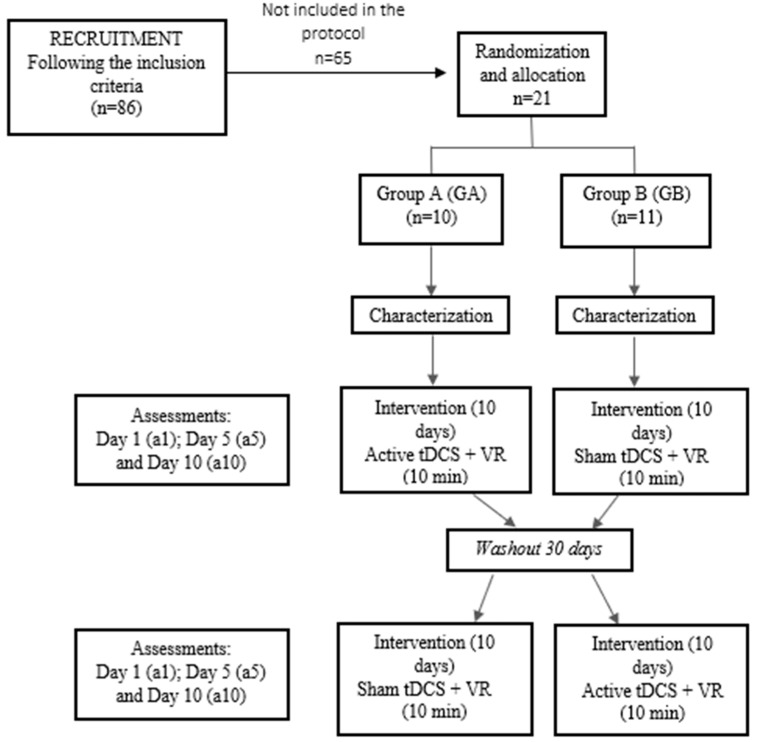 Figure 2
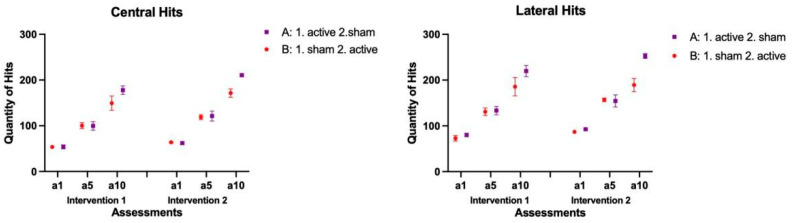 Figure 3
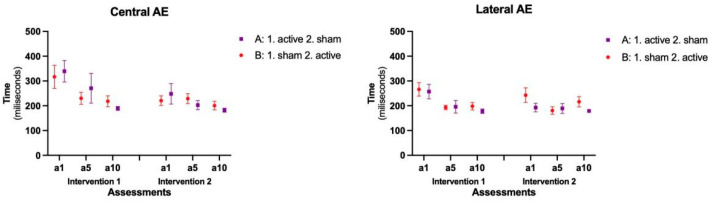 Figure 4
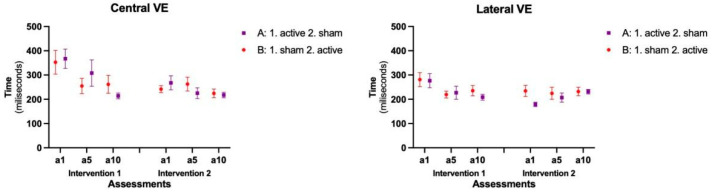 Figure 5
Peer Reviews
No public reviews on file for this paper yet. If you reviewed it on a platform where reviews are public (OpenReview, ICLR, NeurIPS, ICML), you can paste yours below so the community can read it here.
Videos
No videos yet. Explain this paper in a talk, walkthrough, or lecture? Add one.
Taxonomy
TopicsTranscranial Magnetic Stimulation Studies · Pain Management and Treatment · Stroke Rehabilitation and Recovery