Comparison between Motor Performance of People with Multiple Sclerosis during a Virtual Reality Task Practiced on Concrete and Abstract Devices: A Cross-Sectional Randomized Study
Camila Miliani Capelini, Giulianna Mendes Ferrero, Ana Maria Canzonieri, Roger Pereira Silva, Mauricio Ossamu Bando, Renata Martins Rosa, Cintia Ramari Ferreira, Talita Dias da Silva, Alessandro Hervaldo Nicolai Ré, Marcelo Massa, Luciano Vieira de Araújo

TL;DR
People with multiple sclerosis improved motor performance more when using an abstract virtual reality interface, which helped them transfer skills to a concrete task.
Contribution
The study shows that practicing with an abstract VR interface leads to better skill transfer to concrete tasks in people with MS.
Findings
Both groups improved during acquisition and retention phases of the VR task.
Only the MS group using the abstract interface transferred improvements to the concrete interface.
Abstract interfaces, though more challenging, led to better performance in subsequent concrete tasks.
Abstract
Multiple sclerosis (MS) is an autoimmune demyelinating disease of the central nervous system with unknown etiology, resulting in various impairments that necessitate continuous rehabilitation to enhance functionality, quality of life, and motor function, including through Virtual Reality (VR) therapy. Comparing tasks in virtual environments and their potential skill transfer to real-world settings could aid in optimizing treatment programs to improve motor performance in individuals with MS. This study aimed to determine whether practicing acquisition and retention phases using two distinct interfaces (concrete—Touch Screen or abstract—Kinect system) affects performance in a subsequent task using a different interface (transfer phase). A randomized clinical trial was conducted with 56 volunteers with MS and 41 controls. Participants engaged in a computer game where they burst as many…
Genes, proteins, chemicals, diseases, species, mutations and cell lines named across the full text — each resolved to its canonical identifier and authoritative record.
Click any figure to enlarge with its caption.
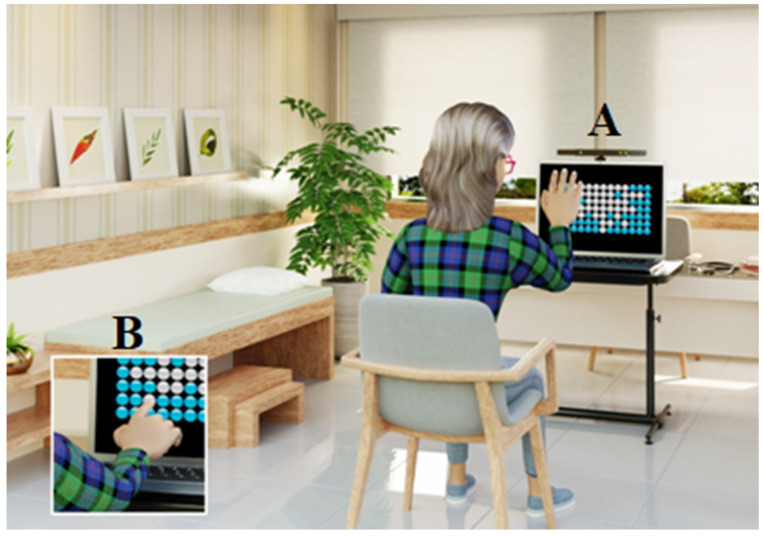 Figure 1
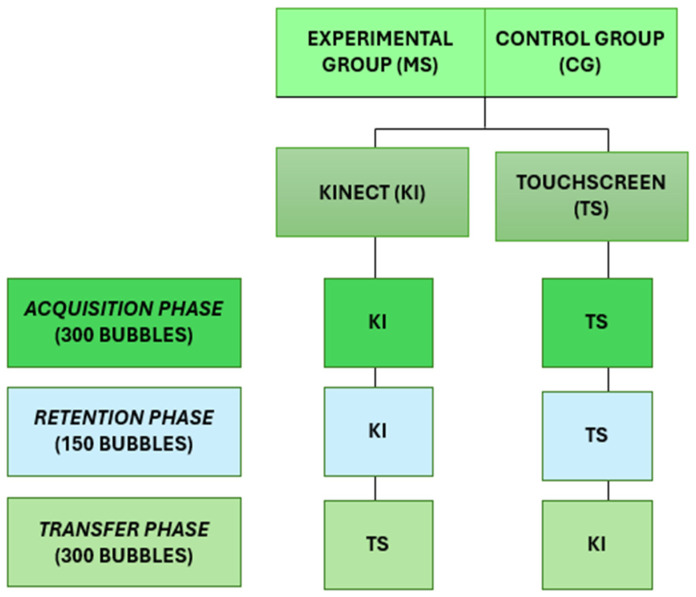 Figure 2
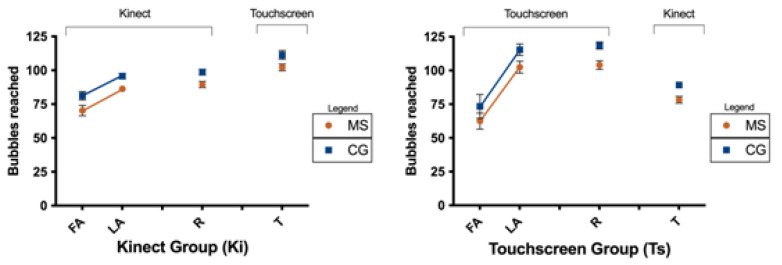 Figure 3
Peer Reviews
No public reviews on file for this paper yet. If you reviewed it on a platform where reviews are public (OpenReview, ICLR, NeurIPS, ICML), you can paste yours below so the community can read it here.
Videos
No videos yet. Explain this paper in a talk, walkthrough, or lecture? Add one.
Taxonomy
TopicsStroke Rehabilitation and Recovery · Multiple Sclerosis Research Studies · Cerebral Palsy and Movement Disorders