Combining Transcriptomics and Proteomics to Screen Candidate Genes Related to Bovine Birth Weight
Xiuyuan Wang, Ruili Liu, Zhenpeng Chen, Renzheng Zhang, Yanfang Mei, Xiuping Miao, Xuejin Bai, Yajuan Dong

TL;DR
This study combines gene and protein analysis to find genes linked to calf birth weight in cattle, revealing how placental function affects fetal growth.
Contribution
The study identifies novel candidate genes and proteins in bovine placentae that influence calf birth weight through lipid and energy metabolism.
Findings
High-birth-weight calves have placentae with enhanced nutrient transport and lipid synthesis genes.
Low-birth-weight calves prioritize cell proliferation and angiogenesis in placental function.
ELOVL5, ELOVL7, ACSL1, CYP11A1, and CYP17A1 are proposed as potential biomarkers for regulating calf birth weight.
Abstract
The growth and development of fetal calves depend on nutrients from maternal circulation through the placenta, which can directly impact offspring health in early or later life. In this study, we examined how the placenta regulates calf birth weight using transcriptomic and proteomic analyses, identifying candidate genes associated with this trait. Our results indicate that a key factor affecting calf birth weight is that the placenta of high-birth-weight (HB) calves supplies more nutrients to the fetus at the transcriptomic level, characterized by enhanced nutrient transport, energy metabolism, and lipid synthesis. However, placentae from low-birth-weight (LB) calves focus more on cell proliferation and angiogenesis. At the protein level, differences in calf birth weight among Shandong Black cattle primarily arise from the energy metabolism and lipid synthesis processes while also…
Genes, proteins, chemicals, diseases, species, mutations and cell lines named across the full text — each resolved to its canonical identifier and authoritative record.
Click any figure to enlarge with its caption.
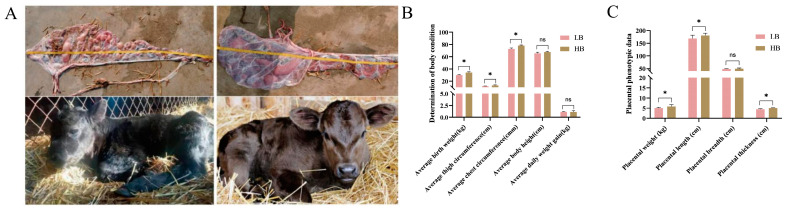 Figure 1
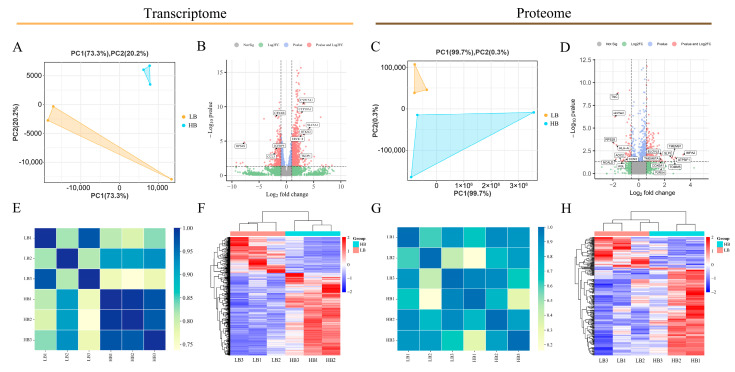 Figure 2
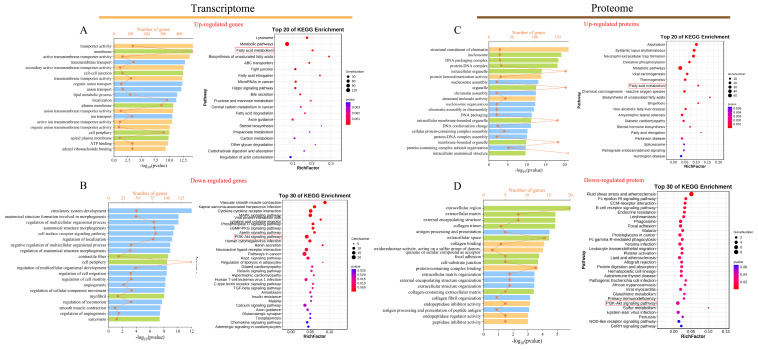 Figure 3
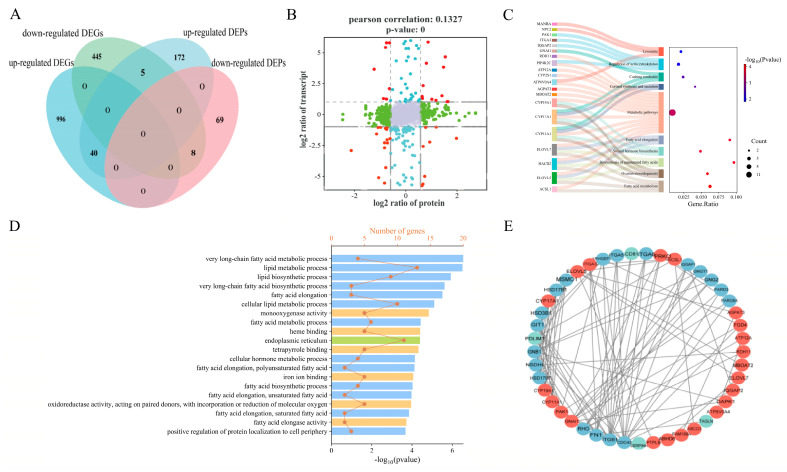 Figure 4
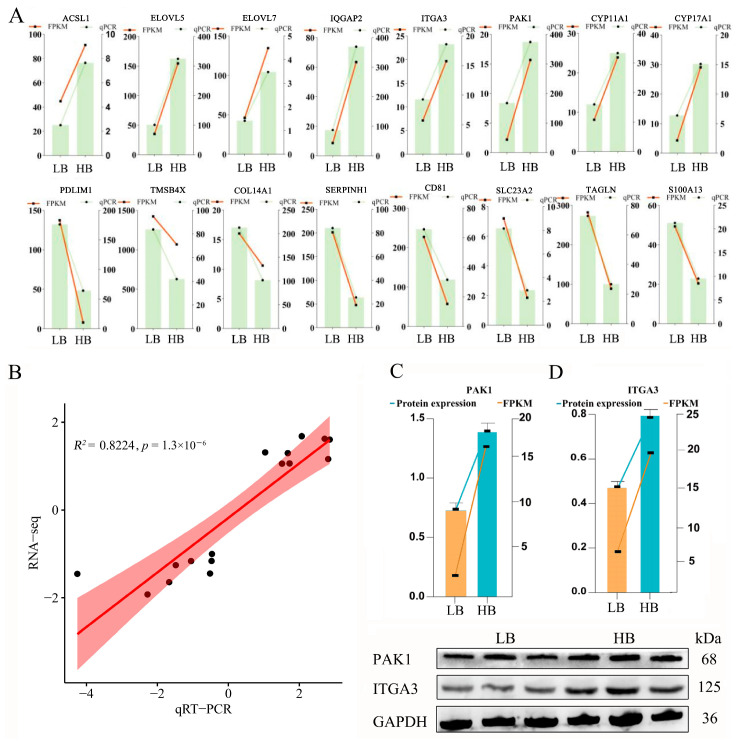 Figure 5
Peer Reviews
No public reviews on file for this paper yet. If you reviewed it on a platform where reviews are public (OpenReview, ICLR, NeurIPS, ICML), you can paste yours below so the community can read it here.
Videos
No videos yet. Explain this paper in a talk, walkthrough, or lecture? Add one.
Taxonomy
TopicsRNA modifications and cancer · Pregnancy and preeclampsia studies · Cancer-related molecular mechanisms research