Identification of Reference Gene for Quantitative Gene Expression in Early-Term and Late-Term Cultured Canine Fibroblasts Derived from Ear Skin
Sang-Yun Lee, Yeon-Woo Jeong, Yong-Ho Choe, Seong-Ju Oh, Rubel Miah, Won-Jae Lee, Sung-Lim Lee, Eun-Yeong Bok, Dae-Sung Yoo, Young-Bum Son

TL;DR
This study identifies the most stable reference genes for measuring gene expression in canine skin fibroblasts at different culture stages.
Contribution
HPRT1, YWHAZ, and GUSB are shown to be the most stable reference genes for RT-qPCR in both early- and late-passage canine fibroblasts.
Findings
Early-passage fibroblasts showed shorter doubling times and lower β-galactosidase activity compared to late-passage cells.
HPRT1, YWHAZ, and GUSB were identified as the most stable reference genes across three algorithms.
Using stable reference genes revealed significant differences in Vimentin expression not seen with unstable genes.
Abstract
This study aimed to identify stable reference genes in early-passage and late-passage cultured canine skin fibroblasts. The early-passage fibroblasts retained their spindle-shaped morphology, exhibited a short doubling time, and had low β-galactosidase activity. In contrast, the late-passage fibroblasts displayed an elongated morphology, a prolonged doubling time, and elevated β-galactosidase activity. To assess the stability of the reference genes, the Ct values obtained using qRT-PCR were analyzed using three algorithms: geNorm, NormFinder, and BestKeeper. As a result, HPRT1, YWHAZ, and GUSB were identified as the most stable reference genes across all three algorithms in canine skin fibroblasts. When comparing early-passage to late-passage fibroblasts, the normalization of Vimentin expression using both stable and unstable reference genes showed a decrease in late-passage cells.…
Genes, proteins, chemicals, diseases, species, mutations and cell lines named across the full text — each resolved to its canonical identifier and authoritative record.
Click any figure to enlarge with its caption.
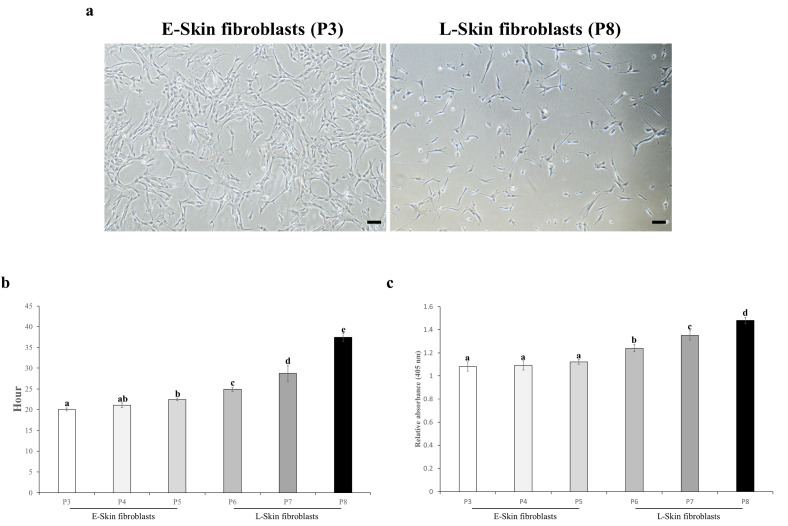 Figure 1
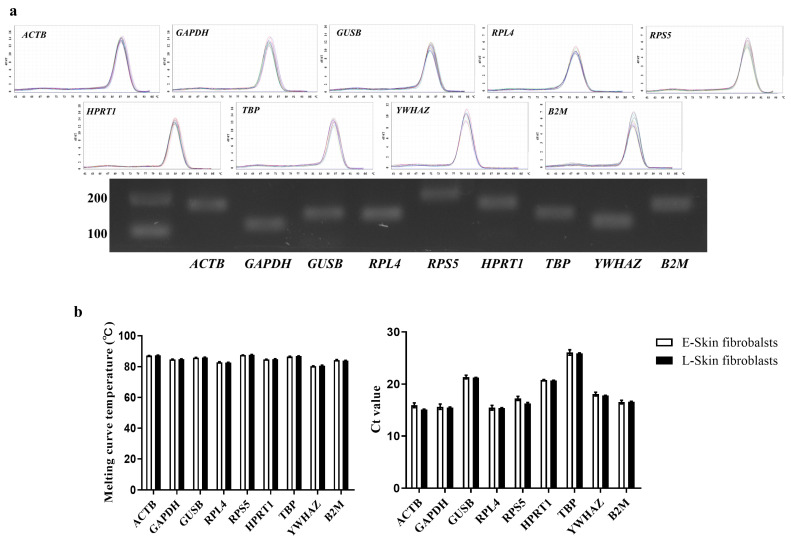 Figure 2
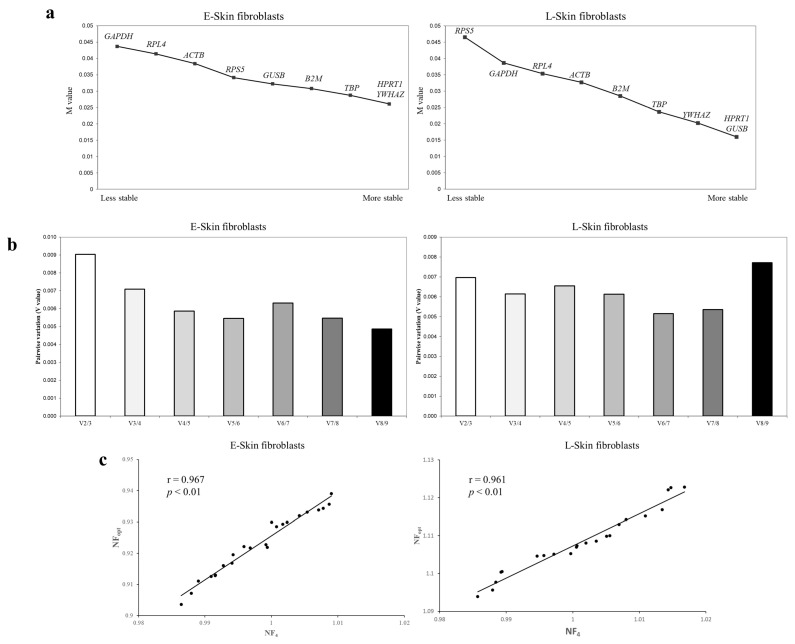 Figure 3
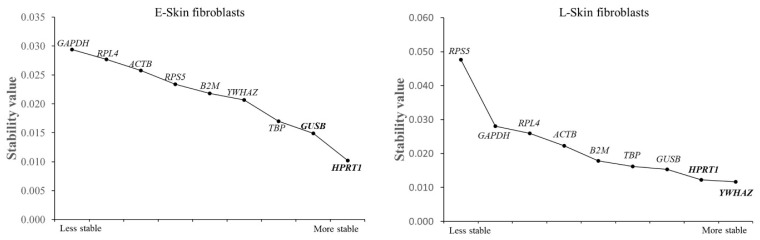 Figure 4
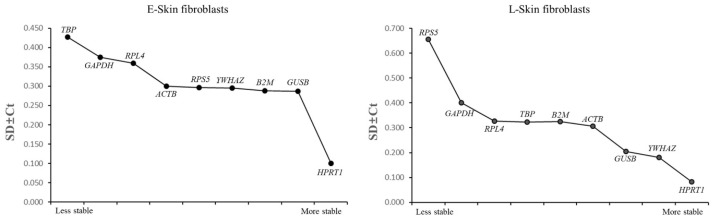 Figure 5
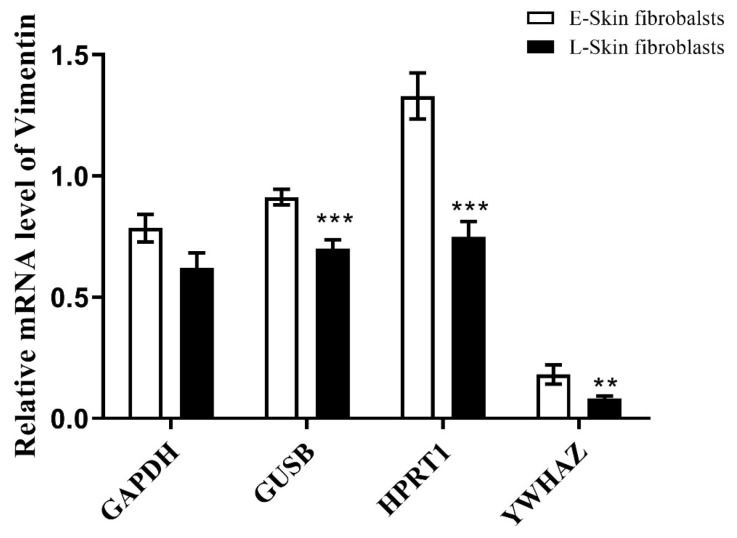 Figure 6
Peer Reviews
No public reviews on file for this paper yet. If you reviewed it on a platform where reviews are public (OpenReview, ICLR, NeurIPS, ICML), you can paste yours below so the community can read it here.
Videos
No videos yet. Explain this paper in a talk, walkthrough, or lecture? Add one.
Taxonomy
TopicsMolecular Biology Techniques and Applications · dental development and anomalies · RNA Research and Splicing