A Non-Invasive Technique to Unveil Renal Implications in Anderson–Fabry Disease
Matteo Gravina, Dario Troise, Barbara Infante, Luciano Tartaglia, Bruno Minopoli, Costanza Allegra, Grazia Casavecchia, Marcella Gambacorta, Carmen Montanile, Silvia Mercuri, Luca Macarini, Giovanni Stallone

TL;DR
This study shows that MRI T1 mapping can non-invasively detect kidney damage in Anderson–Fabry disease patients.
Contribution
The first demonstration of T1 mapping's utility in non-invasively diagnosing renal involvement in AFD.
Findings
T1 mapping showed a positive correlation between heart and kidney values in AFD patients.
AFD patients had significantly higher kidney T1 values compared to controls, indicating kidney damage.
A negative correlation between kidney T1 values of AFD and control groups suggests microvascular damage in AFD.
Abstract
Background: Anderson–Fabry disease (AFD) is a rare genetic disorder characterized by a deficiency of α-galactosidase A activity and the accumulation of glycosphingolipids in tissues, which leads to multiorgan damage. Cardiovascular magnetic resonance (CMR) and the T1 mapping technique are essential tools for the assessment of AFD cardiac involvement. Moreover, the T1 mapping technique has proved to be a successful non-invasive method for the early detection of patients most at risk for kidney disease. We evaluated the application of MRI in patients with AFD to assess renal involvement. Methods: We conducted a retrospective analysis of 19 patients (Group A) with histologically proven AFD who underwent routine CMR examinations for the evaluation of cardiac involvement, selecting specific sequences that also showed the left kidney, compared to a control population (Group B, 19 patients)…
Genes, proteins, chemicals, diseases, species, mutations and cell lines named across the full text — each resolved to its canonical identifier and authoritative record.
Click any figure to enlarge with its caption.
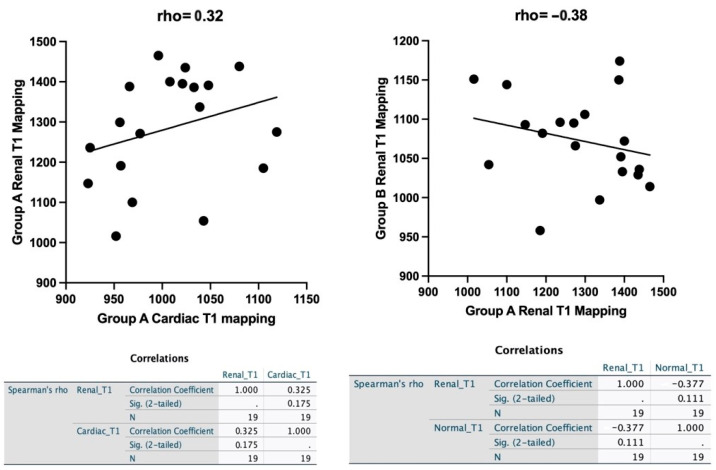 Figure 1
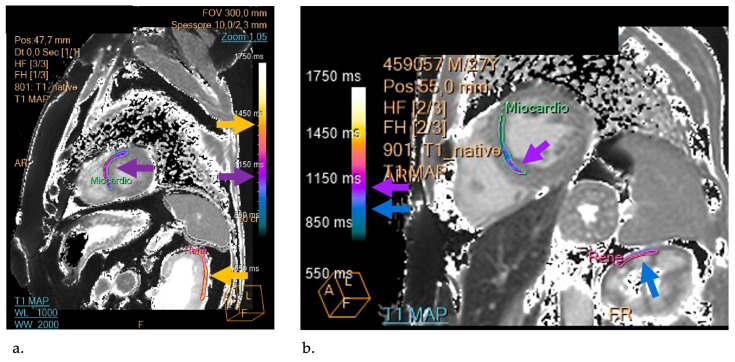 Figure 2
Peer Reviews
No public reviews on file for this paper yet. If you reviewed it on a platform where reviews are public (OpenReview, ICLR, NeurIPS, ICML), you can paste yours below so the community can read it here.
Videos
No videos yet. Explain this paper in a talk, walkthrough, or lecture? Add one.
Taxonomy
TopicsLysosomal Storage Disorders Research · RNA regulation and disease · Amyloidosis: Diagnosis, Treatment, Outcomes