Physiotherapy in the Recovery of Paraplegic Dogs without Nociception Due to Thoracolumbar Intervertebral Disc Extrusion Treated Surgically
Júlia da Silva Rauber, Julya Nathalya Felix Chaves, Mathias Reginatto Wrzesinski, Amanda Miwa Takamori Sekita, Thais da Silva Soares, Diego Vilibaldo Beckmann, Alexandre Mazzanti

TL;DR
This study found that physiotherapy after surgery does not significantly improve recovery in paraplegic dogs with no pain sensation from spinal disc issues.
Contribution
The study provides evidence against the routine use of physiotherapy for functional recovery in paraplegic dogs with thoracolumbar disc extrusion.
Findings
Physiotherapy did not significantly improve functional recovery in the first 21 days post-surgery.
After 21 days, both groups showed similar recovery rates with no significant difference.
The study challenges the common recommendation of routine physiotherapy for these dogs.
Abstract
This study addresses the effects of postoperative physiotherapy in dogs with intervertebral disc extrusion treated surgically. The animals were divided into two groups: the physiotherapy group (PG), which included those that underwent decompressive surgery and postoperative physiotherapy; and the control group (CG), which included dogs that did not undergo any physiotherapy after surgery. The physiotherapy protocol began immediately after surgery. A total of 51 dogs were included, with 30 in the PG and 21 in the CG. The functional recovery rate in dogs up to 21 days postoperatively was 10% (3/30) in the PG and 19% (4/21) in the CG. After 21 days postoperatively, the rates were 43.33% (13/30) in the PG and 61.9% (13/21) in the CG, with no observed difference between the groups (p = 0.258). Physiotherapy administered twice a week in paraplegic dogs with loss of nociception due to…
Genes, proteins, chemicals, diseases, species, mutations and cell lines named across the full text — each resolved to its canonical identifier and authoritative record.
Click any figure to enlarge with its caption.
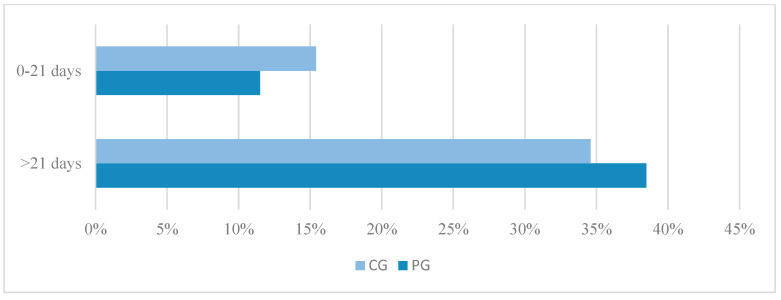 Figure 1
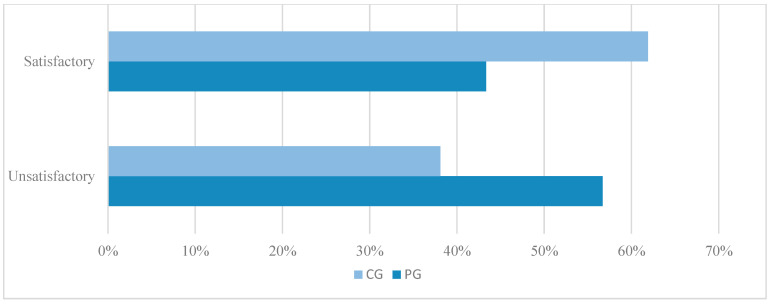 Figure 2
Peer Reviews
No public reviews on file for this paper yet. If you reviewed it on a platform where reviews are public (OpenReview, ICLR, NeurIPS, ICML), you can paste yours below so the community can read it here.
Videos
No videos yet. Explain this paper in a talk, walkthrough, or lecture? Add one.
Taxonomy
TopicsBacterial Infections and Vaccines · Otolaryngology and Infectious Diseases · Streptococcal Infections and Treatments