Peptide-Bound Glycative, AGE and Oxidative Modifications as Biomarkers for the Diagnosis of Alzheimer’s Disease—A Feasibility Study
Anne Grosskopf, Jette Rahn, Ahyoung Kim, Gábor Szabó, Dan Rujescu, Frank Klawonn, Andrej Frolov, Andreas Simm

TL;DR
This study explores whether modified peptides in cerebrospinal fluid can serve as early biomarkers for Alzheimer's disease.
Contribution
The study introduces a novel approach to detect and quantify glycative, AGE, and oxidative peptide modifications as potential early AD biomarkers.
Findings
Identified 299 glycation and 53 oxidative modification sites in Alzheimer's patient CSF proteins.
Found 17 candidate peptides with potential biomarker properties (ROC-AUC > 0.8).
Observed correlations between candidate peptides and established AD diagnostic markers.
Abstract
Background: The diagnosis of Alzheimer’s disease (AD) relies on core cerebrospinal fluid (CSF) biomarkers, amyloid beta (Aβ) and tau. As the brain is then already damaged, researchers still strive to discover earlier biomarkers of disease onset and the progression of AD. Glycation, advanced glycation end products (AGEs) and oxidative modifications on proteins in CSF mirror the underlying biological mechanisms that contribute to early AD pathology. However, analyzing free AGEs in the body fluids of AD patients has led to controversial results. Thus, this pilot study aimed to test the feasibility of detecting, identifying and quantifying differentially glycated, AGE or oxidatively modified peptides in CSF proteins of AD patients (n = 5) compared to a control group (n = 5). Methods: To this end, we utilized a data-dependent (DDA) nano liquid chromatography (LC) linear ion trap-Orbitrap…
Genes, proteins, chemicals, diseases, species, mutations and cell lines named across the full text — each resolved to its canonical identifier and authoritative record.
Click any figure to enlarge with its caption.
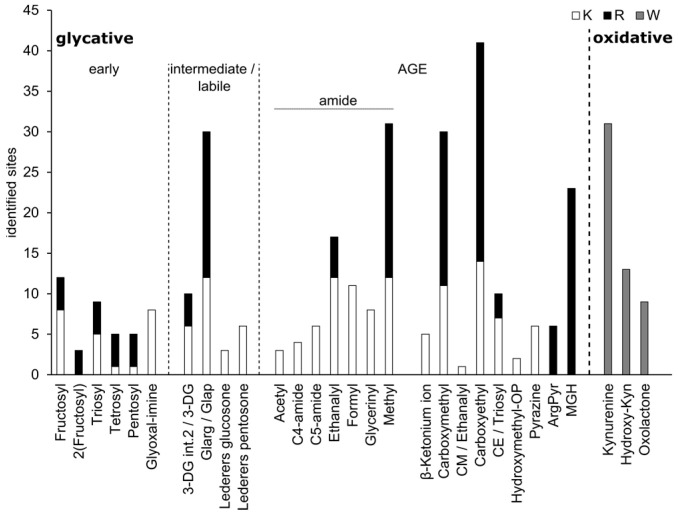 Figure 1
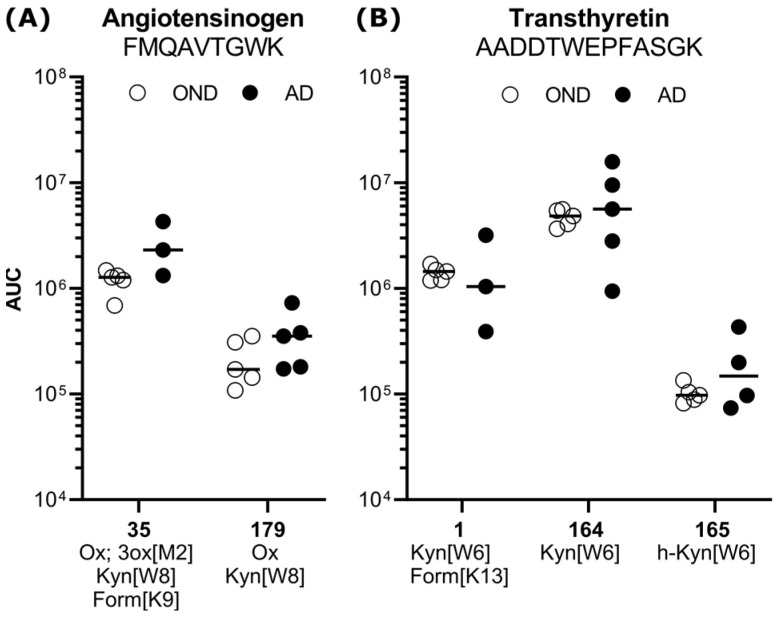 Figure 2
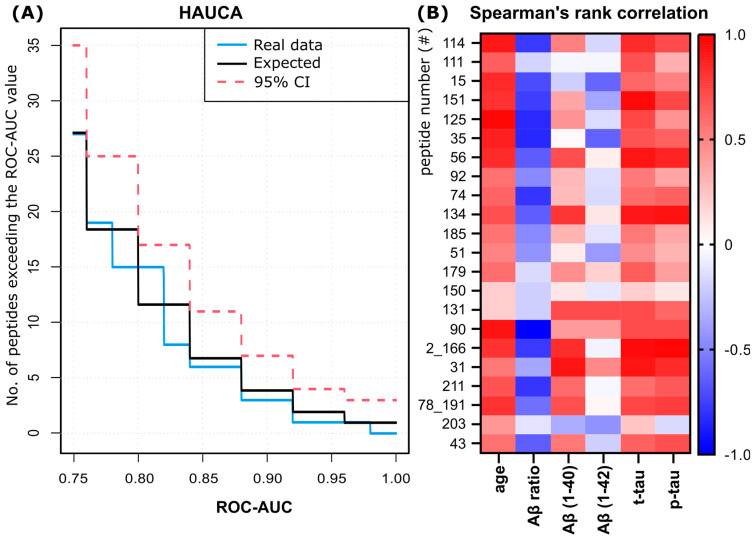 Figure 3
Peer Reviews
No public reviews on file for this paper yet. If you reviewed it on a platform where reviews are public (OpenReview, ICLR, NeurIPS, ICML), you can paste yours below so the community can read it here.
Videos
No videos yet. Explain this paper in a talk, walkthrough, or lecture? Add one.
Taxonomy
TopicsAdvanced Glycation End Products research · Alzheimer's disease research and treatments · Dementia and Cognitive Impairment Research