Changes in Anxiety-Related Behaviors, Voiding Patterns, and Urinary Bladder Contractile Properties in Male Mice Exposed to Water Avoidance Stress for 1 Day and 28 Days
Sarunnuch Sattayachiti, Panida Chumpong, Seree Niyomdecha, Dania Cheaha, Nipaporn Konthapakdee

TL;DR
This study examines how different durations of water avoidance stress affect anxiety and bladder function in male mice.
Contribution
The study reveals that 1-day and 28-day stress exposure have distinct effects on anxiety and bladder function compared to the standard 10-day model.
Findings
1-day and 10-day stress exposure reduced unsupported rearing and voiding area in mice.
28-day stress exposure reversed some bladder impairments seen in shorter durations.
1-day stress increased bladder contractility, which was blocked by a 5-HT3 receptor antagonist.
Abstract
Psychological stress triggers an imbalance of neural and hormonal systems, leading to pathological conditions in many organ systems, especially the urinary bladder. Water avoidance stress (WAS) exposure for 10 days is a well-known rodent model that induces chronic psychological stress and impairs urinary bladder structure and function. However, the impact of WAS exposure in a different period apart from 10 days on anxiety-related behavior and urinary bladder structure and function remains unknown. Here, we investigated the effect of 1 day (acute), 10 days (chronic), and 28 consecutive days (prolonged) of WAS exposure and determined changes in anxiety-related behaviors, voiding patterns, mast cell numbers in bladder tissues, and bladder contractile properties that reflect pathological conditions from the stress exposure. Our study provides useful information on using WAS in an acute…
Genes, proteins, chemicals, diseases, species, mutations and cell lines named across the full text — each resolved to its canonical identifier and authoritative record.
Click any figure to enlarge with its caption.
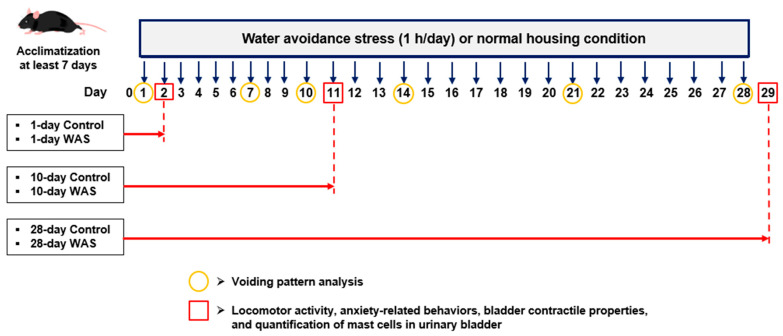 Figure 1
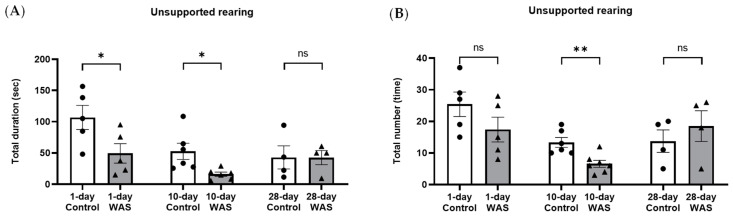 Figure 2
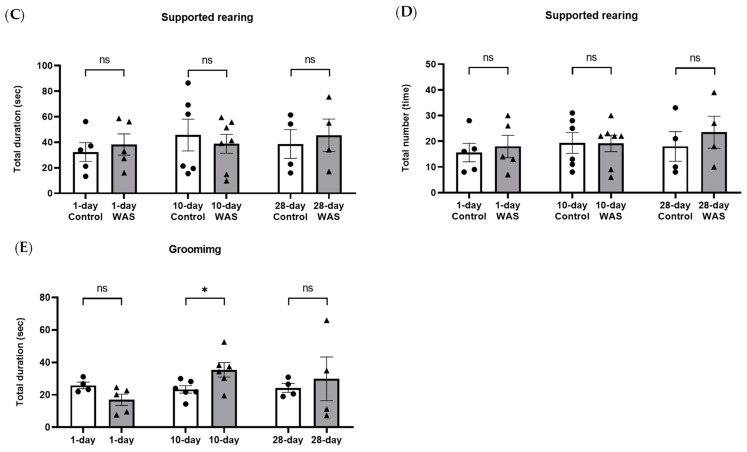 Figure 3
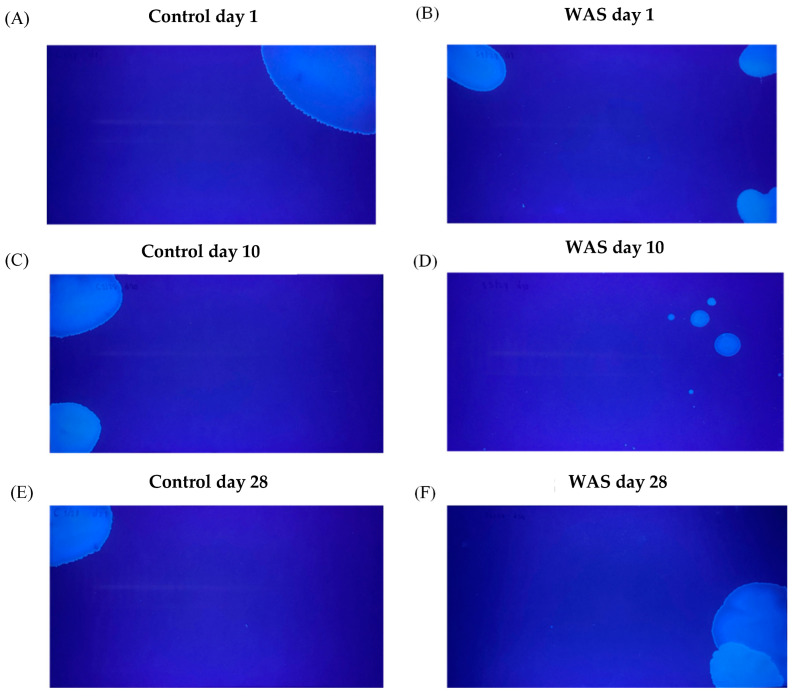 Figure 4
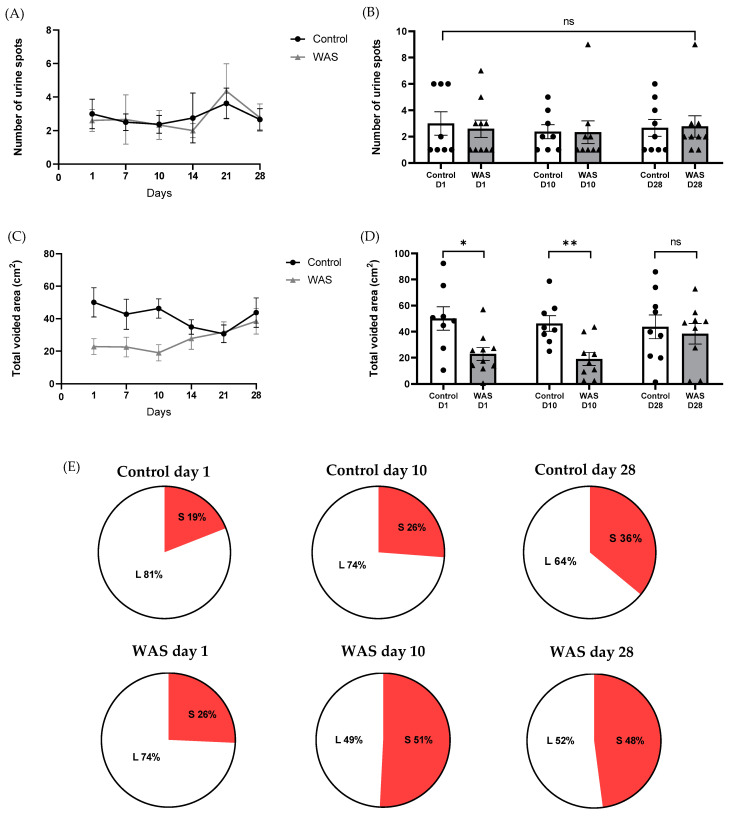 Figure 5
 Figure 6
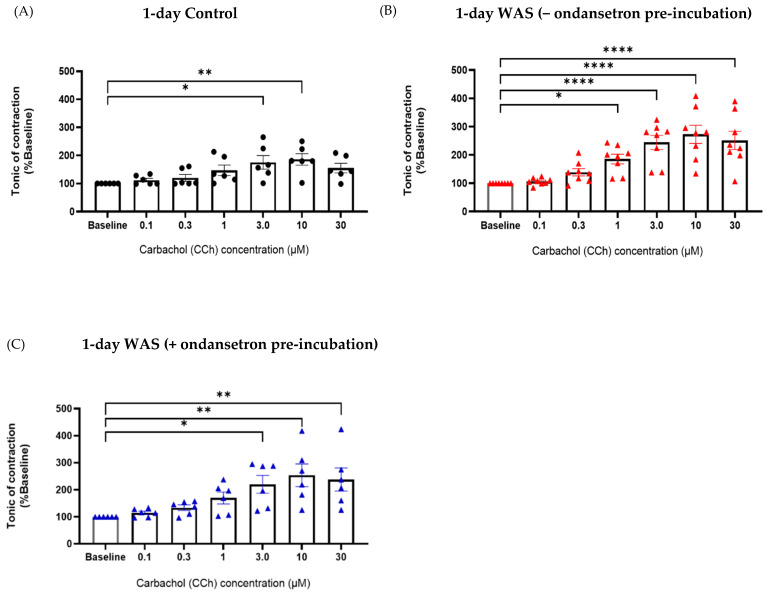 Figure 7
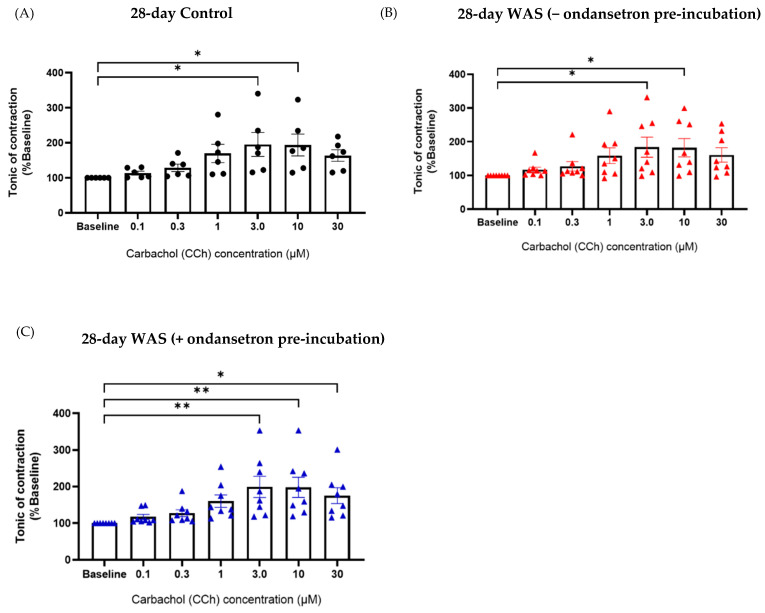 Figure 8
Peer Reviews
No public reviews on file for this paper yet. If you reviewed it on a platform where reviews are public (OpenReview, ICLR, NeurIPS, ICML), you can paste yours below so the community can read it here.
Videos
No videos yet. Explain this paper in a talk, walkthrough, or lecture? Add one.
Taxonomy
TopicsStress Responses and Cortisol · Circadian rhythm and melatonin · Neuroendocrine regulation and behavior