How Distressed Are Adolescent Students? A Mix-Method Study on High School Students in Northern Italy, Two Years after the Beginning of the COVID-19 Pandemic
Anna Maria Della Vedova, Loredana Covolo, Carlotta Fiammenghi, Silvia Marconi, Umberto Gelatti, Maurizio Castellano, Barbara Zanini

TL;DR
This study found that half of high school students in Northern Italy experienced emotional distress two years into the pandemic, with school pressure and family issues being key factors.
Contribution
The study combines quantitative and qualitative methods to identify factors and reasons for emotional distress in adolescents post-pandemic.
Findings
50% of 1686 students showed emotional distress, with females and older students being more at risk.
Key factors included sleep deprivation, anxiety, and unhealthy eating behaviors like comfort food consumption.
Qualitative analysis revealed that school pressure and family/peer relationships were major causes of distress.
Abstract
Adolescence is a central phase for the development of a person’s identity, involving complex multidimensional changes and increasing vulnerability to distress. This study aimed to investigate the psychological well-being of adolescent students in Brescia (Northern Italy), two years after the beginning of the COVID-19 pandemic. An online survey investigated the extent and the reasons reported by high school students (13–21 years) for their emotional distress (ED), also considering other factors such as physical activity, nutrition, sleep and smartphone overuse. The main reasons for ED were classified through a qualitative analysis of the free-text answers. A total of 1686 students agreed to participate, and 50% showed a presence of ED. According to a multiple logistic analysis, adolescents were more at risk of ED if they were female (AdjOR 2.3), older (AdjOR 1.6), slept less than 8 h…
Genes, proteins, chemicals, diseases, species, mutations and cell lines named across the full text — each resolved to its canonical identifier and authoritative record.
Click any figure to enlarge with its caption.
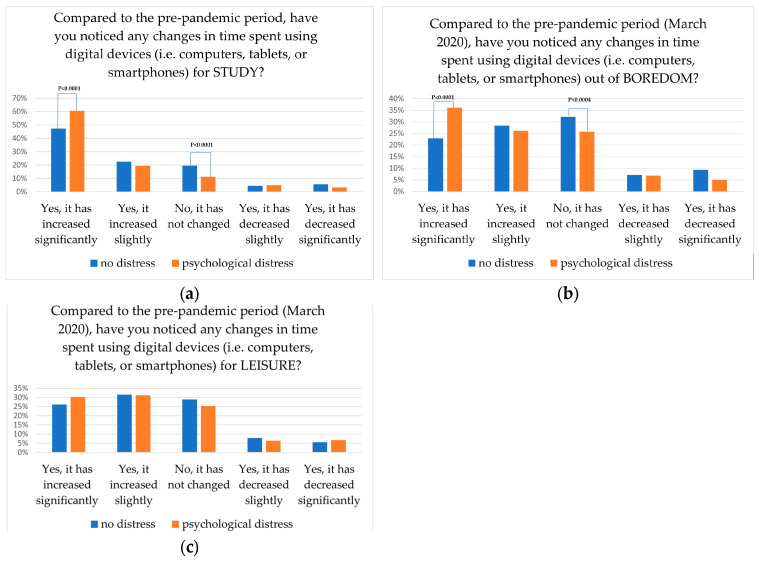 Figure 1
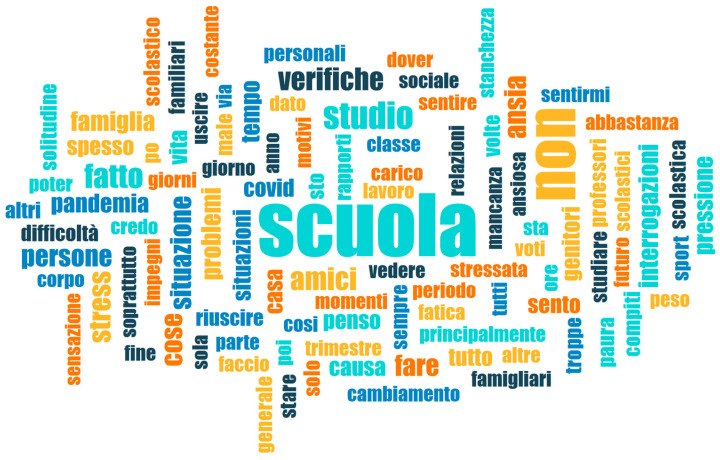 Figure 2
Peer Reviews
No public reviews on file for this paper yet. If you reviewed it on a platform where reviews are public (OpenReview, ICLR, NeurIPS, ICML), you can paste yours below so the community can read it here.
Videos
No videos yet. Explain this paper in a talk, walkthrough, or lecture? Add one.
Taxonomy
TopicsCOVID-19 and Mental Health · Resilience and Mental Health