Serum Uric Acid as an Indicator of Right Ventricular Dysfunction in LVAD Patients: A Preliminary Study
Tomasz Urbanowicz, Małgorzata Tomaszewska, Anna Olasińska-Wiśniewska, Jędrzej Sikora, Ewa Straburzyńska-Migaj, Jakub Piecek, Maksymilian Białasik-Misiorny, Aleksandra Krasińska-Płachta, Andrzej Tykarski, Marek Jemielity

TL;DR
This study suggests that serum uric acid levels may indicate right ventricular dysfunction in patients with left ventricular assist devices.
Contribution
The study identifies serum uric acid as a potential marker for right ventricular dysfunction in LVAD patients.
Findings
Postoperative uric acid levels correlated with right ventricular dimension and TAPSE in LVAD patients.
Higher uric acid levels were associated with worse right ventricular function and higher NT-pro-BNP levels.
Serum uric acid may serve as a non-invasive indicator of right ventricular dysfunction in LVAD patients.
Abstract
(1) Background: Left ventricular assist devices (LVADs) represent mechanical support in end-stage congestive heart failure and are characterized by satisfactory long-term results. Uric acid (UA) represents one of the early heart failure markers whose usefulness was postulated in clinical practice. (2) Methods: Twenty-nine male patients with a median age of 58 (51–62) years were referred for LVAD implantation due to end-stage congestive heart failure in the mean (SD) New York Heart Association (NYHA) status class 3.3 (0.6). Preoperative and postoperative right ventricular (RV) characteristics were compared with serum uric acid concentration within 12 (8–15) months following the implantation. (3) Results: Significant correlations between postoperative uric acid concentration and right ventricular dimension (r = 0.604, p = 0.005), tricuspid annulus plane systolic excursion (TAPSE) (r =…
Genes, proteins, chemicals, diseases, species, mutations and cell lines named across the full text — each resolved to its canonical identifier and authoritative record.
Click any figure to enlarge with its caption.
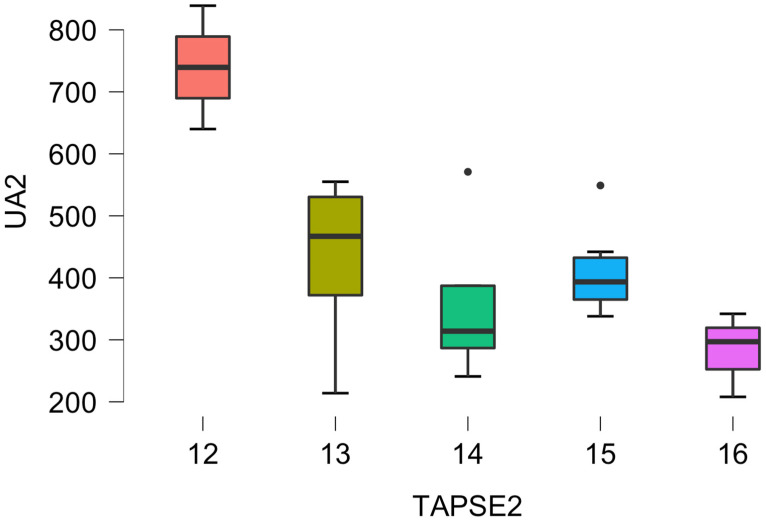 Figure 1
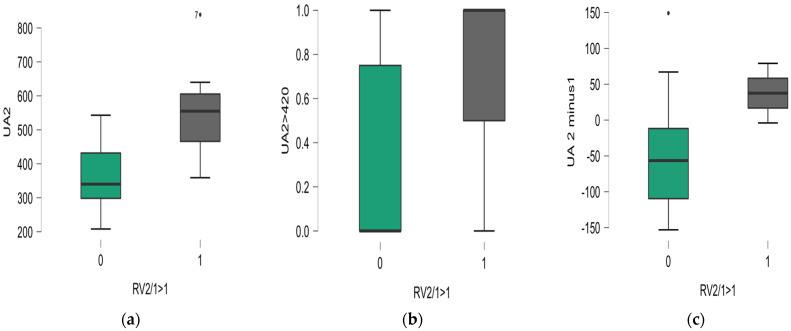 Figure 2
Peer Reviews
No public reviews on file for this paper yet. If you reviewed it on a platform where reviews are public (OpenReview, ICLR, NeurIPS, ICML), you can paste yours below so the community can read it here.
Videos
No videos yet. Explain this paper in a talk, walkthrough, or lecture? Add one.
Taxonomy
TopicsMechanical Circulatory Support Devices · Cardiac Structural Anomalies and Repair · Cardiac Arrest and Resuscitation