What is the Difference between Conventional Drinking Water, Potable Reuse Water, and Nonpotable Reuse Water? A Microbiome Perspective
Matthew F. Blair, Emily Garner, Pan Ji, Amy Pruden

TL;DR
This study uses microbiome analysis to distinguish between potable and nonpotable water types, showing how microbial signatures can help assess water quality and treatment effectiveness.
Contribution
The study introduces microbial community profiling as a novel method for high-resolution water quality assessment based on microbiome composition.
Findings
Microbiome composition clearly differs between potable and nonpotable water types across U.S. water systems.
Specific taxa like Desulfobacterota, Patescibacteria, and Aeromonas effectively discriminate between potable and nonpotable waters.
Core/abundant taxa in nonpotable waters include Myxococcota and NS11.12_marine_group, with exceptions like Ralstonia in potable waters.
Abstract
As water reuse applications expand, there is a need for more comprehensive means to assess water quality. Microbiome analysis could provide the ability to supplement fecal indicators and pathogen profiling toward defining a “healthy” drinking water microbiota while also providing insight into the impact of treatment and distribution. Here, we utilized 16S rRNA gene amplicon sequencing to identify signature features in the composition of microbiota across a wide spectrum of water types (potable conventional, potable reuse, and nonpotable reuse). A clear distinction was found in the composition of microbiota as a function of intended water use (e.g., potable vs nonpotable) across a very broad range of U.S. water systems at both the point of compliance (Betadisper p > 0.01; ANOSIM p < 0.01, r-stat = 0.71) and point of use (Betadisper p > 0.01; ANOSIM p < 0.01, r-stat = 0.41). Core and…
Genes, proteins, chemicals, diseases, species, mutations and cell lines named across the full text — each resolved to its canonical identifier and authoritative record.
Click any figure to enlarge with its caption.
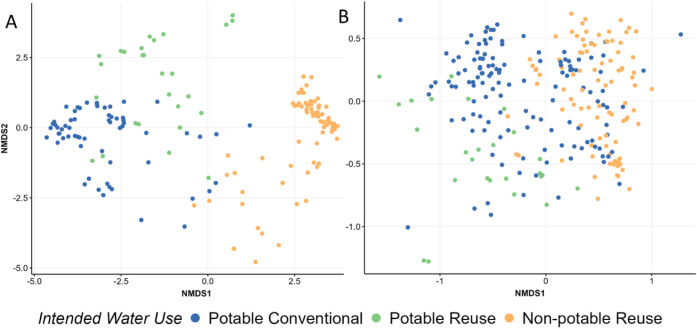 Figure 1
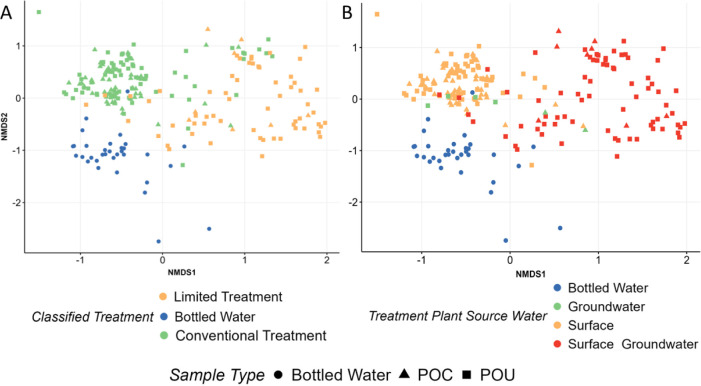 Figure 2
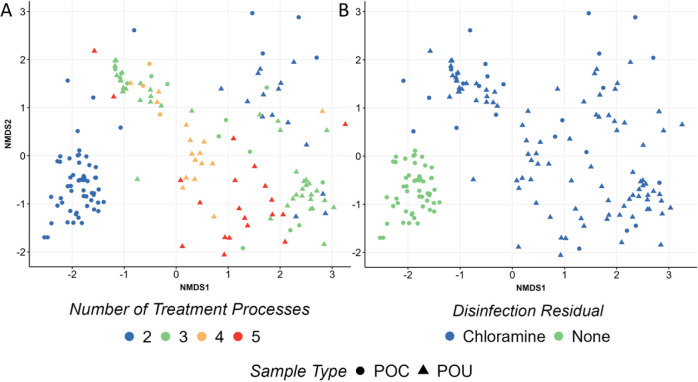 Figure 3
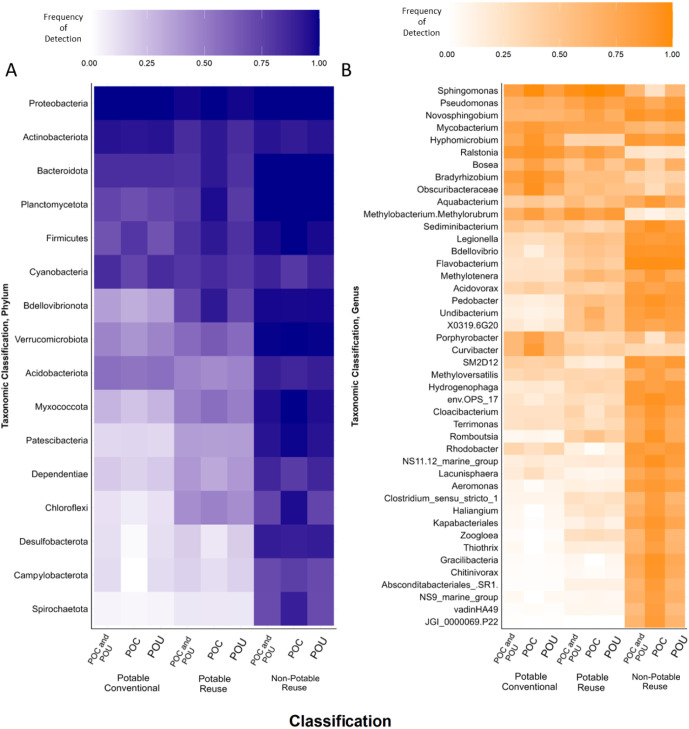 Figure 4
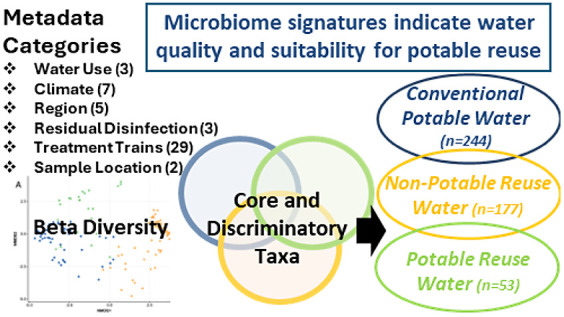 Figure 5
Peer Reviews
No public reviews on file for this paper yet. If you reviewed it on a platform where reviews are public (OpenReview, ICLR, NeurIPS, ICML), you can paste yours below so the community can read it here.
Videos
No videos yet. Explain this paper in a talk, walkthrough, or lecture? Add one.
Taxonomy
TopicsAdvanced Data Processing Techniques · Statistical and Computational Modeling