Staphylococcus aureus infection disparities among Hispanics and non-Hispanics in Yuma, Arizona
Talima Pearson, Sarah Kramer, David Panisello Yagüe, Emmanuel Nangkuu, Sarah Medina-Rodriguez, Colin Wood, Crystal Hepp, Ricky Camplain, Joseph Mihaljevic, Trudie Milner

TL;DR
A study in Yuma, Arizona finds non-Hispanic people have more Staphylococcus aureus infections than Hispanics.
Contribution
The study reveals consistent infection patterns linked to ethnicity and gender in a specific geographic area.
Findings
Non-Hispanics had 2.25 times higher infection rates than Hispanics.
Males showed higher infection rates across most age groups.
Infection disparities align with colonization patterns, indicating similar impacts of sex and ethnicity.
Abstract
Staphylococcus aureus infection patterns in Yuma, Arizona show a 2.25x higher infection rate in non-Hispanics. Males had higher infection rates in most age classes. These disparities in infection are mostly consistent with previously observed patterns in colonization, suggesting that sex and ethnicity do not differentially impact colonization and infection.
Genes, proteins, chemicals, diseases, species, mutations and cell lines named across the full text — each resolved to its canonical identifier and authoritative record.
Click any figure to enlarge with its caption.
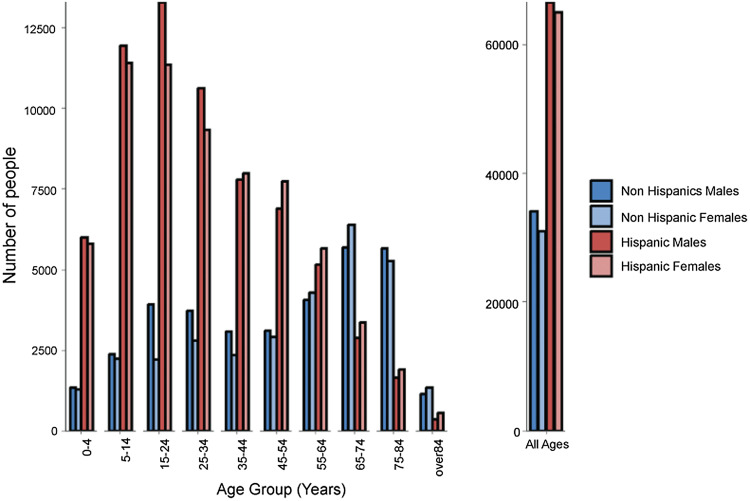 Figure 1
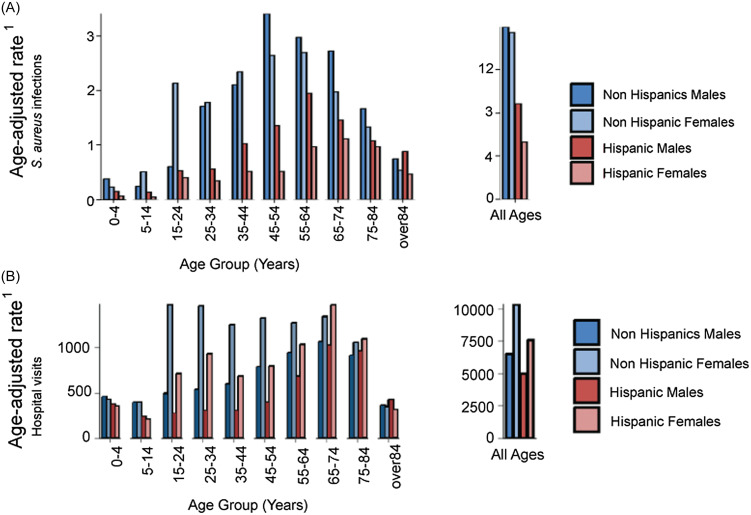 Figure 2
Peer Reviews
No public reviews on file for this paper yet. If you reviewed it on a platform where reviews are public (OpenReview, ICLR, NeurIPS, ICML), you can paste yours below so the community can read it here.
Videos
No videos yet. Explain this paper in a talk, walkthrough, or lecture? Add one.
Taxonomy
TopicsAntimicrobial Resistance in Staphylococcus · Acne and Rosacea Treatments and Effects · Mycobacterium research and diagnosis